
AA
Text Size
- Small
- Medium
- Large
1/13
12 strangest place names in the world and the stories behind them
Geographic names can be serious in nature regarding boundaries and culture, but can also be a source of comedic relief. From Antarctica to Turkey, places often use names that provide adventure seekers with photographic opportunities and historians with opportunities to explain. Names may provide humour in English, but each possesses its own history, language or accidental derivation- the history of the people who settled there. Names may arise from an attempted marketing scheme of the 19th century, or be a result of mistranslation from ancient dialects or be the result of an ‘accidental’ colonial society.
The following destinations demonstrate that the reality is stranger than the fiction on every occasion, and often funnier; herein exists a world where, from the icy peaks of the Executive Committee Range in Antarctica to the coastal reaches of Useless Harbour in Australia.
2/13
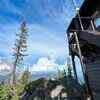
Gobbler’s Knob, USA
The world-famous weather-predicting groundhog, Punxsutawney Phil, resides at the internationally recognised location in Punxsutawney, Pennsylvania. Groundhog Day was first formally celebrated here on February 2, 1887. It’s a tradition based on German folklore in which if the groundhog sees its shadow, winter continues for six more weeks. This is now a major cultural landmark that brings tourists from all over the country.
PC: National Park Service
3/13
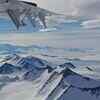
International Association of Antarctica Tour Operators
The United States Antarctic Service Expedition discovered this mountain range located in Marie Byrd Land in 1940 and named it after the committee that served on the expedition. Four of the five main peaks (Mount Hampton, Mount Cumming, Mount Hartigan, and Mount Waesche) were named after an individual member of the US government representing a separate department and the fifth peak (Mount Sidley) was named by Richard Byrd.
PC: International Association of Antarctica Tour Operators
4/13
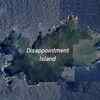
Disappointment Islands, French Polynesia
The Napuka and Tepoto atolls were named by British explorer John Byron in 1765 after having been met with a hostile reception from the atoll’s inhabitants. Furthermore, Byron experienced difficulties while attempting to locate a suitable landing or obtain fresh water from the Napuka and Tepoto atolls. The Napuka and Tepoto atolls are located in the Tuamotu Archipelago, and are among the most untouched inhabited locations within the Pacific Ocean.
PC: (Reddit) r/geography
5/13
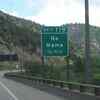
No Name, USA
This community in Garfield County, Colorado, is named after an incident involving government paperwork when constructing Interstate 70. Apparently, either there was a blank space for a name, or residents provided ‘No Name’ when asked for the name of their community. The Wyoming Department of Transportation used this name on highway exit signs, and this name ultimately became the formal name for this area, much to the enjoyment of the drivers passing through.
PC: Colorado Public Radio
6/13
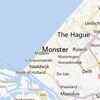
Monster, Netherlands
Although the term ‘Monster’ does sound ominous in nature, it is actually derived from the term monasterium in Latin, which refers to a monastery, and due to the religious use of the area as a centre for many religious functions (in the 13th century), it is believed that the term Monstier was developed as the Old Dutch term for ‘large church’. Currently, the area is known as Westland and is recognised the world over for its extensive greenhouse horticulture production and its miles of pristine North Sea beaches.
PC: Weather Forecast
7/13
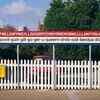
Llanfairpwllgwyngyllgogerychwyrndrobwllllantysiliogogogoch (Wales)
Llanfairpwllgwyngyllgogerychwyrndrobwllllantysiliogogogoch, consisting of 58 letters, is the current name of a village on the island of Anglesey, Wales, and is the longest village name in Europe. The name was created in the 1860s by a local tailor for the pub, to lure in customers (the new Pub was located adjacent to the newly built railway station). It translates into ‘St. Mary’s Church in the Hollow of the White Hazel, near to a Rapid Whirlpool, and St. Tysilio’s Church.’
PC: (Reddit) r/todayilearned
8/13
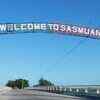
Sasmuan (Sexmoan), Philippines
The municipality of Sasmuan, Pampanga (formerly known as Sexmoan) was renamed in 1991 to avoid misunderstandings based on the unintentional nature of its previous name. The new name, Sasmuan, is derived from a Kapampangan word meaning ‘to meet or place of meeting,’ which references the site’s historical use as a meeting point for early inhabitants of the region. This coastal community is still a vital fishing and aquaculture community.
PC: r/todayilearned (Reddit)

9/13
Pee Pee Township, USA
This township in Pike County, Ohio, known as ‘Pee Pee,’ takes its name from Pee Pee Creek. Local legends say that an early settler who had initials of P.P. carved this into a beech tree growing along the bank of the creek; thus, the creek – and ultimately the township – are named after him. This was established in the early 19th century, making it the first area in the region to be settled.
PC: WOSU Public Media
10/13
Batman, Turkey
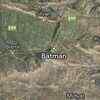
The name of Batman, and therefore the location of this city and province, comes from the Batman River, a tributary of the Tigris River. While it may look like superhero Batman in DC comics, the name likely comes from an Ottoman Empire weight unit of measure, or from the nearby mountain, ‘Bati Raman’, which is abbreviated to the first two letters of each word. Upon discovering oil in the area attributable to this city in the late 1940’s, Batman became a major player in the production and distribution of oil and its many byproducts in Turkey.
PC: (Reddit) r/Geography
11/13
Silly, Belgium
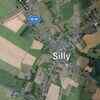
Silly is a municipality in Belgium named after the Sille, a stream that runs through it, called the Zulle in Dutch. The name ‘silly’ may cause laughter for some English speakers; however, it is merely a reference describing the geography of the area. Silly has a reputation for being a rural community; also, its local brewery, ‘Brasserie de Silly’, has been serving the area since the mid-1800s.
PC: (Reddit) r/JackSucksAtGeography
12/13
Useless Harbour, Australia
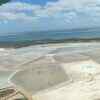
Named Havre Inutile by French explorer Henri-Louis de Freycinet in 1801. The name reflects his frustrations that were due to the fact that, at the time of his discovery, there was a sandbar blocking the entrance to the harbour. Although the area is now referred to as Useless Loop, it is a very productive commercial location for solar salt production. Useless Loop is located in the World Heritage-designated Shark Bay area, an area that has essentially been reserved by the United Nations for its ecological diversity.
13/13
Middelfart, Denmark
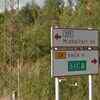
Middelfart is a name that has been recorded since at least 1231 and does not carry any modern-day meaning. The name comes from old Danish words, ‘mæthal,’ meaning ‘middle,’ and ‘far,’ meaning ‘way/passage.’ The name was given to this town because it was historically located centrally on a ferry service from Funen island to the mainland of Jutland. Today, it is an attractive coastal town known for its maritime history and its many bridges.
PC: (Reddit) r/igeoguessr
Follow Us On Social Media