

Male hornbill feeding a nesting female
There has been a silent yet successful attempt at conserving biodiversity in the forest reserves of Northeast India, where the approach has shifted from traditional methods towards an alternative approach based on mutual trust, respect, and collaboration.
The central theme of the conservation process is the notion that communities who live near wildlife can act as its best advocates. One of the finest examples of such conservation success stories is the Hornbill Nest Adoption Programme (HNAP), which serves as one of India’s best conservation programs.The surrounding forest areas of Pakke Tiger Reserve have been instrumental in understanding the reason behind hornbills’ requirement for protection.
These birds are some of the most significant species within the tropics and are often referred to as “forest engineers” since they help spread seeds in tropical forests over great distances, thus rejuvenating forests. However, their breeding cycle makes them highly vulnerable.
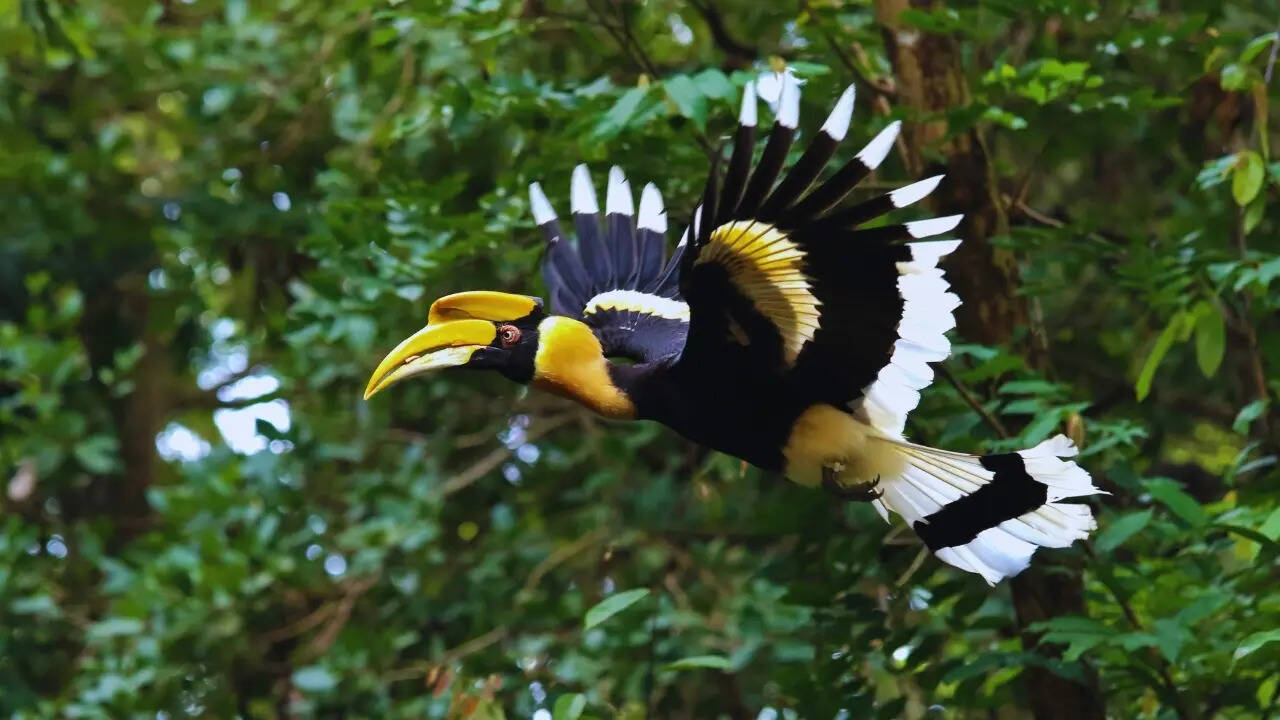
Grreat hornbill in flight
Did you know that a female hornbill blocks itself within a tree cavity by using mud, fruit pulp, and dung, keeping only a small slit open for receiving food from the male? Well, now you do.
Despite the success of this fascinating strategy, there is also an underlying cost. In an environment like that of Pakke and its neighboring forests, if the nest tree is cut down or the male hunted, then the whole family, including the mother herself, perishes. Towards the end of the decade of the 2000s, the hunting and logging of Pakke had reached levels where hornbills were under threat.
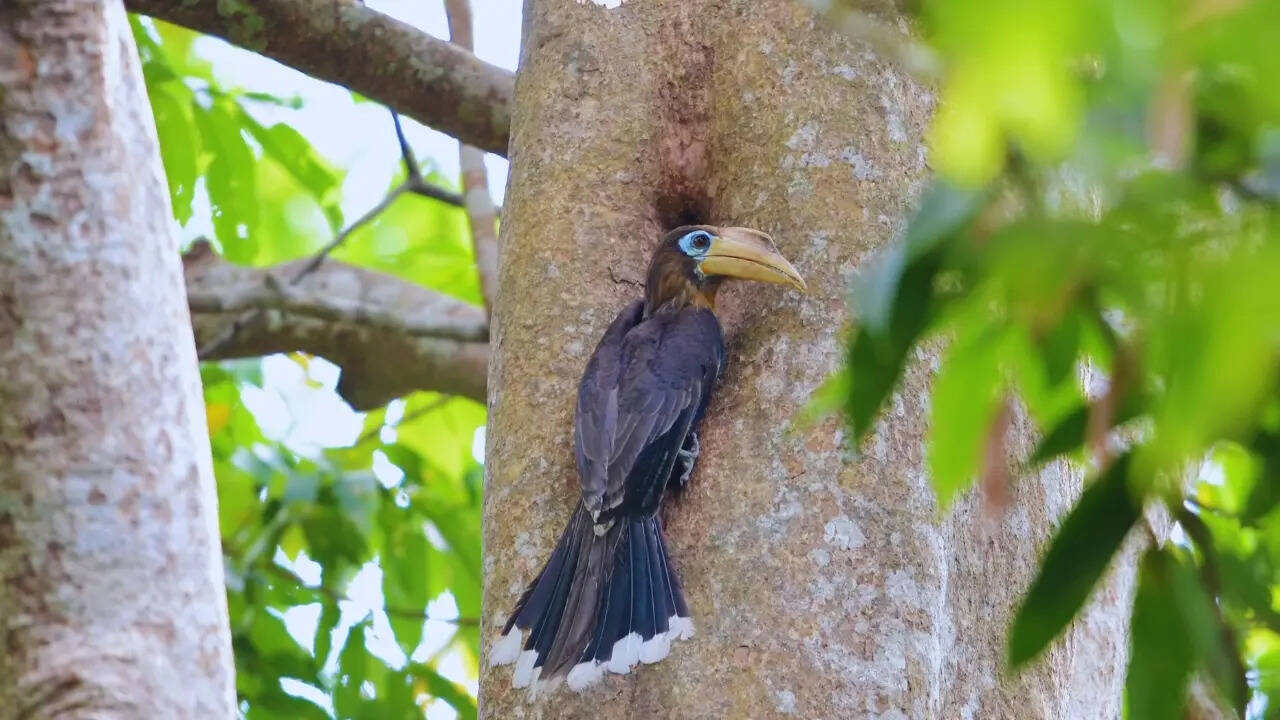
Brown hornbill in front of its nest
The birth of a community-led model
This was the backdrop against which the Nature Conservation Foundation, along with the Arunachal Pradesh Forest Department, came up with the Hornbill Nest Adoption Project around 2011-2012.The concept was very straightforward yet innovative at the same time. People from all over India had the opportunity to “adopt” a hornbill nest by paying a sum of about INR 6,000 each year. This money would be paid straight to the locals, particularly those belonging to the Nyishi community, who would be working as “Nest Protectors.” The protectors started identifying nests, observing the breeding cycle, and protecting the hornbills from any harm or hunting.
Turning hunters into guardians
Hunting was always practiced in the villages around Pakke, and the hornbills, with their characteristic casques and plumage, held great cultural value and were often hunted. The initiative did not seek to eliminate such practices by force. Rather, it provided a new path based on dignity and economic gain.Many of the initial Nest Protectors in Pakke were erstwhile hunters. Their knowledge of the forest rendered them ideal candidates to detect the nests of the hornbills, which were often perched at great heights in old trees.
They were motivated by both financial gain and a newfound sense of accountability. This change has proved to be one of the greatest successes of the program within the buffer zones of Pakke Tiger Reserve.
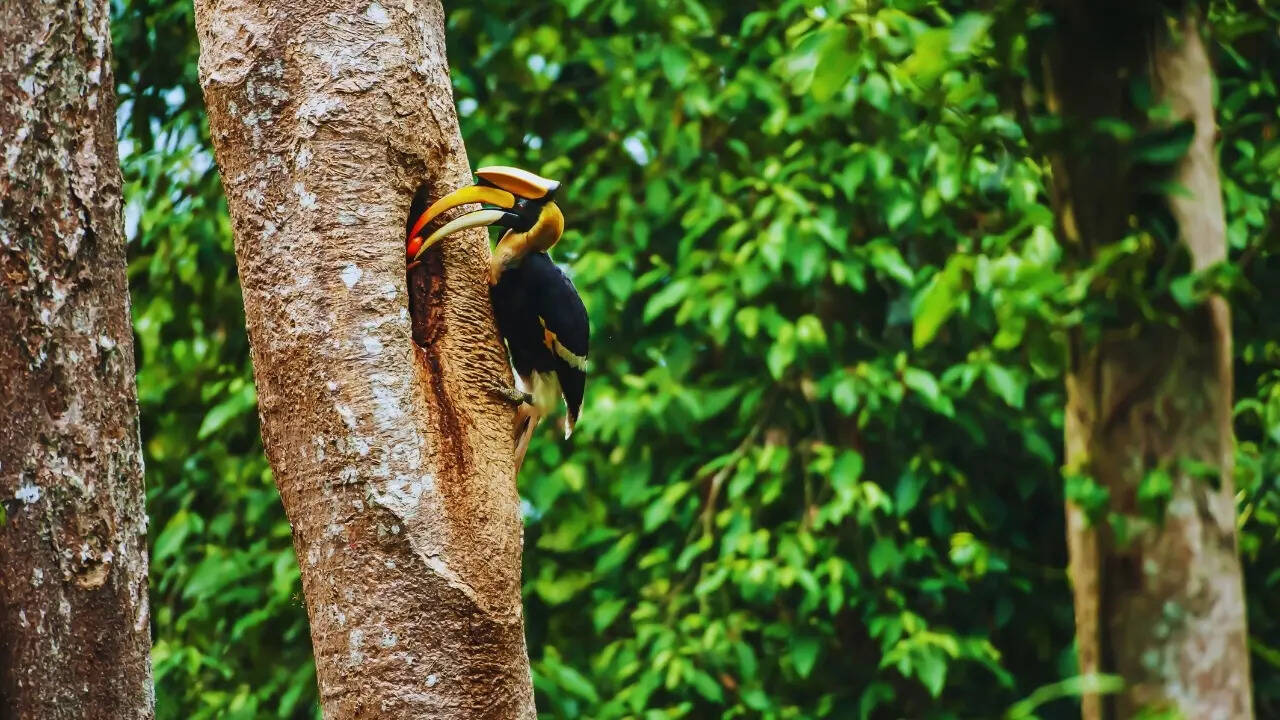
Great hornbill nest
Expanding beyond protected boundaries
Although Pakke Tiger Reserve continues to be the key focus area, the Hornbill Nest Adoption Programme has ventured into other areas like Papum Reserve Forest. This is essential since many hornbill nests are found outside protected areas in forests managed by the local communities.Therefore, the Pakke landscape is made up of different types of forest areas, both protected and community-managed. Through such efforts, the programme has managed to ensure that conservation does not only happen within the boundaries of the protected area. Instead, the programme recognizes that the hornbills roam freely between the areas and need to be conserved through the whole landscape.The success of the programme within the Pakke landscape can be clearly noted.
Every year, the programme continues to monitor dozens of nests, with more success stories emerging regarding chick fledging. According to the report by the Nature Conservation Foundation, close to 220 hornbill chicks have been successfully fledged as of 2024.Also noteworthy is the drop in hunting around Pakke. The continuous availability of Nest Protectors and the awareness of the community members has made them less vulnerable at the time of their greatest risk—the breeding period.
In an area where enforcement alone might not work, community ownership has proved more fruitful.Pakke and the surrounding areas are home to many hornbills, such as the Great hornbill, Wreathed hornbill, Oriental pied hornbill, and the rare Rufous-necked hornbill. The preservation of the nesting sites for these birds will have repercussions on the environment, considering how important these birds are in sustaining the forest’s biodiversity.The Hornbill Nest Adoption Programme shows how much impact can be achieved when communities are enabled and encouraged. These birds are better protected by the people living near them.The program faces some challenges; habitat destruction, particularly the cutting down of nesting trees, remains an issue. However, the program has already shown how successful it can be in Pakke.

