
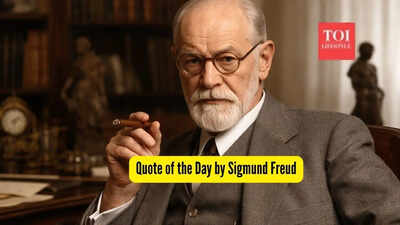
Sigmund Freud, a key figure of the twentieth century, is known for his important and often debated ideas. He is called the father of psychoanalysis, and his work changed how people understand the mind, behavior, and personality.
His ideas have had a wide impact, reaching beyond psychology to include literature, philosophy, art, and cultural studies. Sigmund Freud was born in 1856, in Freiberg, a small town in the Austrian Empire, which is now part of the Czech Republic. Freud’s family later moved to Vienna, where he lived most of his life. He was born into a Jewish family and grew up in a time when social and political restrictions affected his intellectual growth.Freud was a great student and was interested in science from a young age. He enrolled at the University of Vienna, intent on a medical career, and specialized in neurology. Initially, his studies concentrated on the brain and nervous system, a foundation for his future work. He gained experience in laboratories before moving on to clinical settings, where he assisted patients grappling with neurological conditions.
During this time, he became interested in conditions like hysteria, which didn’t have a clear physical cause.The growth of psychoanalysisFreud’s biggest breakthrough came when he started looking into how the mind and unconscious processes are connected. He worked with doctors like Josef Breuer to study patients whose symptoms couldn’t be explained by medicine. “Anna O.” is a well-known case in which talking about her problems helped her feel better.
This made Freud come up with the “talking cure,” which later became the basis for psychoanalysis. Psychoanalysis is a way to understand the mind and a way to help people.
Freud said that people’s actions are mostly shaped by their unconscious fears, desires, and conflicts. He split the mind into three parts:
- The conscious mind (what we know)
- The preconscious is the part of the mind that holds memories that can be accessed.
- The unconscious mind (thoughts and desires that are hidden)
Freud thought that a lot of mental health issues come from problems in the unconscious mind.Development of the mind and bodyFreud said that personality grows through a series of stages in childhood, which he called psychosexual stages.
These stages are oral, anal, phallic, latency, and genital. He said that unresolved conflicts at any stage could change a person’s personality as an adult. Freud posited that dreams serve as a portal to the unconscious. In his well-known book The Interpretation of Dreams, he said that dreams show hidden wants and problems that haven’t been solved yet through symbols.
He discovered that the mind has ways to protect itself from anxiety, which he called defence mechanisms.
Some of these are denial, repression, projection, and displacement. These ideas are still very common in psychology today.Freud wrote a lot, and his work was the basis for modern psychology. Some of the most important books he wrote are:
- The Interpretation of Dreams—Introduced his theory of the unconscious and the meaning of dreams
- Three Essays on the Theory of Sexuality—He talked about his ideas on how sexual development works.
- Civilisation and Its Discontents – Looked at the conflict between what people want and what society says is right
- The Ego and the Id – He showed how the mind is put together in his structural model.
These works had an impact on psychology, literature, art, and cultural criticism, among other things.Later life and problemsFreud worked in Vienna for most of his life, where he gained a large group of students and colleagues.
Despite the controversy surrounding his ideas, which were often criticized for lacking scientific evidence, psychoanalysis became very popular, especially in Europe and the United States. During the 1930s, the rise of Nazi Germany caused political problems for Freud. Because he was Jewish, he had to leave Vienna after the Nazis took over Austria in 1938.
He moved to London, where he lived for the last year of his life.
Freud also had serious health problems. He smoked a lot and got jaw cancer, which required several surgeries. He kept writing and practising until he died on September 23, 1939, even though he was sick.Even people who don’t like Freud agree that he helped people think about the mind in new ways. Sigmund Freud was a trailblazer who changed how people think about psychology. Freud’s development of psychoanalysis introduced groundbreaking concepts concerning the unconscious mind, personality, and human conduct.
While many of his theories remain subjects of ongoing scholarly discussion, his influence has extended across numerous disciplines.
Freud’s contributions initiated a more profound exploration of the intricacies inherent in the human psyche, thereby solidifying his status as a preeminent intellectual figure of the twentieth century.Quote of the DayOne of the most iconic quotes of Freud is, “Most people do not really want freedom, because freedom involves responsibility, and most people are frightened of responsibility.”
It gives us a deep look into human nature and suggests that people may not really want freedom because of the burdens it brings.The statement points out a paradox at its core: freedom is often seen as a basic human ideal, but it comes with a cost that can’t be avoided: responsibility. Being truly free means being able to choose what you want, decide what you want to do, and deal with the results of those choices. This can give you power, but it can also scare you.
Being responsible means taking responsibility for what you do, facing the unknown, and being ready for failure.
Many people feel anxious when they have this much responsibility.Freud’s observation indicates that individuals frequently favour security and order over absolute freedom. Social norms, traditions, laws, and authority figures are all examples of systems that give us a sense of order and predictability.
People can avoid making tough choices and put the blame on others by following these rules. For instance, people may feel safer when they follow the rules of society or do what an authority figure says without question because they aren’t the only ones responsible for what happens.
People willingly give up their freedom because they are afraid of being responsible. It takes courage, self-control, and the ability to think critically.
Not everyone is ready to be this independent. Some people might feel better when they are guided, controlled, or directed, even if it means giving up their freedom. People sometimes prefer clear instructions over the stress of making complicated decisions. This can happen at work, in politics, or even in personal relationships.But Freud’s statement shouldn’t be seen as true for all people. A lot of people want to be free and take on responsibility, even though it can be hard.
In fact, taking responsibility and learning from your mistakes is often what helps you grow as a person. The quote is more of a comment on a common human trait than a strict rule.Many people, either on purpose or by accident, avoid this responsibility and instead choose the safety of rules and guidance. Knowing how this works helps us understand why true freedom is not only a right, but also a challenge that requires strength and the willingness to take responsibility.