

BENGALURU: India’s satellites were forced to navigate an increasingly crowded orbital environment in 2025, with more than 1.5 lakh close approach alerts issued for Indian assets alone, according to the Indian Space Situational Assessment Report 2025 made public on Thursday.The alerts came from the Combined Space Operations Center (CSpOC) of USSPACECOM. The scale of these warnings reflects a broader shift in space activity.
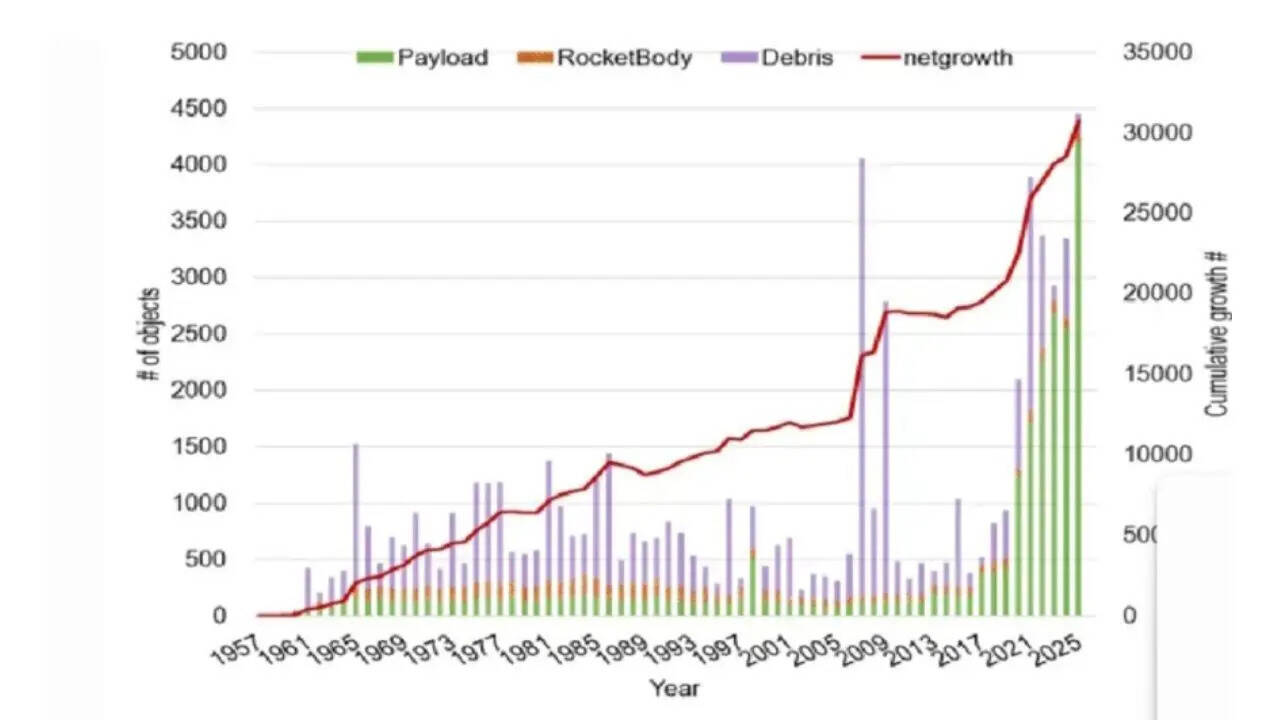
As reported earlier, 2025 saw record launches globally, but the full report now shows the operational strain behind those numbers: about 1.6 lakh close approach alerts were recorded overall, signalling how frequently satellites now risk potential collisions.This congestion is being driven largely by the rapid expansion of satellite constellations. On several occasions through the year, single-day launches added more than 100 objects into orbit, often through rideshare missions or overlapping deployments by competing constellations.Such clustering has made coordination more complex, with shorter warning times and limited tracking data in some cases.For Isro, this has translated into continuous monitoring and frequent orbital adjustments.
Indian missions carried out 18 collision avoidance manoeuvres (CAMs) during the year, including 14 in low Earth orbit and four in geosynchronous orbit.“All manoeuvre plans, including CAMs, were subjected to close approach risk analysis to rule out potential close approach with neighbouring space objects within a few days of the manoeuvres; 82 manoeuvre plans were revised to avoid post-manoeuvre close approaches with other space objects for LEO satellites, and two were revised to avoid post-manoeuvre conjunctions for GEO satellites,” the report found.A similar methodology for conjunction assessment and collision risk mitigation was followed for deep-space missions. For the Chandrayaan-2 Orbiter (CH2O), 16 orbit manoeuvres (OMs) were carried out, and the OM plans were adjusted on two occasions.The report also flags a turning point ahead. With multiple large constellations planned, active satellites could outnumber space debris within this decade. While that may indicate better utilisation of orbit, it also means more objects moving in tight corridors, raising the burden on space traffic management.Globally, 2025 recorded 315 successful launches that placed 4,651 objects in orbit, a significant rise compared to the previous years: space object population increased by 2963 objects from 254 launches in 2024 and 3135 objects from 212 launches in 2023. Of the 4,651 objects placed in orbit, 4,198 are known operational satellites.
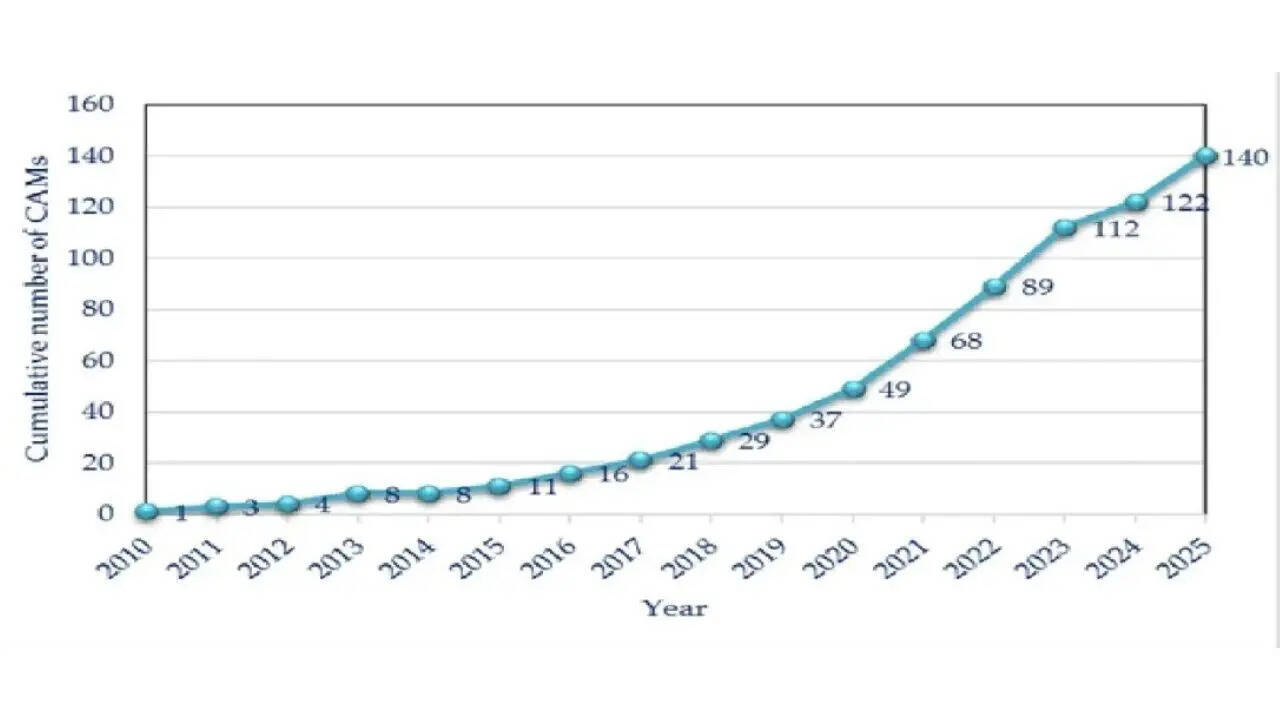
While 1,911 objects re-entered the atmosphere in 2025, the overall population of objects in space continues to grow, adding to long-term sustainability concerns.The risks are no longer confined to orbit. The report notes several instances of debris surviving atmospheric re-entry and falling over inhabited regions, though without casualties. It also cites an incident where a Chinese spacecraft suffered window damage, likely from a micrometeoroid impact, delaying the crew’s return.India’s own space activity remained steady, with five launches from Sriharikota, one of which did not achieve its intended orbit.
Eight Indian satellites were eventually placed in orbit through a mix of domestic and foreign launches.The year also saw key operational steps, including the controlled disposal of a navigation satellite into a graveyard orbit and continued deep-space missions such as Chandrayaan-2 and Aditya-L1.At the same time, Isro is preparing for a more congested future. Efforts are under way to strengthen indigenous tracking under Project NETRA (Network for space object TRacking and Analysis), alongside plans to ensure all Indian satellites carry de-orbit capability by 2030.Taken together, the findings point to a clear shift: managing traffic in space is fast becoming as critical as launching missions, as Earth’s orbits grow busier by the year.