
The choice of an air conditioner is more than just about having cool air. It also concerns the way it is integrated into people’s routine activities, its capacity, as well as its electricity-saving ability in the long run.
Various houses have varied needs for cooling, and the use of improper equipment may result in temperature imbalance or extra expenses. Besides, air conditioners today are equipped with additional options, including ventilation and intelligent controls.Before taking into account all the extra features. The factors that play a role include the size of the room, tonnage, installation method, and electricity rating.
A well-balanced combination allows for stable functioning without excessive expenditure of energy.Check below the key details and quick tips to choose energy-efficient air conditioners for your home, approved by the US Department of Energy.
Choosing the right air conditioner for your home
Understanding room size and why it matters
The size of the room is the first factor that determines the choice of the right air conditioner. It influences the speed of cooling of the room.Small rooms do not need a strong unit, while large ones need a powerful machine.
It appears easy, but many consumers make wrong choices that cause undesirable effects.For instance:
- Smaller than 120 sq. feet areas operate with smaller capacities.
- Medium-sized rooms should have balanced capacities.
- Larger rooms should have stronger capacities.
Other factors also influence performance, such as:
- Rooms with direct sunlight heat up faster
- Upper floors tend to trap more heat
- High ceilings increase air volume, which changes cooling needs
- Even furniture density can slightly affect airflow.
It is not only about square footage, but also about the heat load inside the room.
Understanding AC tonnage and its impact on cooling performance
Tonnage refers to cooling capacity, not weight. It indicates how much heat an AC can remove from a room in a specific time.A lower ton unit is designed for smaller spaces. It cools quickly in limited areas but struggles in larger rooms.
A higher ton unit handles bigger spaces, but it may be unnecessary for small rooms.Using incorrect tonnage creates issues. A low-capacity AC runs continuously without achieving proper cooling. A high-capacity AC cools too quickly and may not manage humidity properly.Balanced selection is important. It helps maintain a stable temperature and reduces strain on the compressor.
Types of air conditioners and how they behave
There are three main AC types, each with different installation needs and performance styles.
Window air conditioners are installed in a single frame, usually in a window opening. All components sit inside one unit.They are generally simpler to install and may require less setup work. They also tend to be more affordable. Cooling is direct, but the airflow direction is fixed.This type is often used in compact rooms or where installation flexibility is limited.
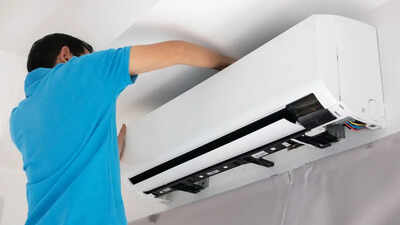
Split air conditioners have two units. One stays inside the room, and the other is placed outside.This design separates noise-producing parts from the indoor unit. As a result, indoor operation feels quieter.Split ACs often provide more stable cooling and are widely used in homes and offices. Installation requires piping and wall mounting, which adds setup steps.They are suitable for long-term residential use.
Portable air conditioners are movable units. They do not require permanent installation.They are useful in temporary setups, rented spaces, or rooms where installation is not possible.Cooling capacity is usually limited compared to split or window models. They work best in small, controlled spaces.
Energy efficiency and how it affects long-term AC usage
Energy efficiency plays a major role in cost control. Air conditioners run for long hours, so even small efficiency differences matter over time.Inverter ACs adjust compressor speed based on temperature needs. Instead of switching on and off repeatedly, they maintain steady operation at variable speed.
This helps reduce power fluctuations and improve consistency in cooling.Non-inverter ACs operate with fixed-speed compressors. They switch on and off when the temperature changes. This leads to higher power cycles and more noticeable temperature variation.Star ratings also indicate efficiency levels. Higher ratings generally reflect lower energy consumption for similar cooling output.Energy-efficient models are often preferred for long daily usage.
Quick tips for choosing the right AC
The selection of an air conditioner is dependent on several factors, such as room area, tonnage, type, energy consumption, and efficiency ratings. There is no one determining factor. An efficient air conditioner should provide continuous cooling without straining the compressor. The air conditioner should be able to suit the existing room environment without either overwhelming or underserving the room requirements.
According to the US Department of Energy, while selecting an energy-efficient air conditioner, emphasis should be placed on certification and efficiency ratings.
- Start by checking for the ENERGY STAR® label, which indicates that the unit meets recognised energy-efficiency standards. These models are designed to use less power while maintaining effective cooling.
- Next, consider the Energy Efficiency Ratio (EER). A higher EER means better efficiency, and newer systems now follow the stricter EER2 rating standards introduced in recent years.
- The right size is equally important. A small or large unit could make you feel uncomfortable and inefficient at the same time. As a rule of thumb, 20 BTU per square foot is necessary, but other considerations may affect your ultimate need.
- It is equally crucial that electrical requirements match the specifications of your air conditioner. A smaller model could probably run off standard electrical sockets, but a bigger one would most likely require a dedicated circuit breaker because of its higher power consumption.
- In addition, other features, including adjustable airflow settings and easy filter cleaning, could add to your convenience.
Features that affect daily comfort while selecting the correct air conditioners
Present-day air conditioners come with various advanced technologies besides their primary purpose of cooling. Smart controls enable users to regulate the temperature via mobile applications or from afar. Some models use voice recognition technology.Air purifiers filter out dust particles, pollen, and other airborne contaminants. It could improve the air quality indoors, especially in highly polluted cities.Auto-clean functionality ensures the prevention of excessive moisture accumulation within the unit. It promotes hygiene and lowers the maintenance period.Dehumidifying modes manage the high humidity levels in moist climates. It will increase comfort while not significantly reducing the temperature. Moreover, some models feature heating functionalities. They prove useful during colder seasons, ensuring all-year-round usability.These functions add more value according to geographical and operational conditions.