
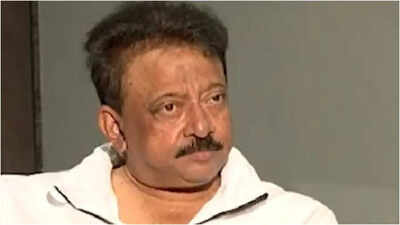
Ram Gopal Varma revisits the 1990s, when Mumbai’s underworld controlled Bollywood through fear, extortion, and casting pressure. He explains why Rakesh Roshan and Gulshan Kumar were targeted, links it to real attacks and killings, and reveals how gangsters used cinema to boost their image while stars were summoned to Dubai at their behest.
Filmmaker Ram Gopal Varma has gone back to one of Bollywood’s toughest times: the 1990s, when the Hindi film world was controlled by Mumbai’s gangsters. This was when threats for money, funding from abroad, and pressure on casting came from crime groups run by people like Dawood Ibrahim. Varma explained why big names like Rakesh Roshan and Gulshan Kumar were attacked.
Ram Gopal Varma on how gangsters used fear instead of chaos
During a discussion with crime author Hussain Zaidi on his YouTube channel, Varma clarified that the gangsters didn’t resort to aimless attacks; instead, they employed targeted fear tactics. “When the underworld wants to show its power, how does it do that? By targeting big names—Rakesh Roshan, Salman Khan, Shah Rukh Khan,” he said, noting that these criminals often viewed themselves as heroic, oversized personalities.
Ram Gopal Varma explains control, not just cash
Varma said it wasn’t just about money, it was about being the boss. “To become a ‘hero’, they need to overpower someone bigger. These are big stars, you can’t just get
Hrithik Roshan
’s dates. So they create fear. The idea is: if the star refuses, what will happen to him?”.
He noted the uncertainty about the real culprits behind the threats whether Chhota Shakeel, Dawood Ibrahim’s gang, or someone else. “Many people were not giving in to gangsters’ demands, so they had to set an example—‘Look what happened to him, it can happen to you too.’ There’s a saying in the underworld: ‘Kill one, extort money from ten.
’”
Ram Gopal Varma links the terror to Rakesh Roshan’s shooting
He tied this atmosphere of terror straight to Rakesh Roshan’s shooting in January 2000, just after ‘Kaho Naa… Pyaar Hai’ became a hit.
“They wanted Hrithik Roshan’s dates. The plan was to make a film together, there would be a front name, but Chhota Shakeel would control things from behind. Rakesh Roshan resisted that, and that’s why shots were fired,” Varma claimed.
The January 2000 attack on Rakesh Roshan
On January 21, 2000, gunmen shot at Rakesh Roshan outside his office in what most believe was underworld retaliation. He pulled through. Reflecting on the gangsters’ push for Hrithik’s filming dates, Rakesh shared in a 2025 Bollywood Hungama interview: “I never gave any indication that Hrithik could do a film for them.
I kept putting them off saying Hrithik had no dates, which in any case, was the truth. They then asked me to take dates away from other producers and give it to them.
This again, I refused to do.” He called that period “full of fear.”
Ram Gopal Varma on the motives behind Gulshan Kumar’s killing
On Gulshan Kumar’s murder in August 1997, Varma highlighted a mix of triggers coming together. “At one point, Gulshan Kumar was extremely successful, people were jealous. He was introducing new talent and making money,” he said, explaining how blame often fell on him unfairly.
“If anything went wrong, the first reaction was ‘Gulshan Kumar must have done something.’ That was the mindset. Some people would meet Abu Salem and, out of jealousy, say things about Gulshan Kumar.
Influenced by that, he might have thought that killing him would make him a ‘hero’. I’m not justifying it, but that was one reason.” He cited unpaid extortion threats and Kumar’s defiance too. “He was not someone who would get scared.
A man of his stature wouldn’t be intimidated by a phone call.” Varma also emphasized Abu Salem’s goal to break free from D-Company and build his own name. “He saw this as his ‘film’, his big move. After Gulshan Kumar was killed, Abu Salem became more famous than even Dawood Ibrahim for a while.”
Ram Gopal Varma’s memory of the Gulshan Kumar murder day
Varma remembered the murder day, August 12, 1997, saying, “I was at
Jhamu Sugandh
’s house when he got the call. He was shaken and immediately left for Gulshan Kumar’s home.”
The filmmaker, known for portraying Mumbai’s gangland in movies like Satya, Company, and D, has long pulled inspiration from these true stories.
Ram Gopal Varma on Bollywood’s deep ties to the Mumbai underworld
In the 1990s, Bollywood was caught up with Mumbai gangsters on every level—from shakedown calls to rumored control over casting and money flows. An air of silent fear hung over the industry. D. Sivanandhan, Mumbai’s Joint CP (Crime) from 1998-2001, stated in his 2025 book that movies such as Satya, Company, Daddy, Shootout at Wadala, and Shootout at Lokhandwala aimed to “lift the image of the gangsters and were all funded and financed by them only.
” Snaps from that decade captured Hindi film stars alongside mafia leaders in the Middle East.
D. Sivanandhan on star summonses to Dubai
In his ANI interview, D. Sivanandhan revealed that top stars got ordered to Dubai with no real option to refuse. “Dawood Ibrahim could summon cinema actresses to Dubai and give them rewards and send them back.” He further described how actors headed there to perform at shows demanded by the mafia bosses.