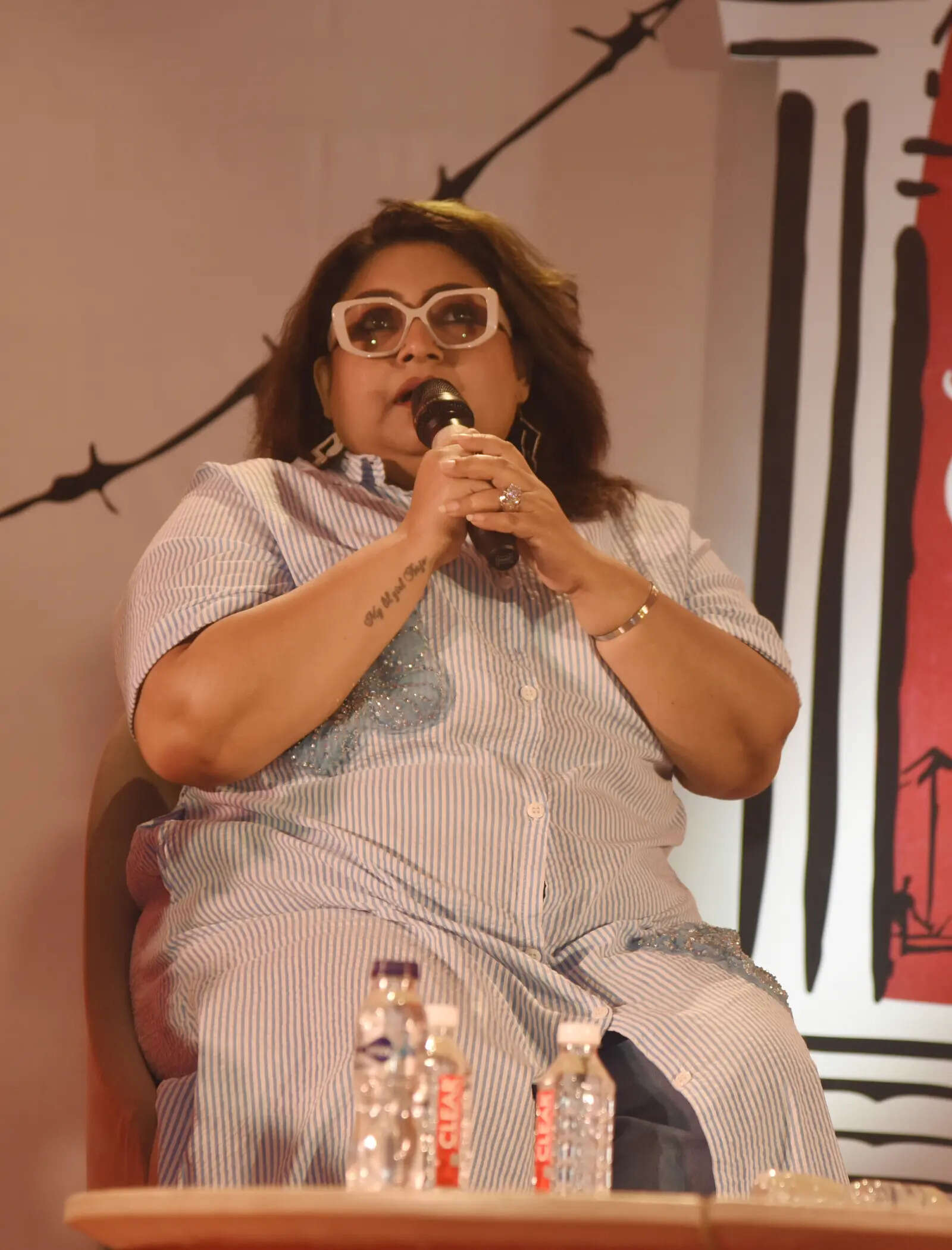
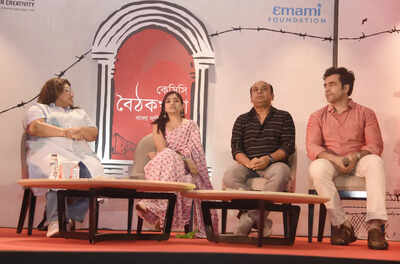
There is a very specific memory many Bengalis share: being told to be home by 10, negotiating that curfew, and sometimes crossing it. At a recent session of Baithakkhana, hosted by the Kolkata Centre for Creativity in collaboration with the Emami Foundation, that memory became the starting point for a deeply personal conversation.
Titled “Seema chhariye jaachhe!”. The discussion brought together , Abir Chatterjee, Isha Saha, Jojo Mukherjee and Anirban Chakrabarti, moderated by Prithvi Basu. What emerged was not just nostalgia, but a layered reflection on discipline, fear, gender, and the ways in which boundaries are negotiated.
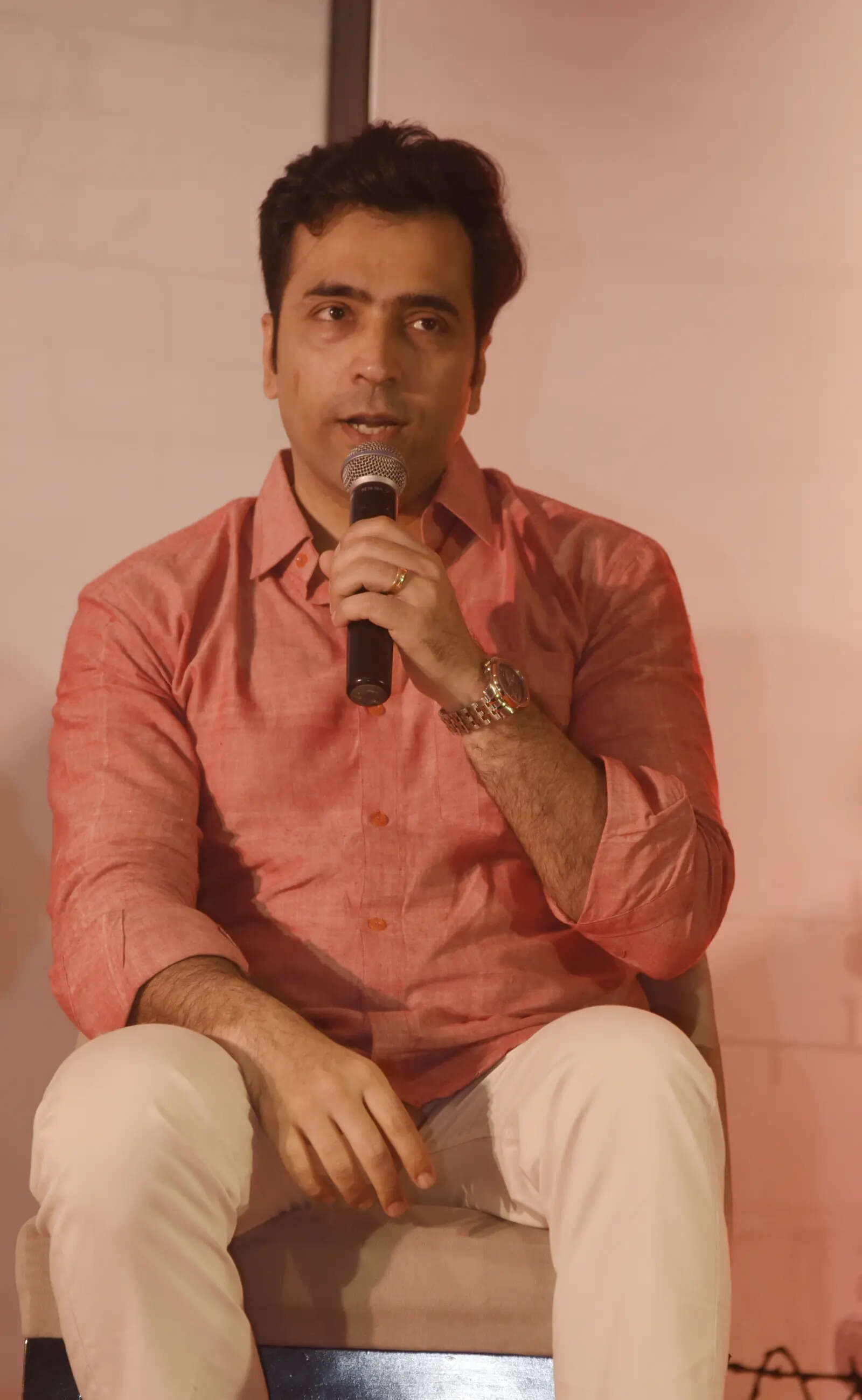
Abir Chatterjee: “There was always a question, how late is too late?”
For Abir Chatterjee, growing up meant navigating “shashon”, a system of discipline that changed shape but never disappeared.
“At first, I could only go out with elders. Then I was allowed during the day. Then evenings, but even then, there was always doubt. How late is too late?” he said. He admitted that fear was central to this system. “I was beaten a lot as a child,” he said, half in jest, recalling how he would even “plan revenge” in his head as a boy.
But his rebellion, he insisted, was quiet. “I never ran away from school. But I did bunk college,” he said, describing how he would spend those hours watching films in North Kolkata theatres- an early pull towards cinema.
He also shared how football opened up a different world. “Through football, I mixed with people from all kinds of backgrounds. Those friendships taught me things that rules never could.” Even experimentation, like smoking, came with peer pressure. “At that age, you feel, if you don’t smoke, where is the heroism?” he said. “But I never carried it forward in real life.”Isha Saha: “I didn’t give anyone the chance to stop me”If Abir spoke of external discipline, Isha Saha spoke of internalised control.
“I grew up in a small town, and I had this idea of being a ‘good girl’,” she said. “So I made my own rules. I would come home before 10, even if no one asked me to.” Fear, for her, was social rather than parental. “Even if something uncomfortable happened, I wouldn’t speak up. I was scared people would judge me, or blame me,” she said. In one moment, she summed up her experience sharply: “It’s not that I was stopped-I didn’t give anyone the chance to stop me.
” Even today, she admitted, that conditioning lingers. “I think I’m still that ‘good girl’ somewhere,” she said.

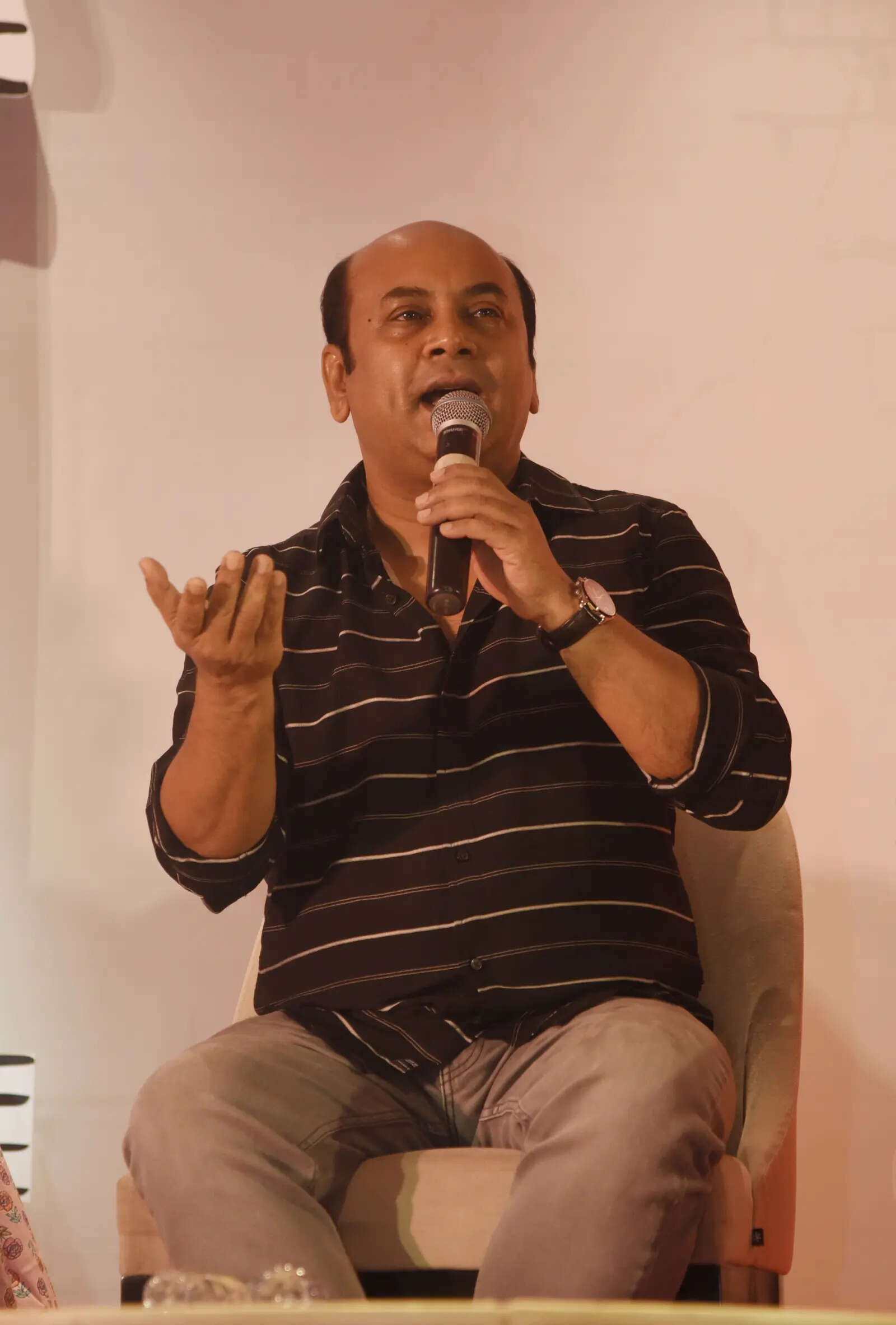
Anirban Chakrabarti: “I didn’t rebel, I just learnt how to use the system”
Anirban Chakrabarti’s memories carried a different tone, less about restriction, more about strategy. “In school, I had this image of being the ‘good boy’,” he said. “And I realised early on that I could use that.” While others were punished, he often escaped scrutiny. “Teachers would ask, ‘Anirban was there?’ and then say, ‘No, he wouldn’t do this,’” he recalled.
Instead of breaking rules, he bent them. His involvement in television allowed him to skip classes under the pretext of rehearsals.
“I would rehearse one day, and bunk the next two,” he admitted. Even his first encounter with smoking ended quickly. “I tried it once in Class 8. It tasted terrible. That was the end of it,” he said. Later, as a teacher, he found himself on the other side of discipline. “I was friendly outside class, but very strict during exams,” he said.
“If I allowed something once, I couldn’t maintain discipline later.”
Jojo Mukherjee: “I didn’t have to break rules, my mother set them for me”
Opening the conversation, Jojo Mukherjee described her upbringing as a contradiction between extreme freedom and extreme control. “I started working very young. There were days when I would be out from 6 in the evening to 6 in the morning,” she said. “But at home, it was almost like military rule. My mother was extremely strict.” Because of this, she said, rebellion never felt like a conscious choice.
“I didn’t have to break limits, my mother had already drawn them so strongly that I lived within them.
” Yet, moments of transgression existed. Recalling a childhood incident during a puja outing in Bagbazar, she said, “My hair got stuck in a ride, it could have been very dangerous. But I didn’t tell my mother. I was more scared of her reaction than the injury.” Her most striking story, however, came later in life, when she chose to marry on her own terms. “I suddenly decided, I’ll get married today,” she said. “I went to his house and told his mother, ‘From today, I’m staying here.’” What followed was a flurry of negotiations, letters to her father, and eventually a wedding arranged within days. “If a Bengali girl doesn’t cross the line, I think I did,” she added.