
Asia’s longest free-flowing river, the Salween, is showing alarming levels of arsenic contamination, more than double WHO safety standards. Unregulated mining in Myanmar’s Shan state, particularly for rare earth minerals and gold, is identified as the primary cause. This pollution threatens the vital lifeline for ethnic communities and biodiversity.
Rivers have sustained civilizations for millennia, carving paths through mountains and valleys, while nurturing ecosystems and communities.But sometimes, these lifelines face growing threats from unchecked human activity, directing pristine waters into silent carriers of danger.One such example is The Salween, which stands out as an undammed, and vital river yet recent discoveries reveal contamination creeping into its flow.
Asia’s longest free flowing river might be under threat
The Salween River, stretching 3,300 kilometers from Tibet’s snowmelt through China, Myanmar, and briefly Thailand’s border before reaching the Andaman Sea, is Asia’s longest undammed waterway. According to Mongabay, an environmental and conservation platform, it serves as a lifeline for ethnic communities like the Karen and a biodiversity hotspot teeming with life.
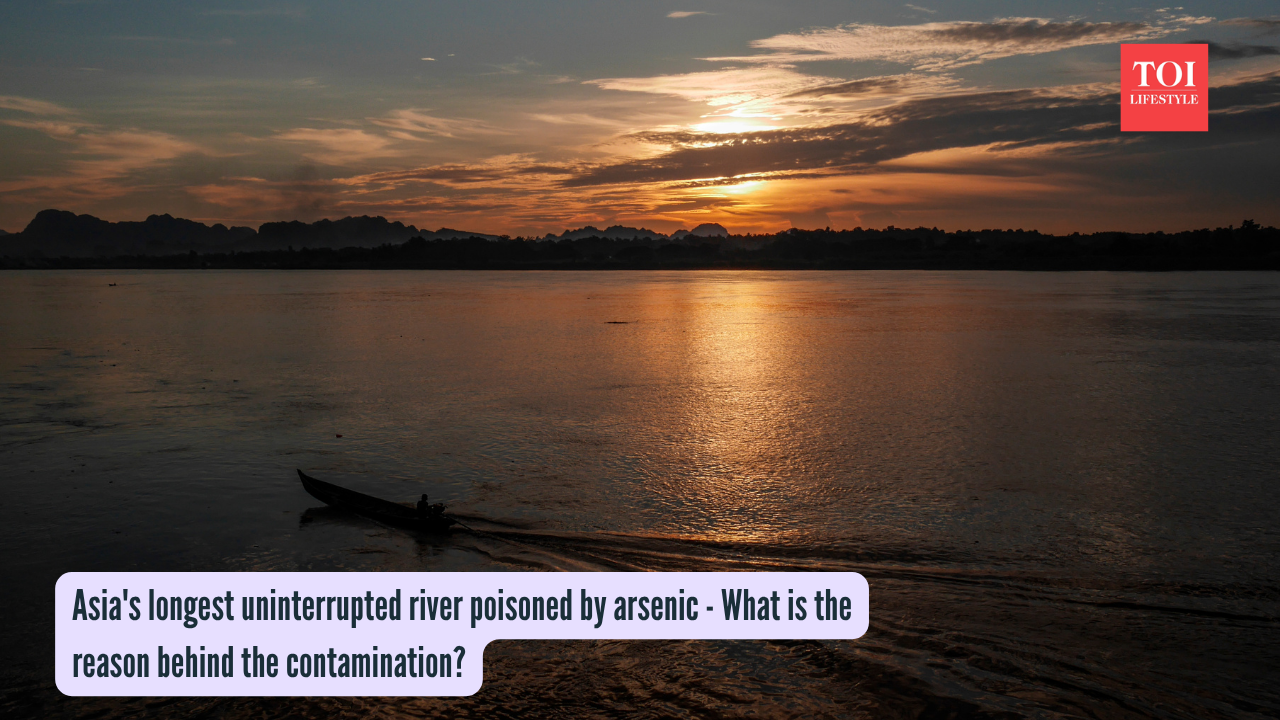
Salween river
Alarming Arsenic content found in the river
Independent tests starting September 2025 by Thailand’s Institute of Health Sciences Research at Chiang Mai University, detected toxic levels in the Salween after similar issues in nearby Kok, Sai, and Ruak rivers.Mongabay reports arsenic levels hit every monitoring point at more than double WHO safety standards of 0.01 mg/L, with some spots five times higher. The Karenni state’s Interim Executive Council warned on February 25 that mainstem levels reached 0.096 mg/L, surging to 0.554 mg/L in Molo Creek tributary.
Why have the Arsenic levels increased?
Unregulated mines in Myanmar, especially Shan state, are prime suspects. The US-based Stimson Center identified 127 suspected sites in the Salween basin between 2016 and 2026 using satellite imagery, including 28 new ones since 2023 – five of which use in situ leaching for rare earth extraction.These operations extract minerals for AI, phones, EVs, and renewables, along with secretive Gold mining controlled by groups like the United Wa State Army, Myanmar National Democratic Alliance Army, and military factions.
Calls for action
Local fishers and communities are on high alert, avoiding river contact. A Thai working group was also formed to tackle Salween contamination, but messaging remains vague. The Mekong River Commission flagged similar arsenic and mercury from Shan state mines polluting downstream waters.Reuters warns, toxic mines threaten Southeast Asia’s rivers and people broadly. Protecting the Salween demands urgent regional cooperation before irreversible harm sets in.