
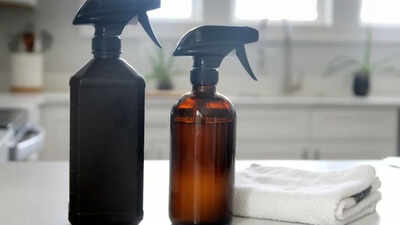
(Photo Credit: Shutterstock)
In many homes, simple kitchen staples are now being seen in a new light. Such items as Hydrogen peroxide and Vinegar are now gaining popularity and being recommended as an intelligent choice over chemicals when properly used.Properties of each ingredientWhite distilled vinegar has a little content of acetic acid in it, which allows for dissolving such items as mineral deposits, soap scum, and dirt on glass, tile, sink, etc. In other words, this property of vinegar allows for dissolving dirt that regular tap water will not be able to get off.Hydrogen peroxide has totally different properties. This substance is used as an oxidizer as it releases oxygen. As a result, hydrogen peroxide can be used to destroy bacteria, fungi, and viruses.Additional evidence is provided by a research article published in JCM Images Case Reports in 2024, with A Jafarian as lead author, which observes that the effectiveness of natural disinfectants is increased when used in combination, rather than individually.How to use them correctlyVinegar and hydrogen peroxide should never be mixed in the same container since it produces peracetic acid, which is potentially hazardous, irritating to the skin, eyes, and respiratory tract.
The appropriate procedure is as follows:First, vinegar is used to clean and sanitize the area. Following this, hydrogen peroxide is applied to the area to kill germs.Where this method can be appliedThis cleaning strategy is highly effective for surfaces that are not porous, such as bathroom tile, countertops, glass and stainless steel. This approach may prove useful in places where frequent cleaning is necessary or areas prone to germs and mold.Due to its economic cost, availability, environmental friendliness, and ability to decompose into water and oxygen without residue, many families have adopted this method.
Balanced outlookEven though the benefits sound great, specialists believe that this technique should be utilized only for regular cleaning purposes and not for those that need sanitation. The majority of researches take place in artificial conditions, not actual homes. Health institutions still advocate for certified disinfecting agents in case of high-risks zones, where proven results are needed.Simple yet efficient solutionThe use of the two mentioned components can be called simple but effective. It is a clear demonstration that the things around us can be efficient if used appropriately.