
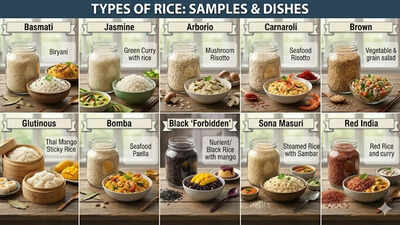
Rice is the most commonly used ingredient worldwide, and it provides more than half of the total calories consumed by people globally, primarily in Asia. From a nutritional standpoint, rice is a low-fat food containing high amounts of complex carbohydrates, vitamins, and minerals.Rice plants are grown in tropical and subtropical regions, and various types or strains of rice have distinct physical properties according to their area of origin, climatic conditions, and traditional processing techniques. It is imperative to know the classification of these strains because each one requires a different preparation method.
From basmati to black rice: How to cook 10 types of rice the right way
Basmati rice
Basmati rice is a premium long grain known for its distinct aroma and slender grains that expand significantly when cooked.
It is grown primarily in India and Pakistan, and it is aged to enhance flavour and texture. When basmati is prepared correctly, it remains light, separated, and long. This variety is used widely in biryani and pulao, where the rice must absorb the spices without becoming sticky. Cooking basmati requires careful rinsing and controlled water ratios to maintain its structure. It is also commonly paired with grilled meats, curries, and lentils, where its subtle flavour complements rather than overpowers other ingredients.
Jasmine rice
Jasmine rice is a long-grain rice variety from Thailand that becomes soft and sticky when cooked. In contrast to basmati, it has a somewhat sticky texture, allowing it to adhere well to sauces. It is therefore ideal for Thai curries and stir-fry from Southeast Asian cuisine. The grains are short and plump and adhere to one another slightly without being too sticky when cooked. Because jasmine rice takes in a lot of flavour, it is a good base for many highly seasoned foods.
It is usually cooked with little washing to keep starch contained. Due to its fragrant aroma and tender texture, it is used in everyday cooking in Southeast Asia.
Arborio rice
Arborio is a variety of short-grain rice that is often used to prepare various dishes in Italy. It contains a lot of starch and produces more starch compared to other varieties of rice. It keeps some degree of crunchiness in the centre while remaining tender and creamy on the outside, thanks to its cooking method involving slow heating and constant stirring to allow gradual absorption of liquid.Arborio should not become light and separated; otherwise, it would lose its binding properties. The taste of Arborio pairs well with cheese, mushrooms, and seafood.
Carnaroli rice
Carnaroli rice is commonly called the “king” of Italian rices for its great qualities as a cooking rice. Compared to its cousin, Arborio (another type of Italian rice), Carnaroli has more starch content overall and therefore retains its shape better than Arborio. Carnaroli’s ability to hold together during cooking makes it the perfect rice choice for larger food items, as well as being used in higher-end cuisines. Chefs can create risottos that have a rich taste and full structure with every individual grain intact during the cooking process.
Brown rice
Brown rice is a whole grain, as it has the bran and germ remaining after it is milled. The fact that brown rice has the bran and germ gives brown rice its nutty flavour and chewy texture. Brown rice has undergone very little processing, which allows it to keep a significant amount of nutritional content, such as fibre, vitamins, and minerals. Due to the presence of the bran layer, cooking time will take longer than with white rice. Brown rice goes well with a variety of foods, especially vegetables, legumes, or lean protein; it works well in both simple and complicated recipes because of its earthy flavour.
Glutinous rice (sticky rice)
People refer to glutinous rice as “sticky rice”, which tends to clump up because it is high in starch when it is cooked. The term “glutinous” suggests that this type of rice has gluten in it; however, there is no gluten present in sticky rice. Sticky rice (glutinous rice) is most commonly used in Asian-inspired dishes throughout East and Southeast Asia, where the rice must remain intact. Sticky rice is usually steamed, rather than boiled, in a manner that adds to the texture of the finished dish. Sticky rice can be used in both savoury dishes (such as dumplings) and sweet dishes (such as sweet rice cakes). Sticky rice has the unique property of binding together and can, therefore, be moulded or shaped easily.
Bomba rice
Bomba rice is a short-grain Spanish variety of rice that absorbs large amounts of liquid without breaking down, has an extraordinary ability to do so. Bomba rice can absorb up to three times its volume of broth while still retaining its structure, and will maintain its shape after cooking. As a result, this variety of rice is the best choice for cooking paella, where the rice takes on the rich flavour from the “sofrito” without becoming mushy. The grains of Bomba rice remain firm and separate, yet infused with the cooking liquid. To achieve uniform absorption of Bomba rice grains, careful cooking is required.
Black rice (forbidden rice)
Originally known as forbidden rice due to its distinct dark purple/black colouring of the grain, black rice is very nutrient-dense with antioxidants called anthocyanins. When cooked, the grains of black rice become a very dark purple colour with a mild sweetness and are slightly nutty in taste. Black rice can be used in both sweet and savoury dishes, from salads and puddings to side dishes. Historically, it was eaten only by those of royal heritage (kings/queens) in certain areas of the world, which led to it being known as forbidden rice. Today, it continues to be consumed because of its superior flavours and highly nutritious content.
Sona Masuri rice
Sona Masuri rice (medium grain) is commonly consumed in South India, particularly for cooking rice dishes at home. This delicious rice has a light texture and is mildly aromatic, which allows you to use Sona Masuri rice in many dishes, such as Pongal (dosa), curried rice (curd rice), and simply steamed rice with vegetable side dishes or other strong flavours such as sambar and chutneys. Sona Masuri rice is very simple to digest and cooks quickly, making it an ideal food to eat on a daily basis.
The texture of Sona Masuri rice allows it to be used in various cooking styles.
Red rice
Red rice is a whole-grain rice that retains the bran layer of the rice, giving it a reddish hue with a slight nutty flavour. In addition to being very nutritious and high in fibre, red rice is a traditional grain found in many traditional diets today. Compared to white rice, red rice has firm grains and takes longer to cook. Red rice is commonly used in many regional dishes in both India and Sri Lanka, typically paired with coconut-based curries or simple side dish type preparations. The firm and nutty taste and texture of red rice distinguish it from other rice grains. In addition to its unique taste, red rice has many nutritional benefits.


