
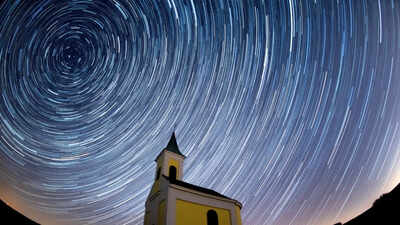
It’s April again, and as it turns out, the universe is ready with a bit of cosmic theater!The Lyrid meteor shower, one of the oldest sky shows around, is about to light up the heavens once again.
People have watched these meteors, the “shooting stars,” streak across the night sky for almost 2,700 years, which is a seriously long tradition.
In 2026, they’re set to put on a good show across the United Kingdom and the rest of the Northern Hemisphere.If you love catching shooting stars, you’ll want to step outside and take a look. With a bit of luck and some clear skies, this year’s display could be a real treat.
Lyrid meteor shower: What is it?
Per Space, the Lyrids are one of the oldest recorded meteor showers in human history, with sightings dating back nearly 2,700 years.
They occur when Earth passes through a stream of debris left behind by Comet C/1861 G1 (Thatcher), a long-period comet that orbits the Sun roughly every 415 years.How does this meteor shower come to be?Turns out, each April, Earth passes through leftovers from Comet Thatcher. These bits of debris hit our atmosphere at ridiculous speeds, burning up and creating those classic streaks of light everyone calls shooting stars.
The shower gets its name because the meteors seem to pop out of the constellation Lyra. However, they can dash across any part of the sky, so you don’t need to hunt down Lyra to see them.
When is the Lyrid meteor shower in 2026?
The Lyrids usually glide by from around April 16 to April 25. In 2026, they’ll reach their peak on the night of April 21 into the early hours of April 22. That’s when your chances of spotting shooting stars are highest. If you find yourself under a truly dark sky, you might catch about 10 to 20 meteors every hour.
Sometimes, if you get really lucky, there are sudden bursts, maybe up to 100 meteors in an hour, though that’s a rare treat.And because timing is everything, aim for the hours after midnight, especially as you get closer to dawn. Peak visibility comes around 2 am onwards, when the radiant is higher in the sky.In the UK, midnight through the early morning is your best bet. Good news for this year: the Moon will be a thin crescent and set early, so you’ll have deeper darkness for spotting meteors.Lyrids meteor shower: Where can you see it?You can see the Lyrids pretty much anywhere in the Northern Hemisphere, including the UK, Europe, North America, and lots of Asia.In the UK, look east after midnight. The farther you get from city lights, the better, so find a countryside spot or a local dark-sky park if you can. Light pollution is the real enemy here.In India and the rest of South Asia, aim for time before dawn, again as far from artificial lights as possible.
If you’re south of the equator, you’ll see fewer meteors, but you still might catch a few lucky streaks.
Lyrids meteor shower: How to watch?
The best part of aiming to watch the Lyrids? You don’t need any fancy gear. No telescopes or binoculars; it’s just your eyes.Here’s how to get the most out of the shower: pick a dark spot, settle in away from streetlights, and let your eyes get used to the dark for about half an hour. Resist checking your phone (the light will ruin your night vision).
You’ll see more if you lie back and take in as much of the sky as possible. And don’t get impatient, as meteors turn up in bursts and lulls, not a constant parade.For an even better shot at dramatic meteors, look about 40 degrees from the radiant near the bright star Vega. That’s where longer, more impressive trains often appear. Moreover, Lyrids are unpredictable; just when you think it’s a quiet year, they can surprise you with a sudden burst of activity.
Lyrid Meteor Shower 2026 : FAQs to keep in mind
Q1. What is the best time to watch the Lyrid meteor shower?After midnight until dawn, when the radiant point is highest, and the sky is darkest.Q2. How many meteors can I see per hour?On average, expect 10–20 meteors per hour. However, rare bursts can produce more.Q3. Do I need a telescope or binoculars?No. The Lyrids are best viewed with the naked eye. In fact, optical devices limit your field of vision.Q4. Where should I look in the sky?Towards the constellation Lyra, near the bright star Vega, but focus slightly away from it for better meteor trails.Q5. What should I bring for viewing?Warm clothing, a blanket or reclining chair, and a bucket full of patience!