
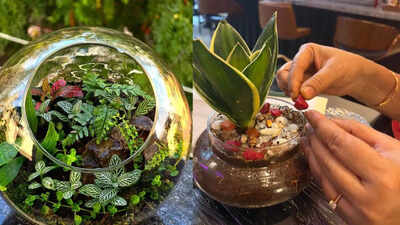
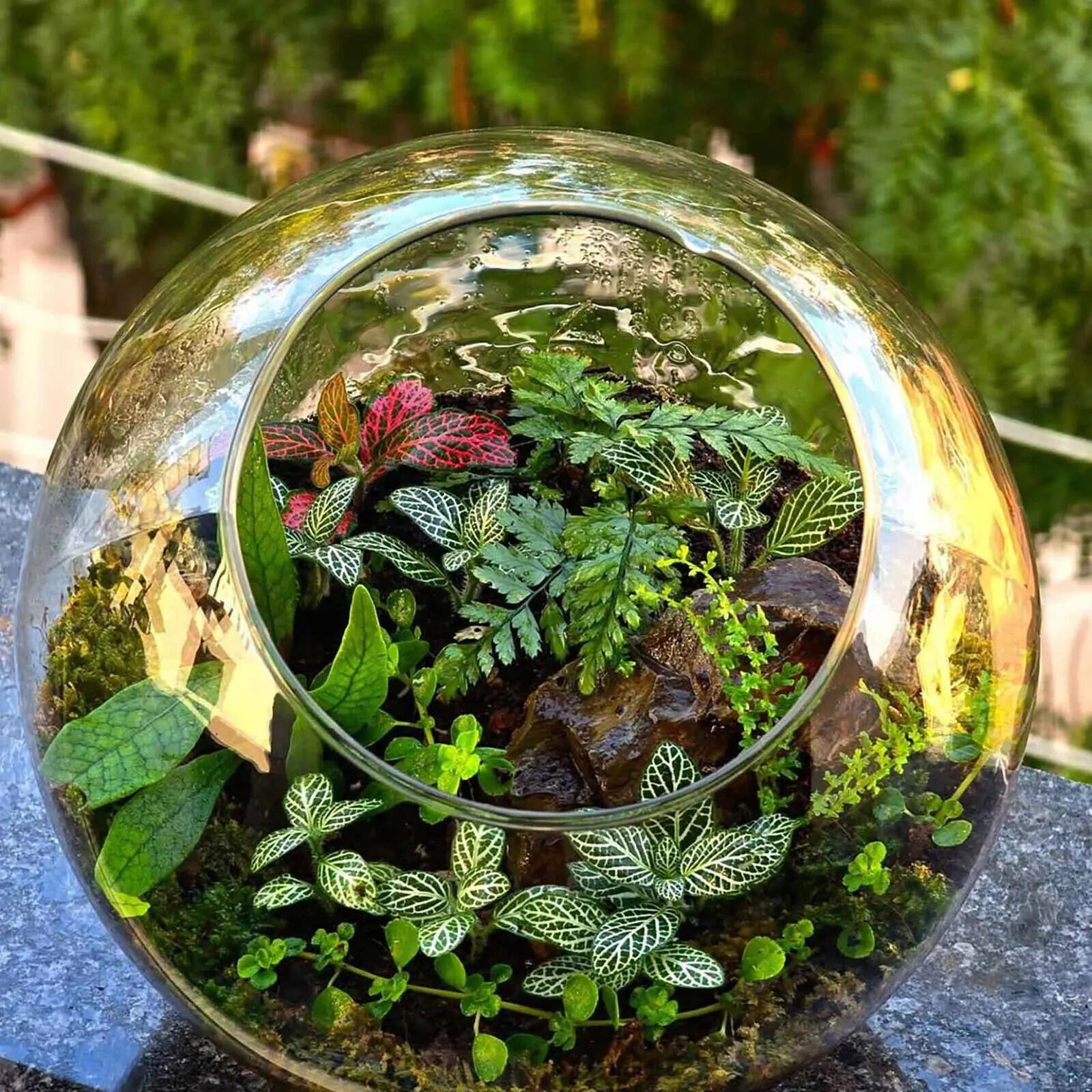
The traditional garden is being downsized to fit the desks and windowsills of Hyderabad’s IT corridors. Known as terrariums, these glass-enclosed environments use a biological cycle where plants thrive on recycled moisture and oxygen.
The concept originates from 19th-century “Wardian Cases,” which were designed to shield exotic plants from harsh maritime climates and pollution. This self-sustaining nature makes them suited for the city’s apartment living and air-conditioned offices. Consequently, the act of assembling and curating these landscapes is gaining traction as a tactile hobby for urban dwellers.
Credits: @terrariumtales
‘There’s something calming about building your own terrarium’Srinath Gunti, who organises terrarium workshops in the city, says, “A terrarium is a small, self-sustaining ecosystem with minimal maintenance.” She notes that people are often drawn in by how real and alive the setups look. “Today, people lead busy lives and no longer have gardens, so this becomes a compact way to stay connected with nature.” For Sai Krishna, who assembled a terrarium at a workshop, the experience became deeply personal.
“It is truly fascinating to see a self-sustaining ecosystem thrive in such a small space,” he says, adding that working with plants helped him find calm during a stressful phase.
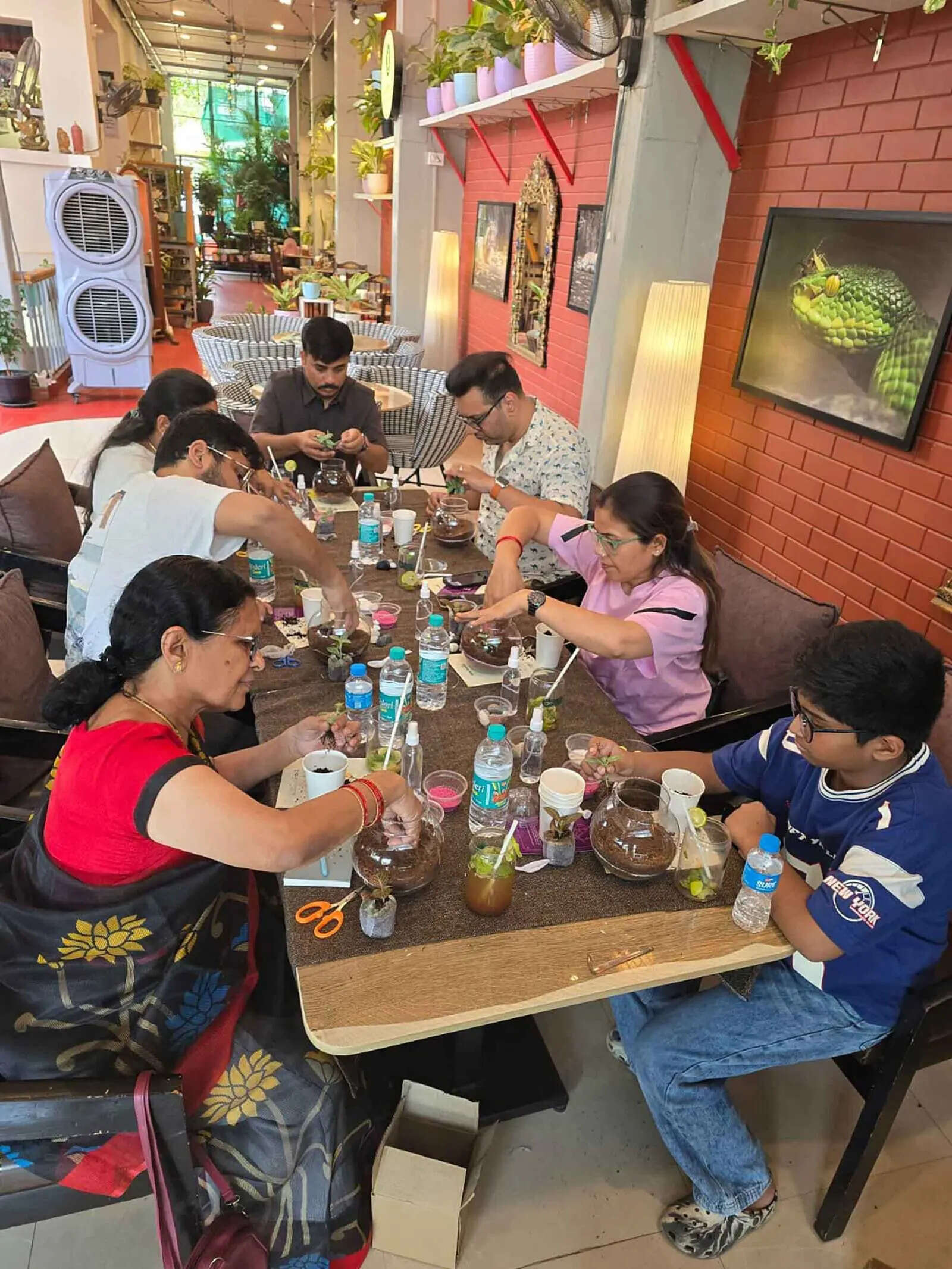
For many, building a terrarium offers a break from fast-paced routinesCredit: @terrariumtales
People no longer have gardens like before, so terrariums offer a compact way to stay connected with nature
Srinath Gunti, terrarium workshop organiser
‘Themed terrariums are gaining popularity’“From natural builds to themed setups, terrariums come in varied styles,” says Dhana Lakshmi Balasubramani, regional manager of an events company. “There are different styles of terrariums gaining popularity, including DIY, beach and fountain-themed setups, each defined by the materials and elements used.
While natural terrariums focus on soil and plants, themed versions include coloured sand, clay and handcrafted elements to create imaginative miniature setups.
Among these, beach terrariums have seen the biggest response in Hyderabad because people enjoy personalising them with tiny figures and designs of their choice,” she adds.

Nishanthi Basavaraju
Working on a terrarium felt like creating a small world from scratch. It was a form of therapy that felt relaxing and rewarding, where the process mattered as much as the outcomeNishanthi Basavaraju, IT professional
‘People walk in curious, and discover a new hobby’“Even though terrariums have been around for decades, awareness in the city is still growing,” says Arun Kumar Singari, a hobbyist.
“Many people initially walk in out of curiosity or for a fun weekend activity, but once they experience the process of building a miniature ecosystem themselves, they become far more interested in it..” That growing curiosity is now reflecting in workshop participation across the city.
“When I started, we had around nine to 10 participants. Now, I see 20 to 30 people per session,” says Shivani Mallika Talari, who organises terrarium workshops in the city. “There is no fixed age group — children as young as seven take part. It’s easy to start, but maintaining a terrarium requires some understanding.”Terrarium tips you need
- Use cocopeat and charcoal for proper drainage instead of regular soil
- Avoid succulents; opt for indoor plants suited for humidity
- Don’t overcrowd; allow enough space for plants to grow
- Keep your terrarium in indirect sunlight or under soft artificial light
- Avoid overwatering; mist lightly only when the soil looks dry
- Clean the glass and remove yellow or decaying leaves regularly
- Observe regularly and be patient as it develops