
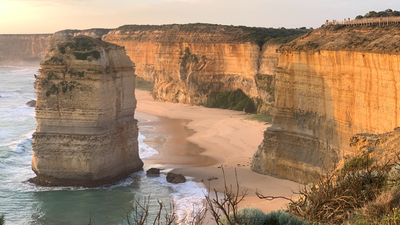
NEW DELHI: A landmark geological study has, for the first time, pieced together how Australia’s iconic Twelve Apostles were formed, revealing that tectonic plate movements over millions of years lifted and tilted the limestone stacks out of the sea, before erosion sculpted them into their present form.Researchers at the University of Melbourne say the formations, long thought to be shaped largely by coastal erosion alone, are in fact the result of a complex interplay between deep-earth forces and surface processes. The findings, published in the Australian Journal of Earth Sciences, also revise the age of the rock layers, suggesting they are younger than previously estimated.

Lead researcher Stephen Gallagher said shifting tectonic plates gradually pushed the limestone structures upward over millions of years, while also tilting and fracturing them.
“If you look closely at the cliffs today, the layers are not flat but slightly tilted, with small fault lines that record ancient earthquakes,” he said.The study likens the Apostles to an environmental archive, with each sedimentary layer preserving evidence of past climates, sea levels, and biological activity. Scientists identified microscopic fossils within the rock that helped narrow down the age of the formations to between 8.6 million and 14 million years, refining earlier estimates of 7 to 15 million years.
A particularly significant period captured in the layers dates back about 13.8 million years, when global temperatures were considerably warmer than today. Researchers say this record could help scientists better understand long-term climate patterns and anticipate future shifts.
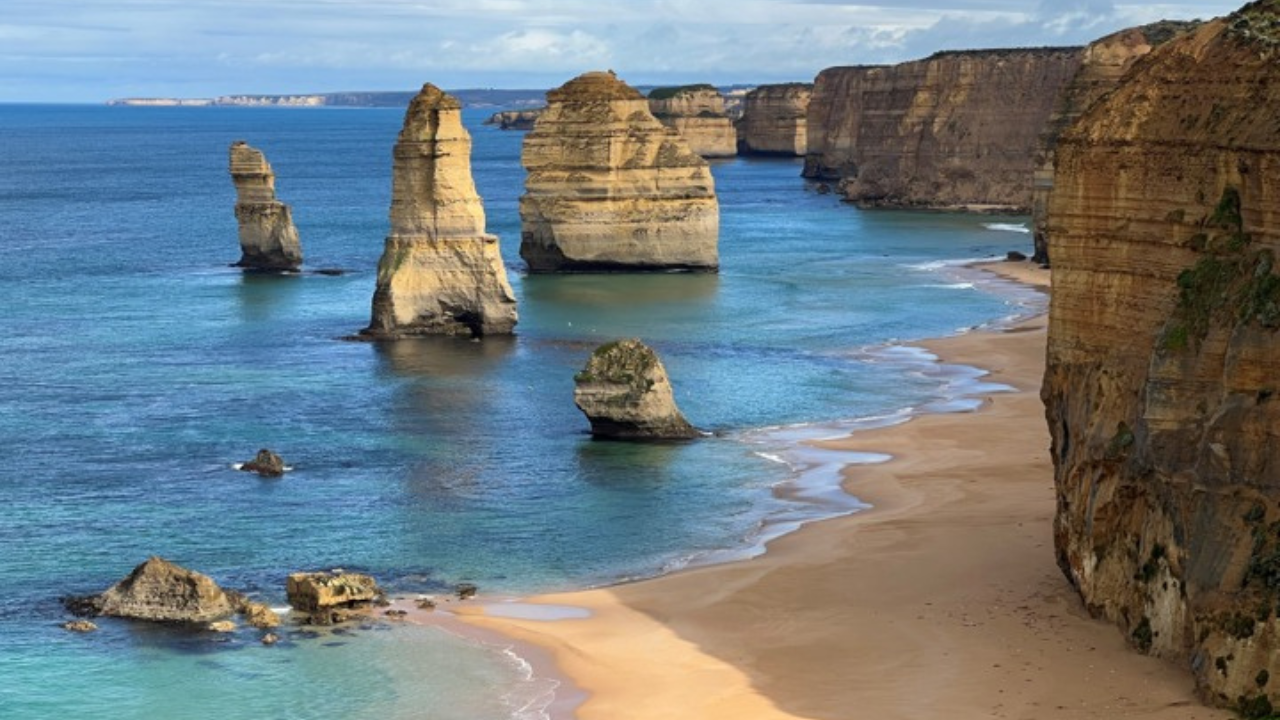
Twelve Apostles in Victoria, Australia (Image credit: Mark Cuthell)
While tectonic forces laid the foundation, the dramatic rock pillars visible today are relatively recent in geological terms.
According to the study, it was only after the last Ice Age, within the past few thousand years, that rising sea levels and coastal erosion carved out the freestanding stacks from the surrounding cliffs.Today, only eight of the original twelve limestone pillars remain, with ongoing erosion continuing to reshape the coastline. Researchers say studying these formations is increasingly urgent, as they provide rare insights into how ancient geological and climatic processes influence present-day coastal change.The team is now examining individual rock layers in greater detail to reconstruct historical ocean conditions and sea-level variations, hoping to draw clearer links between Earth’s past and its rapidly changing future.