
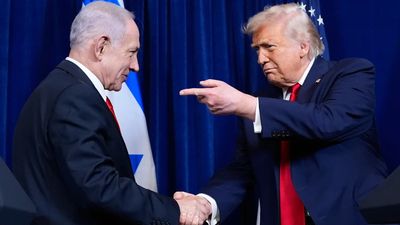
It is April 2026, and the Middle East feels like it is holding its breath. At the centre of the tension are three countries, the United States, Israel, and Iran, locked in a conflict that is now nearing the two-month mark.
What began as coordinated strikes by Washington and Jerusalem onto Tehran has rapidly escalated into something far more complex. Drones continue to hit targets, missiles cross borders, and the language from all sides has only grown sharper.For decades, the relationship between the United States and Israel has been described as “extraordinary,” steady, reliable, and deeply aligned. But as this conflict stretches on, a key question is beginning to surface more clearly: are these two allies still fully in sync, or are cracks beginning to show beneath the surface?At first glance, the leadership of Donald Trump and Benjamin Netanyahu appears aligned. Both have backed military action targeting Iran’s missile systems, nuclear facilities, naval assets, and weapons production networks.
In the early phase of the conflict, their goals seemed to overlap, weaken Iran’s capabilities and reduce its threat in the region.However, the alignment becomes less clear when looking beyond immediate military targets. The bigger question is not what happens during the strikes, but what comes after. This is where Washington and Jerusalem begin to diverge.
How are the US and Israel fighting different wars on the same battlefield?
Trump’s approach appears focused on pressure leading to negotiation.
The idea is to weaken Iran enough to bring it to the table and secure a deal. Netanyahu, on the other hand, seems to be aiming for something far more ambitious. His focus is not just on containing Iran, but on fundamentally reshaping it, weakening its regional influence and even creating conditions for regime change.
Domestic pressures are also shaping Washington’s stance. With midterm elections approaching in the United States, there is limited public appetite for a prolonged war.
Many Americans remain wary of another long and uncertain conflict in the Middle East. This has led analysts to believe that Trump may prefer a shorter, more controlled strategy, one that delivers results without dragging the US into a deeper military commitment.This raises a critical question: are the US and Israel working toward the same outcome, or are they simply sharing the same battlefield for now?
A visible gap begins to emerge
In recent weeks, the differences between the two countries have become more visible.
What once appeared as a coordinated strategy is now revealing underlying tensions.One clear example is the US-backed ceasefire effort with Iran. Washington agreed to a pause in fighting to calm tensions and create space for negotiations. For the US, this was a strategic move to prevent further escalation and stabilise the region. Israel, however, viewed the pause differently.This contrast became particularly evident during US-Iran talks held in Islamabad on April 12–13.
While American officials were focused on maintaining diplomatic momentum, Israeli strikes in Lebanon continued. That moment highlighted the growing divide, the US trying to slow things down, while Israel remained determined with its military pressure.
I’m honored that President Trump invited me to be the first foreign leader to visit the White House in your second term. This is a testament to your friendship and support for the Jewish state and the Jewish people…I’ve said this before, and I’ll say it again—you are the greatest friend Israel has ever had in the White House. That’s why the people of Israel have such enormous respect for you.
Israeli Prime Minister Benjamin Netanyahu
At its core, this difference reflects two very different ways of viewing the conflict. The United States is balancing global interests: diplomacy, economic stability, and alliance management.
Israel, meanwhile, sees an immediate and direct threat that cannot be delayed or softened.Leadership styles also play a role. In Washington, decisions are shaped by multiple layers, public messaging, backchannel negotiations, economic concerns, and domestic politics. In Israel, Netanyahu faces a more direct set of pressures: national security threats, political survival, and expectations from both allies and the public.Both leaders are under pressure, but the nature of that pressure is very different. And in a crisis like this, those differences matter.
The turning point: Summer 2025
To understand why the current tensions feel deeper, it is important to look back at events from 2025.The so-called “12-Day War” in June 2025 marked a key turning point. During that period, Israel launched preemptive strikes on Iranian missile and nuclear-linked sites in Isfahan and Natanz.
The region was pushed to the edge of a wider war.
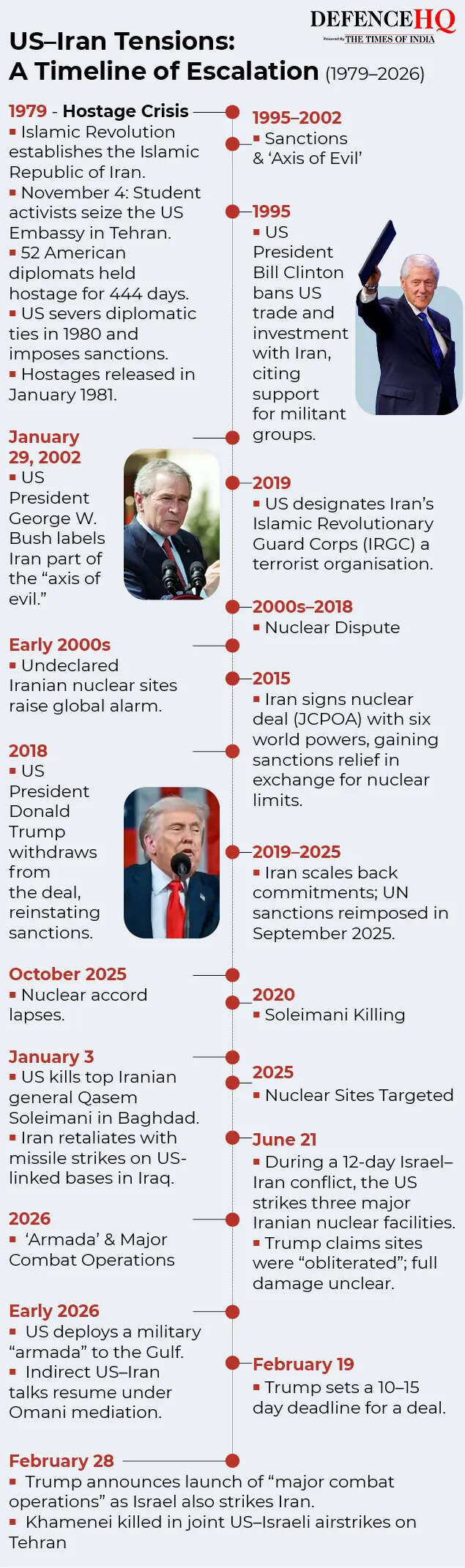
At a critical moment, Trump took an unusual step. Instead of relying solely on traditional diplomatic channels, he publicly urged Israel to halt its operations through his social media platform. On June 17, he warned against further escalation, citing instability in global markets and the risk of a broader conflict.For Israel, this intervention came at a difficult time. Its leadership believed it was close to delivering a significant blow to Iran’s nuclear capabilities.
Being asked to stop, not for military reasons, but for economic and geopolitical considerations, created frustration.That episode left a lasting impact. It signalled that US priorities, especially economic stability and global risk management, could override Israel’s immediate security calculations. The seeds of today’s friction were planted there.
April 2026: The “dual blockade” crisis
Fast forward to the present, and the region is now facing what analysts describe as a “dual blockade” situation.
Global shipping routes, especially around the Strait of Hormuz, are under severe pressure.Two overlapping ceasefires are currently shaping the situation. The first is a 10-day humanitarian pause in Lebanon that began on April 16. While officially in place, Israel has continued to carry out strikes under the justification of targeting “imminent threats,” leading to near-daily clashes.The second is a 21-day extension of a US-Iran understanding announced on April 23.
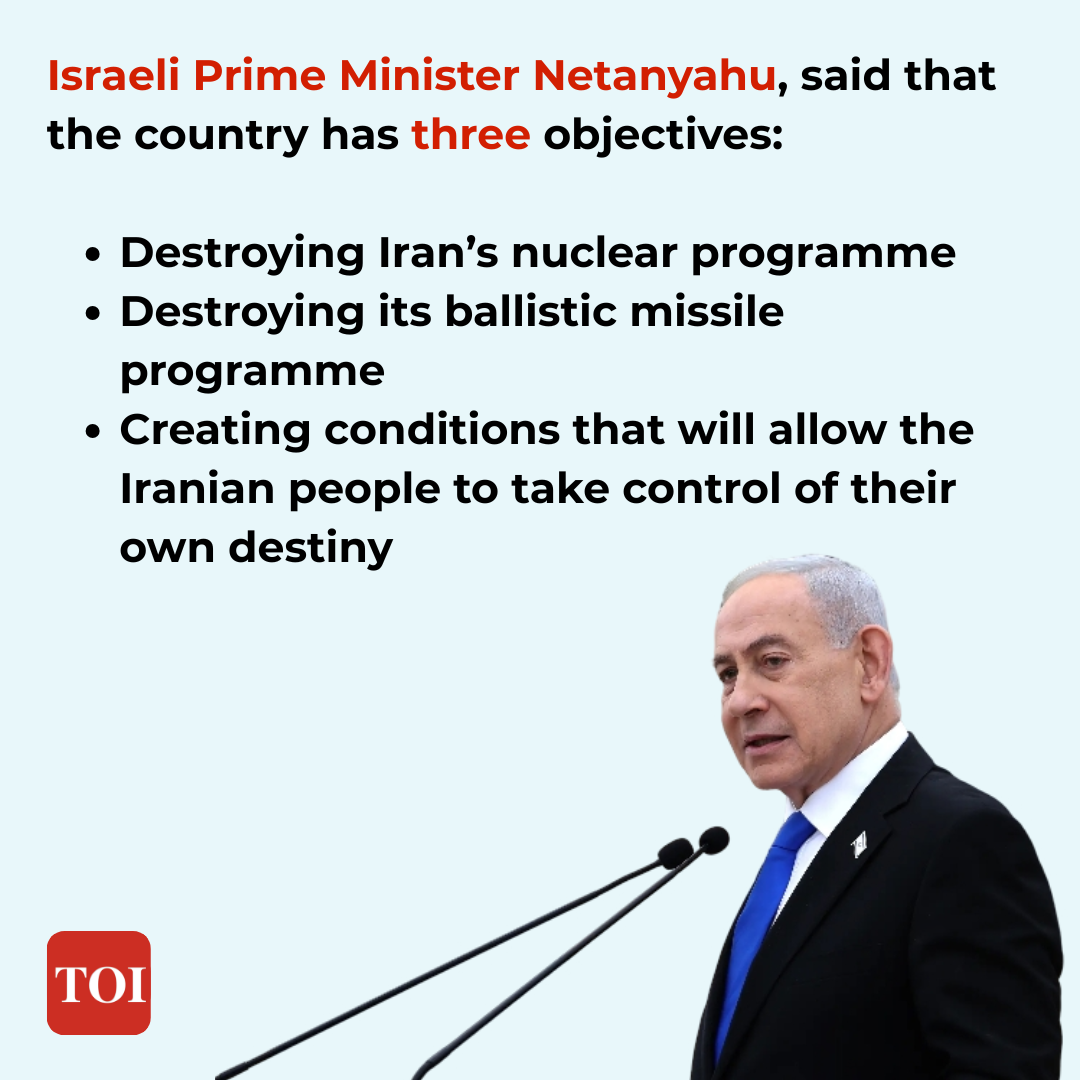
This arrangement was designed to ease tensions and potentially reopen the Strait of Hormuz.However, these parallel efforts reveal a deeper issue. Washington and Jerusalem are not aligned on what these pauses are meant to achieve.Netanyahu has clearly outlined Israel’s objectives: dismantling Iran’s nuclear programme, destroying its ballistic missile capabilities, and creating conditions that could allow political change within Iran.
Trump, meanwhile, has focused more on military strength and deterrence, highlighting the US naval presence in the region, including multiple aircraft carriers.
The difference is subtle but important. One side is aiming for transformation, the other for containment.
A rapid escalation:
The current crisis did not build slowly. It escalated quickly, with events unfolding over just a few weeks.The turning point came on February 28, when the US and Israel launched major strikes across Iran.
These attacks targeted key government and military sites in Tehran and reportedly killed Iran’s Supreme Leader, Ali Khamenei, along with several senior officials. A mistaken strike on a school also resulted in civilian casualties, intensifying global outrage.Iran responded swiftly, launching missiles and drones at Israel and US bases in the Gulf. Within days, the conflict expanded. Hezbollah joined the fighting from Lebanon, firing rockets into Israel.
Iran also carried out attacks that killed US soldiers in Kuwait.Soon after, Mojtaba Khamenei was named the new Supreme Leader, signalling continuity in Iran’s leadership despite the losses.The conflict then moved beyond direct military exchanges. Iran began targeting commercial shipping in the Strait of Hormuz, disrupting global oil supplies and shaking international markets. In response, the US and Israel intensified strikes on Iran’s energy and military infrastructure.By mid-March, the situation had become even more volatile. Key Iranian figures were killed, infrastructure was repeatedly targeted, and the war spread across multiple countries, including Qatar and Saudi Arabia.Even as violence continued, there were signs of possible negotiations. Trump hinted at a deal, but fighting did not stop. In early April, Iran shot down a US fighter jet, further escalating tensions.On April 7, Trump announced a two-week ceasefire with Iran, raising hopes for de-escalation.
However, the ceasefire was uneven. Israel continued operations in Lebanon, arguing that the agreement did not apply there. Iran, meanwhile, maintained firm demands regarding its nuclear programme and control over the Strait of Hormuz.Talks held in Islamabad on April 11–12 ultimately failed, as both sides remained divided on key issues. By April 19, tensions rose again when the US seized an Iranian vessel accused of bypassing its naval blockade.In just over a month, the conflict had transformed from targeted strikes into a full-scale regional crisis, affecting multiple countries and global economic stability.
The bottom line: A partnership under pressure
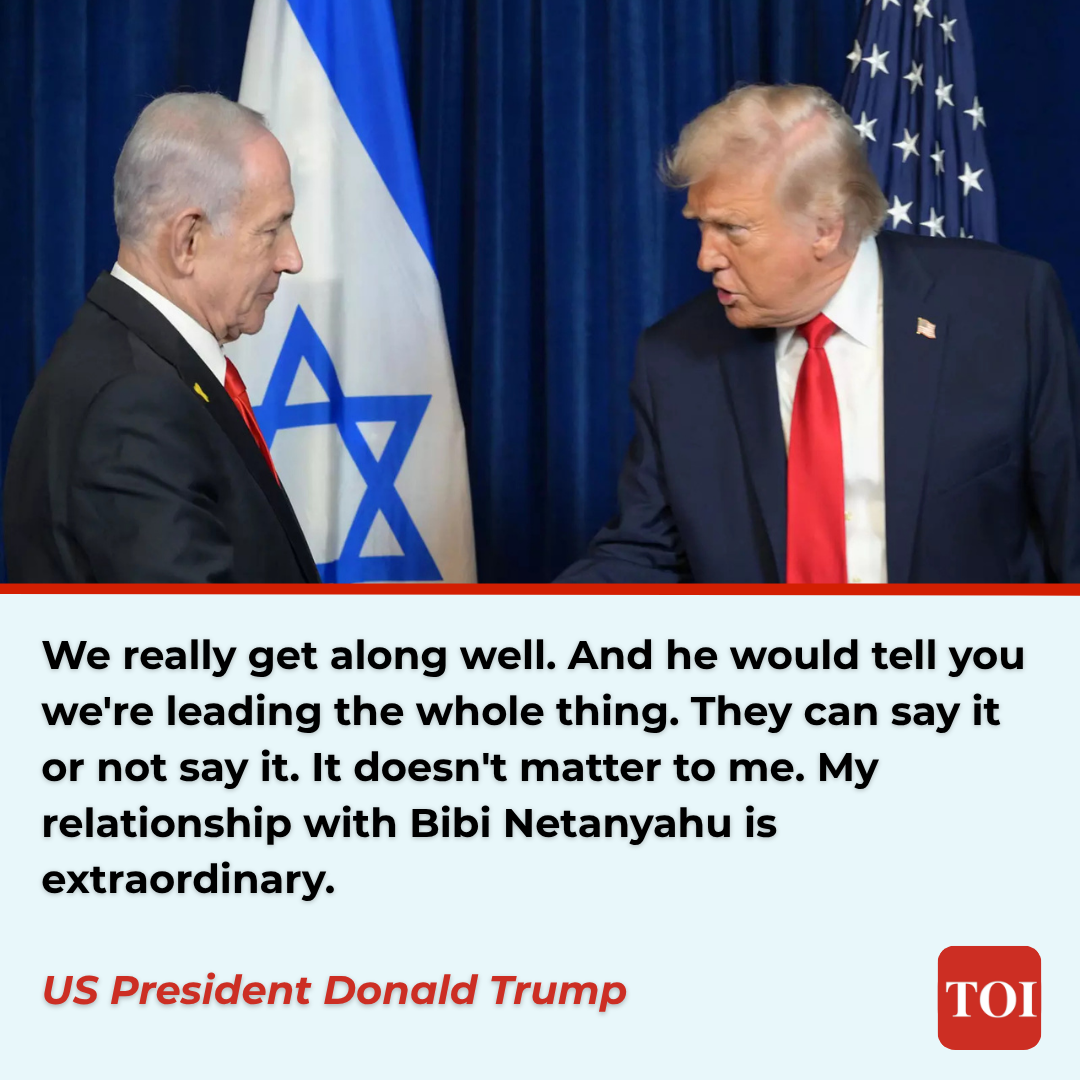
Despite growing speculation about a rift, Trump has publicly dismissed such claims. Speaking to reporters, he called reports of tension “fake news” and described his relationship with Netanyahu as “extraordinary.”
Yet, beneath these statements, the reality appears more complicated.The United States and Israel are fighting the same enemy, but they are not fighting the same war, according to The Jerusalem Post. For Israel, the stakes are existential, tied directly to its security and survival. For the United States, the stakes are broader, involving strategy, economics, and global influence, but not immediate survival.This difference shapes everything, how long each side is willing to fight, how much risk each is willing to take, and what each considers a successful outcome.History shows that alliances rarely break because of external threats. More often, they weaken when partners begin to see the same conflict in different ways. The most dangerous moment in an alliance is not when missiles are being fired. It is when partners quietly begin planning different endgames.As the conflict continues, the question is no longer whether the US and Israel are aligned today. It is whether they can remain aligned tomorrow.