
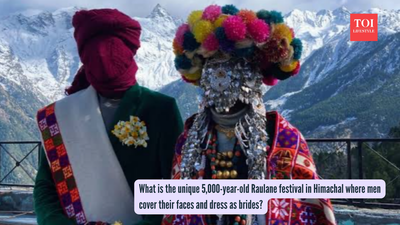
The Raulane Festival in Himachal Pradesh’s Kinnaur valley marks the end of winter and the start of the harvest season with vibrant celebrations. Villagers dress in bridal finery, dancing and singing for days. This ancient tribal festival, traditionally held after Holi, involves rituals to bid farewell to mountain fairies.
India is a diverse cultural land, with hundreds of diverse festivals that range from region to region in the country. One such festival whose photos recently went viral on social media is from Himachal Pradesh.Faces covered in silver and gold jewellery, heads adorned with Styrofoam flowers in vibrant colours, and bodies wrapped in traditional handwoven shawls—the scene in the valley has natives dressed in bridal finery!All for what?The Raulane Festival.
What is the festival all about?
The Rulane is a mythical celebration to mark the end of winter and welcome the harvest season. Villagers residing in the lap of Himachal Pradesh’s Kinnaur valley and surrounding areas come together to dance, sing and indulge in unfettered merrymaking for a few days during the celebration. The festival was happily celebrated and remained much our of social media’s sight onlyu until some snapshots from travel bloggers’ Instagram pages went viral, landing in AI chatbots that turned them into wallpapers and video game backgrounds without due credit. But the power of the internet is such that good hearts can come together to make a wrong right.
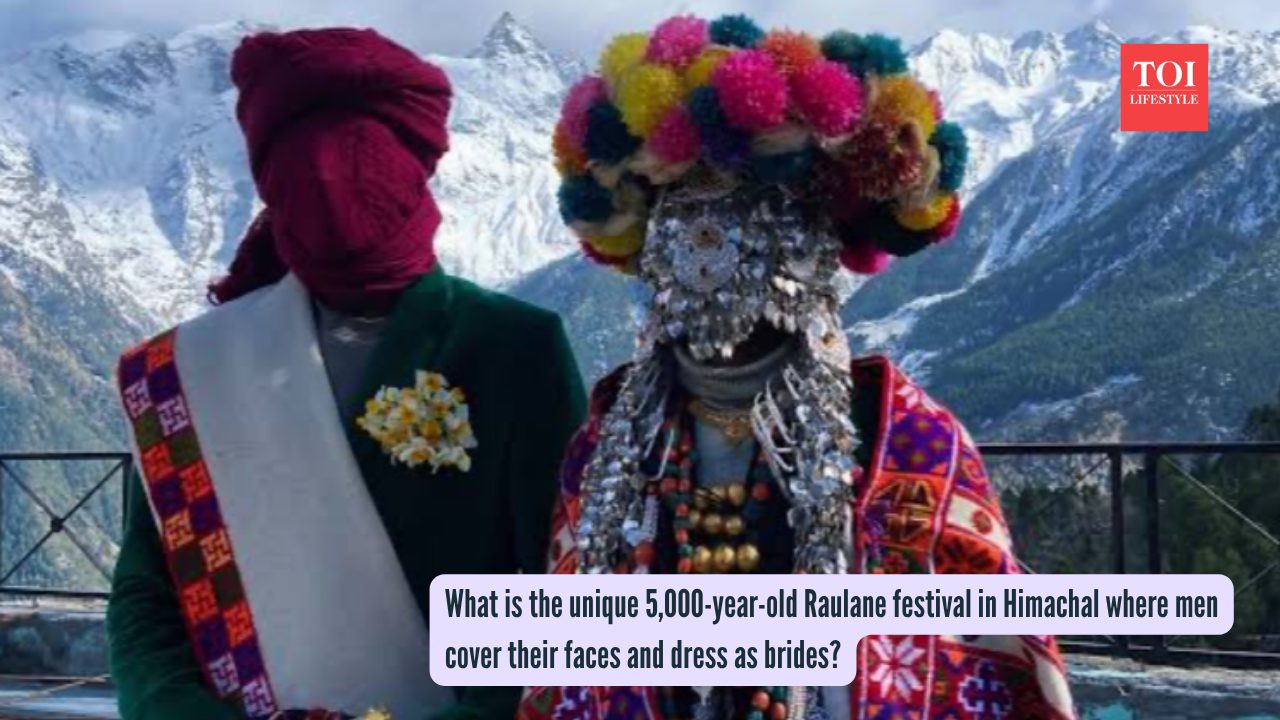
Raulane festival (Photo: GoHimachal_)
About Raulane
Raulane usually occurs on the day after Holi and lasts for 5 days in March.
It is native to Kinnaur, a small town in Himachal Pradesh, and tribes from the neighbouring villages of Sangla and Kalpa join in the festivities.During the celebrations, men dress up like grooms, women as brides and wear all the heirloom jewellery that they have. There is no significance to this festival in their region. It’s just a tribal festival.According to ancient belief, villagers hold a special ritual to bid farewell to the mountain fairies as winter comes to an end.
This tradition has been passed down through generations for centuries.The festival celebration happen over several days. On the first day, a few couples arrive dressed in their finest traditional clothing. This is followed by a larger group of five couples on the second day. By the third day, the celebration grows as people from neighbouring villages join in, dancing together and performing a sacred puja to honour the spirits.
Tips to attend the Festival:
- Mind the cold: It is usually very cold in the hills in March, and the region often experiences snow the day before the Festival. Carry warm clothes and prepare yourself accordingly.
- Travel is not the smoothest: The roads are treacherous, and the town is far. Buses are limited.
- Accessibility: The space where the Festival is held is small; hence, check with the locals if they are allowing access to the Festival area. If the crowd increases, locals might stop outsiders from attending.