
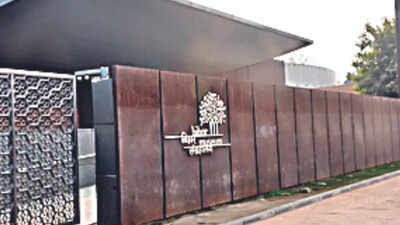
Patna: The Bihar Museum in Patna has emerged as the highest-selling museum souvenir store in the country, recording business worth Rs1.71 crore in the 2025–26 financial year, a significant jump from Rs1.34 crore in 2024–25, official figures show.An official said the steady rise in sales reflects growing national and global interest in Bihar’s traditional and contemporary art forms. “This growth underscores the increasing global fascination with Bihar’s rich artistic heritage,” he said.The museum has also recorded a sharp rise in footfall. While annual visitor numbers earlier hovered between four lakh and 4.5 lakh, more than five lakh people visited the Bihar Museum over the past year alone, the official added.Sharing the data on social media platform X on Monday, JD(U) national working president and Rajya Sabha member Sanjay Kumar Jha said the success of the museum carried forward former chief minister Nitish Kumar’s vision. “This success carries forward Nitish Kumar’s vision of building institutions where heritage is not just preserved, but actively promoted and connected to people,” Jha said.The Bihar Museum souvenir store offers a wide range of products, including Mithila-painted saris, Bhagalpuri silk, ‘Bawan Buti’ textiles and traditional handicrafts.
These items have emerged as a major draw for international tourists as well as local residents.Nitish Kumar, who served as Bihar’s chief minister for nearly two decades, conceptualised the Bihar Museum as a modern cultural institution. He stepped down from the post on April 14, handing over charge to long-time JD(U) ally BJP and its leader Samrat Choudhary.Jha said the museum store’s performance highlights the rising demand for Bihar’s artistic traditions.
“Bihar is showing how culture, when given the right platform, can create both pride and opportunity. Behind the remarkable success of the museum store lies the hard work of Bihar’s local artisans and artists,” he said.Located on Nehru Path, the Bihar Museum—currently being connected to the old Patna Museum on Budh Marg through an underground tunnel—has evolved beyond a conventional exhibition space. It now serves as a bridge between heritage, livelihood and identity, linking cultural preservation directly with the people of the state.

