
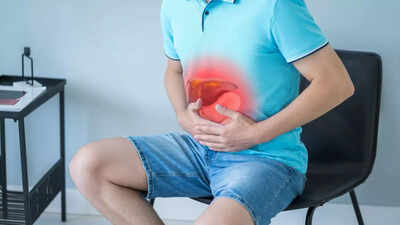
The condition known as metabolic dysfunction-associated steatotic liver disease (MASLD), previously referred to as fatty liver, frequently goes unnoticed until routine check-ups unveil fat accumulation in the liver. When this fat exceeds 5% of the liver’s mass, it can lead to serious health repercussions, such as cirrhosis, despite a lack of overt symptoms.
Many people discover they have fatty liver disease during a routine health check-up. They walk into a clinic for a regular blood test, an insurance screening, or a mild stomach complaint.
Then an ultrasound report quietly mentions “fatty liver.” There were no strong symptoms. No sharp pain. No warning signs that felt urgent.
This is not rare. In fact, it is common.
Fatty liver disease, now often called metabolic dysfunction–associated steatotic liver disease (MASLD), happens when excess fat builds up in the liver. The liver can hold some fat, but when more than 5% of its weight is fat, doctors call it fatty liver. What makes it worrying is not how it begins, but how silently it grows.
Why most people find it “by accident”
The liver is a patient organ. It does not complain easily. In the early stages of fatty liver disease, most people feel completely normal.There may be mild fatigue. Some may feel heaviness in the upper right abdomen. But these signs are vague. They are easy to ignore. They are often blamed on long work hours, poor sleep, or stress.Dr Vikram Raut, Senior Consultant – Liver Transplant & HPB Surgery, Fortis Hospitals Mumbai, told TOI Health, “Fatty liver is often found accidentally because it usually doesn’t show symptoms in its early stages.
This means people don’t realise they have it until they get an ultrasound or other imaging done for something else, like a routine health check-up or other abdominal condition. In the beginning, the liver still works normally which means it can detoxify, make proteins, and doesn’t cause pain or swelling or jaundice.
Even liver function tests might show normal results; this is attributed to large liver reserves (we need just 30% of functional liver for normal body function) and the regeneration capacity of the liver.”
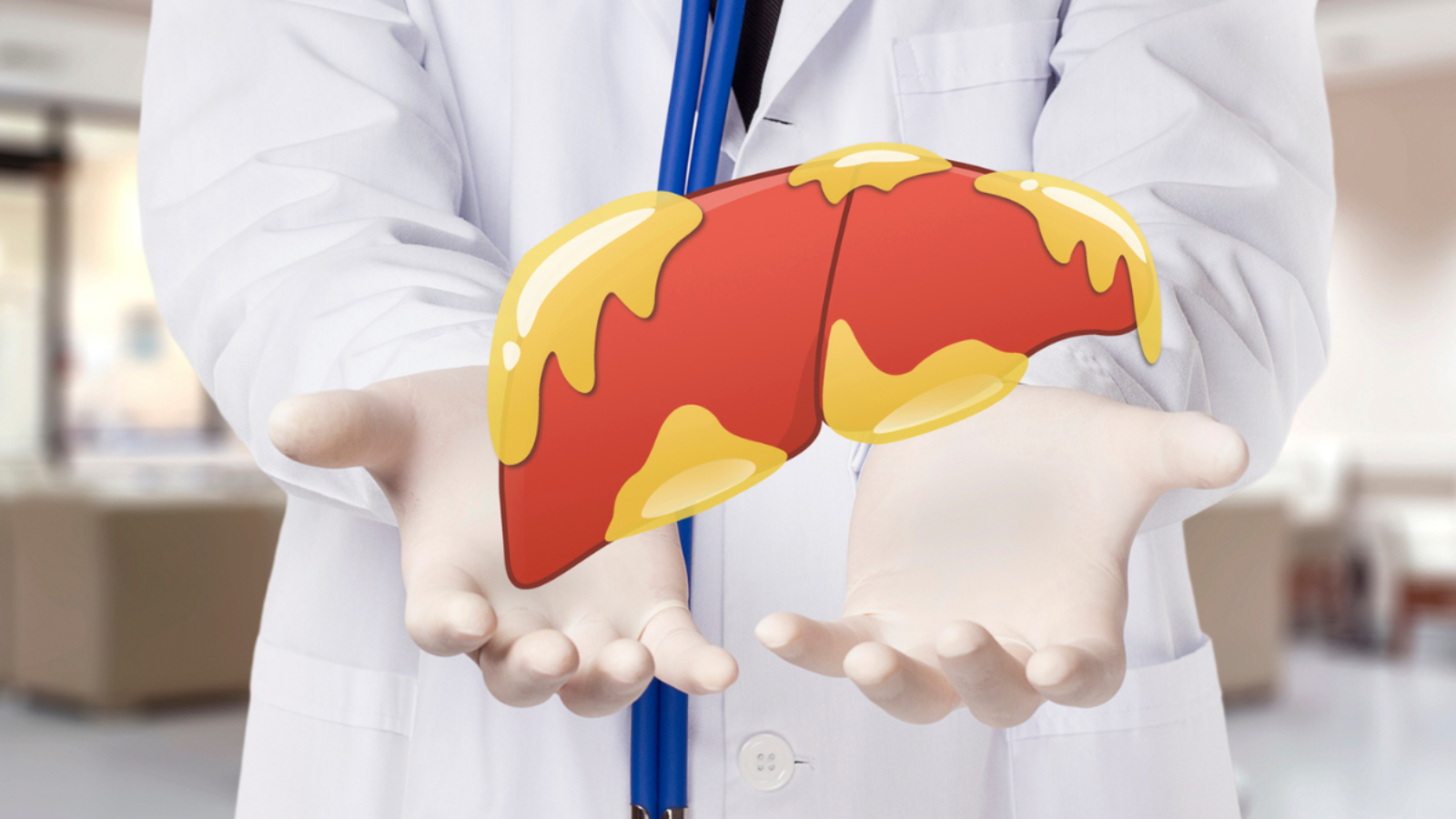
Fatty liver disease, now often called metabolic dysfunction–associated steatotic liver disease (MASLD)
So, how is it usually found?
- Routine blood tests showing raised liver enzymes (ALT, AST)
- An abdominal ultrasound done for unrelated reasons
- A full-body health check package
According to the National Institute of Diabetes and Digestive and Kidney Diseases (NIDDK), many people with nonalcoholic fatty liver disease have no symptoms, especially in the early stages.In India, urban screening studies have shown a high prevalence of fatty liver among adults undergoing routine check-ups, even when they did not report symptoms. The Indian Council of Medical Research (ICMR) has highlighted the growing burden of non-communicable diseases, including metabolic liver disease, in its national health surveys.To this Dr Raut added, “The liver is very resilient and can handle a lot of fat buildup up to 30–40% of its cells can be filled with fat over the years. Fat then leads to inflammation with progress to fibrosis and liver cirrhosis before it starts to show signs of trouble. This is why, fatty liver can progress silently for years. Also there’s no standard screening for fatty liver in India, even though it’s common, especially among people with metabolic syndrome.
In India, many people have high belly fat, lead sedentary lifestyle and eat a lot of refined carbs, which increases the risk of fatty liver. It’s estimated that 25–40% of urban Indians have fatty liver but most don’t know it because it doesn’t cause symptoms until it gets worse.” In short, the condition hides well. That is why it is often discovered by chance.
What is actually happening inside the body
The liver plays a key role in metabolism. It processes sugars, fats, and toxins.
When a person consumes more calories than the body needs, especially from refined carbs and sugary drinks, the extra energy is converted into fat. Some of this fat gets stored in the liver.Over time, this fat can:
- Cause inflammation
- Lead to scarring (fibrosis)
- Progress to cirrhosis in severe cases
The Centers for Disease Control and Prevention (CDC) states that fatty liver disease is strongly linked to obesity, type 2 diabetes, high cholesterol, and metabolic syndrome.This means fatty liver is not just a “liver issue.” It reflects deeper metabolic imbalance.
Why it is rising so fast in India
India is facing a rapid rise in lifestyle-related diseases. Urban diets have shifted. Physical activity has dropped. Sleep patterns are disturbed. Stress levels are high.Recent Indian studies estimate that fatty liver disease may affect nearly one in three adults in urban areas. It is also rising among adolescents and young adults.There are three main drivers:1. Sedentary lifestyleLong desk jobs and screen time reduce calorie burn.2. Processed food intakePackaged snacks, sweetened beverages, and high-carb meals increase fat storage.3. Hidden metabolic risksEven people who look lean can have fatty liver. This is sometimes called “lean NAFLD.” South Asians are genetically more prone to insulin resistance at lower body weights.The World Health Organization (WHO) has repeatedly warned about the growing burden of non-communicable diseases driven by diet and inactivity.Fatty liver is part of that larger story.
The myth: “It only affects people who drink alcohol”
Many people still believe fatty liver is caused only by alcohol. That is not true.There are two broad types:
- Alcohol-related fatty liver disease
- Non-alcoholic fatty liver disease (now often termed MASLD)
In India, a large number of cases are non-alcoholic. People who do not drink at all are being diagnosed.This misunderstanding delays action. Some patients feel confused or even ashamed when they hear the diagnosis. That emotional response needs careful handling. It is not about blame.
It is about biology and lifestyle patterns.As Hippocrates once said, “Let food be thy medicine and medicine be thy food.”
India is facing a rapid rise in lifestyle-related diseases. Urban diets have shifted. Physical activity has dropped. Sleep patterns are disturbed.
What could change this trend
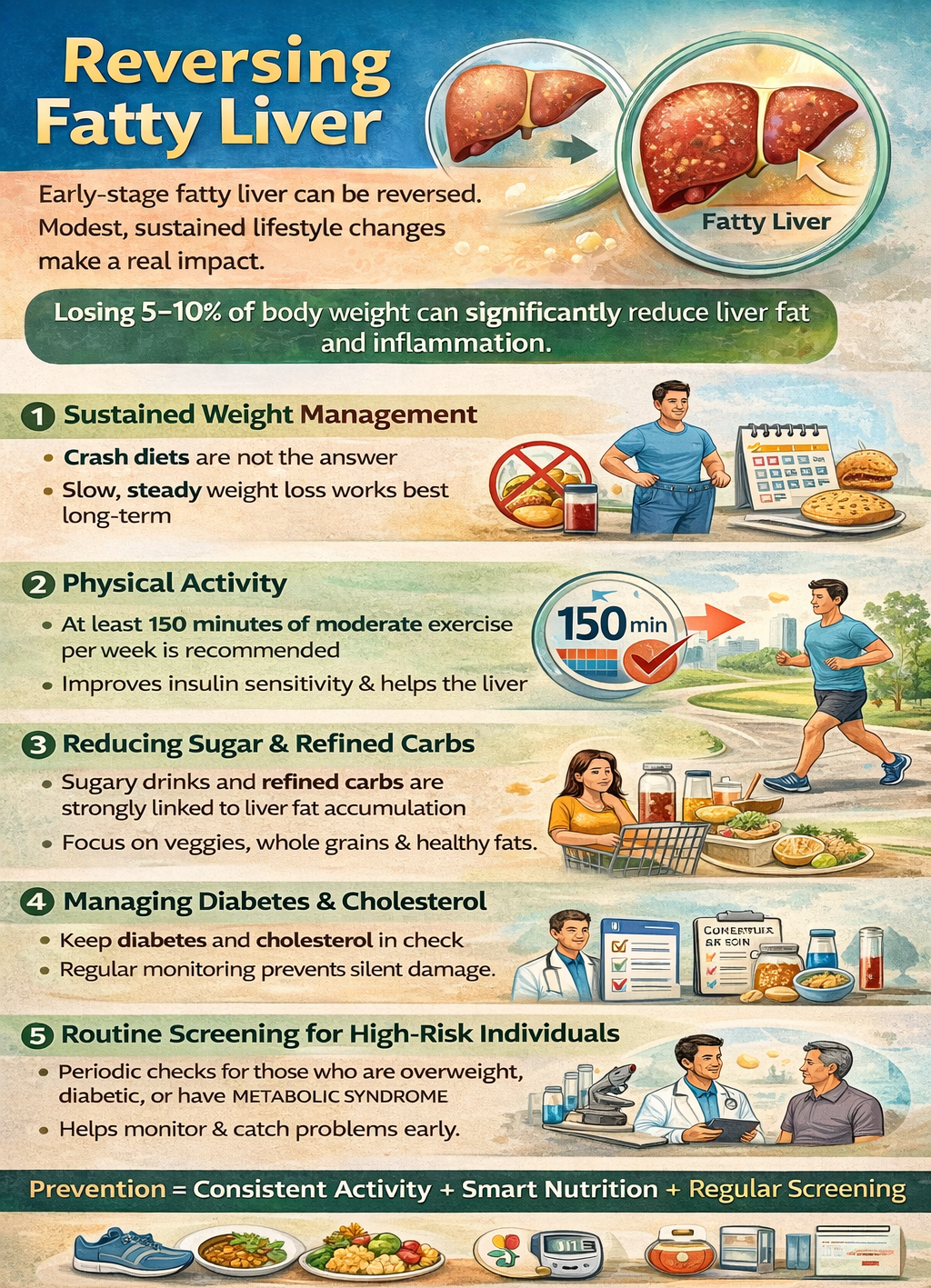
The good news is that fatty liver in its early stages is reversible. Medical guidelines from global liver associations suggest that even 5-10% weight loss can significantly reduce liver fat and inflammation.Here is what makes a real difference:
- Sustained weight management
- Crash diets do not work long term. Steady weight loss does.
- Physical activity
- At least 150 minutes of moderate exercise per week improves insulin sensitivity.
- Reducing sugar and refined carbs
- Sugary drinks are strongly linked to liver fat accumulation.
- Managing diabetes and cholesterol
- Regular monitoring prevents silent damage.
- Routine screening for high-risk individuals
People with obesity, diabetes, or family history should consider liver evaluation even without symptoms.
Early detection changes the story. Waiting for symptoms does not.
Why early silence can be dangerous
The liver can function normally even when partially damaged. That is why people feel fine for years.But if inflammation continues, it can progress to:Non-alcoholic steatohepatitis (NASH)FibrosisCirrhosisIn rare cases, liver cancerBy the time symptoms such as swelling, jaundice, or severe fatigue appear, the disease may already be advanced.Lastly Dr Raut said, “To catch fatty liver early, it’s important to screen high-risk groups, such as those with type 2 diabetes, a BMI over 23 (the Asian cutoff), high cholesterol, or metabolic syndrome. Tests like ultrasounds or Fibroscans can help detect the condition before it progresses to more serious stages like steatohepatitis or cirrhosis. Early detection is crucial because once symptoms appear, the disease may have already been advanced.
“This gap between “feeling normal” and “being at risk” is what makes fatty liver a quiet public health challenge.Health awareness often begins with a lab report. But it should not end there. Instead of seeing fatty liver as a sudden shock, it may help to view it as an early warning system. It signals that metabolism needs attention. It calls for long-term habits, not temporary fear.Small changes matter. A 30-minute walk. A balanced plate. Regular sleep.
Periodic blood tests. The condition may be discovered by accident, but recovery does not have to be accidental.Medical experts consultedThis article includes expert inputs shared with TOI Health by:Dr Vikram Raut, Senior Consultant – Liver Transplant & HPB Surgery, Fortis Hospitals MumbaiInputs were used to explain why fatty liver is a serious and often silent health condition, and why one should consult a doctor before relying on self-diagnosis.