
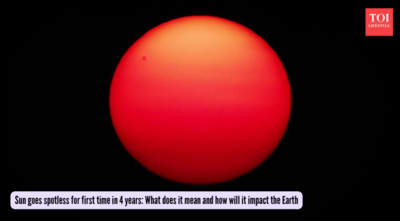
The Sun experienced its first spotless days in four years, from February 22-24, 2026, indicating a shift towards a calmer phase in Solar Cycle 25. This period of low sunspot activity precedes the solar minimum, expected around 2030, though flares can still occur.
Our nearest star, the Sun, isn’t static, it’s a dynamic powerhouse cycling through phases of frenzy and calm, influencing space weather, tech disruptions, and even Earth’s climate whispers.For centuries, humans have tracked its moods using various signals like sunspots, those dark, magnetic storms dotting its face. But are all these patterns timed or just a random doing by nature?Recently, the Sun was observed without any sunspot and this has happened after many years.
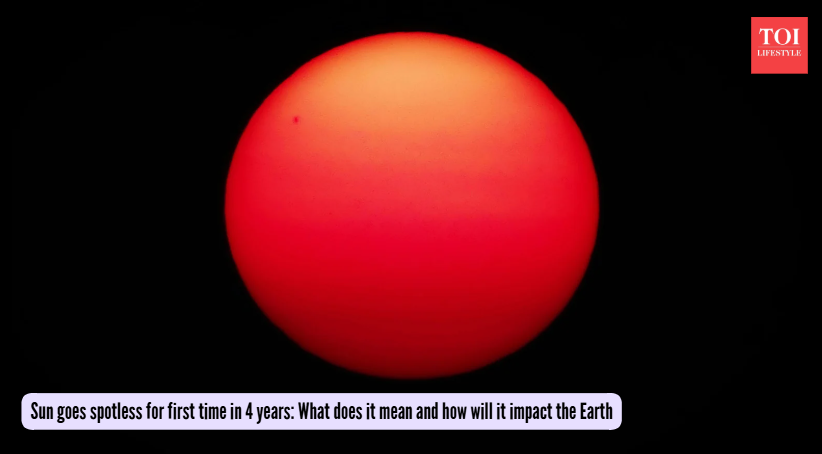
Sun goes spotless for first time in 4 years: What does it mean and how will it impact the Earth
Sun’s first spotless days in years
From February 22 to 24, 2026, the Earth-facing side of the Sun went blemish-free, without any sunspots for the first time in four years.
Sunspots are cooler patches buzzing with intense magnetic fields, not mere dots. Their short absence signals that the Sun is easing into a calmer phase of Solar Cycle 25. As reported by IFLScience, observations on February 25 already spotted a tiny sunspot peeking from the solar limb, meaning the break won’t last.
What is the Sun’s 11-year solar cycle
The Sun flips between high and low activity every 11 years. Maximum hits when sunspot counts peak; minimum follows with sparse activity.
Solar Cycle 25 crested in October 2024, after beginning from a quiet start.Dr Rachel Howe, solar physicist at the University of Birmingham, UK, explained to IFLScience, “The definition of the solar maximum is when the sunspot number is at its highest. At the same time, you tend to see that that’s when this polarity reversal happens. Then in the next cycle, it all happens again, but the other way around”.
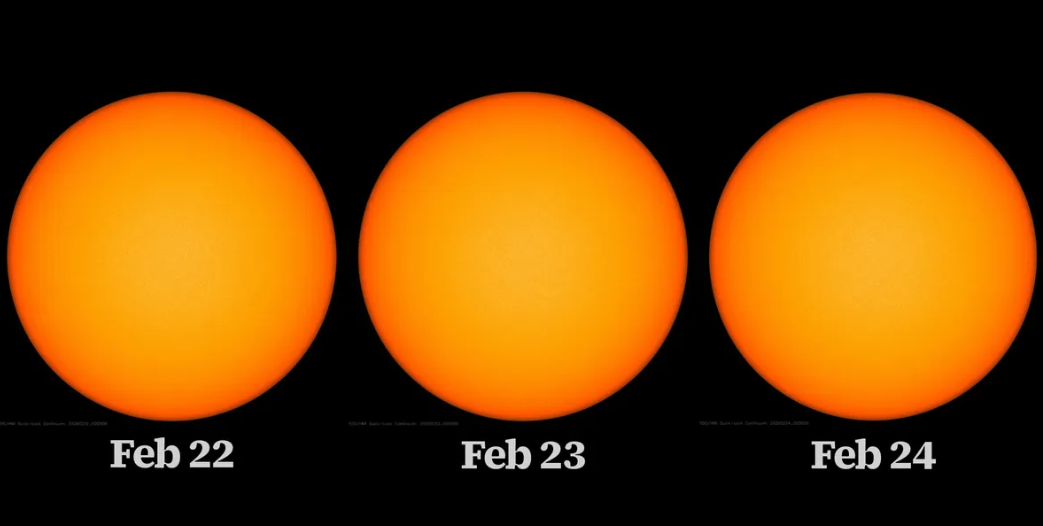
Photo via NASA
Around maximum, solar flares and coronal mass ejections spiked until recently, disrupting satellites and radio signals.
Now, with poles flipped and spots fading, minimum looms around 2030.
Being spotless doesn’t mean that the Sun in silent
Quiet phases aren’t dead, flares can still erupt. Previously, cycle’s strongest flare hit in 2017, near 2019’s minimum. Dr Howe noted, “Sometimes you can see towards the end of a cycle, regions that belong to the next cycle propping up at higher latitudes, and you can tell that they’re a new cycle because they’re the other way around”.


