
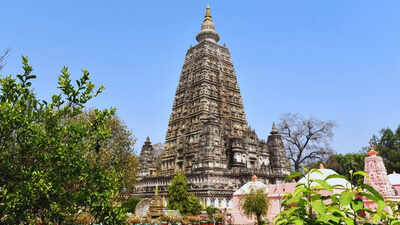
In the quiet town of Bodh Gaya, where the air hums with prayer chants and the rustle of Bodhi leaves, transformation is supposed to be spiritual. For many, it is. But for one traveller, it became something deeper, more unsettling—and ultimately, more human.When @carmen.leiii arrived in Bodh Gaya, it was with purpose and anticipation. She writes, “I actually came to Bodh Gaya to volunteer for a charity event at the Mahabodhi Temple happening in the coming days. I’ve wanted to visit for a long time, so it feels special to finally set foot in this sacred place for the first time. But I was honestly quite surprised by the surrounding conditions and how difficult life looks for many of the people living here.
” For years, she had imagined this journey—one filled with peace, reflection, and spiritual connection.And yet, what she encountered beyond the temple walls was something she hadn’t prepared for.“For those who may not know, Bodh Gaya is home to the Mahabodhi Temple, the sacred place where the Buddha attained enlightenment under the Bodhi Tree over 2,500 years ago. It’s one of the most important pilgrimage sites for Buddhists around the world, with people travelling from many countries to pray and meditate here,” she adds.
The contrast was stark.Just steps away from one of the holiest sites in the Buddhist world, life unfolded in a way that shook her. Mothers walked barefoot on the dusty streets, carrying their unclothed infants on their shoulders. Children, not older than three or four years of age, approached people with their hands outstretched and asked for money instead of carrying books and schoolbags. The look in their eyes, while curious and tired, spoke of stories beyond their age.Carmen found herself overwhelmed—not by the unfamiliar, but by the reality of it.
“This is not what I am used to,” she said, her voice breaking in her video. It wasn’t judgment—it was confrontation. A quiet collision between two worlds: one of comfort and predictability, and another where survival is a part of daily life.She saw things that most people would overlook, the roofs that were fragile and cobbled together, the frames of stray animals, malnutrition that seemed to plague both humans and animals.
It wasn’t poverty she saw; it was a system of hardship that had become normal to those in it.But it’s a thing that stayed with her.But in the midst of this emotional turmoil, something else was taking form: a sense of responsibility. Not the kind that demands grand gestures, but the quieter kind that begins with awareness. Carmen didn’t claim to have solutions. Instead, she acknowledged something far more honest: there are small ways to help, and noticing is the first step.Her story is not about Bodh Gaya alone. It’s all about perspective. You see, while millions visit this sacred city in search of enlightenment, not all are ready for the human realities that are also part of its sacredness. Carmen’s story is a reminder that the world is full of dichotomies—beautiful and ugly, sacred and struggling, all at once. And sometimes, leaving our “bubble” does not just alter our perception. It also alters our emotions and actions.



