
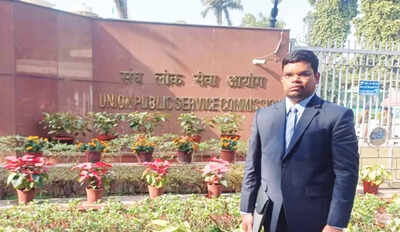
In a country where the civil services exam is often described as a marathon of the mind, Sanjay Dahariya ran his with a body that was constantly under siege. He comes from Mahasamund, a district in Chhattisgarh where ambition is usually shaped by circumstance long before it is shaped by opportunity.
The son of a farmer, Dahariya did not begin with the advantages that often frame success stories. What he did have, by most accounts, was a stubborn steadiness, the kind that does not announce itself early, but endures. Scroll down to know more.By the time he cleared the UPSC Civil Services Examination 2025 with an All India Rank of 946, he was 38. In the UPSC ecosystem, where timelines are tight and patience thinner than it appears, that number alone tells a story.
But the years leading up to it tell a far more demanding one. For nearly six to eight years, Dahariya was fighting cancer.This wasn’t a single, contained episode of illness. It was prolonged, uncertain, and physically draining. His treatment involved multiple surgeries, long recovery phases, and complications that altered his day-to-day life in ways most aspirants never have to account for. Reports note that he also dealt with facial paralysis, a condition that, beyond its physical toll, carries its own emotional weight.
Somewhere within that prolonged battle, his eyesight, too, was affected. Not in a way that halted his journey entirely, but enough to make an already difficult path more complex. Studying for UPSC demands relentless reading, sustained focus, and the ability to sit with information for hours. When your vision itself becomes unreliable, the act of preparation changes. It slows down. It demands adaptation. It tests patience in ways that go beyond the syllabus.
And yet, he continued.
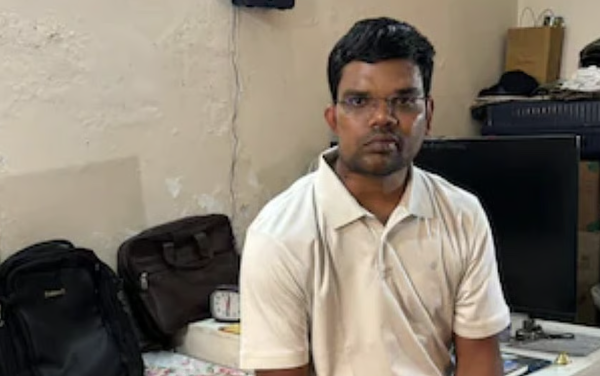
There is a quiet kind of discipline that stories like these often fail to capture. It isn’t the dramatic moment of deciding to fight back. It is the far less visible act of returning to your books after a hospital visit. Of revising notes when your body would rather rest. Of keeping a routine alive even when the idea of routine feels fragile.Dahariya’s journey through UPSC was not linear. Like many who eventually clear the exam, he faced failures along the way, attempts that did not convert, efforts that fell short.
But failure, in his case, came layered with something heavier. It wasn’t just an academic setback; it unfolded alongside a medical battle that could have easily justified stepping away. He didn’t.Instead, he recalibrated. Preparation became less about speed and more about consistency. Less about covering everything quickly and more about holding on, day after day, to the possibility that the effort would eventually add up.There is also something quietly radical about clearing UPSC at 38. In a culture that often ties success to youth, Dahariya’s result stretches that timeline. It suggests that ambition does not expire on schedule, and that resilience can outlast the expectations placed on it.When the final list was announced and his name appeared with AIR 946, it marked more than just an exam cleared. It marked the end of a prolonged negotiation, with illness, with time, with doubt.
What stands out in his story is not a single moment of triumph, but the accumulation of many small, unseen decisions. To continue. To adjust. To begin again after every interruption.There is a tendency to turn such journeys into neat, inspirational arcs. But Dahariya’s path resists neatness. It is uneven, interrupted, and deeply personal. And perhaps that is where its real power lies.Because in the end, this is not just a story about cracking one of India’s toughest exams. It is about sustaining belief when circumstances repeatedly test it. About finding a way forward when the body slows you down, when time feels uncertain, when outcomes are anything but guaranteed. At 38, after years of illness and effort, Sanjay Dahariya did not just clear UPSC. He endured it.