
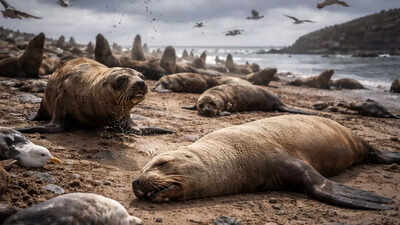
What was once considered a virus that infected birds only is now infecting the oceans and marine life in ways that scientists never considered possible. The highly pathogenic avian influenza (H5N1) was first recognised in the world many decades ago and is now a worldwide phenomenon that has infected the entire globe and continents of the earth.
What is now happening to the sea lions and seals in the oceans of this world is a great concern to everyone. The recent outbreaks of this virus in the coastal regions of South America have been devastating, with tens of thousands of marine life dying from the effects of this virus. This is no longer a bird virus; this is a virus that is crossing species and affecting marine life in ways that no one knows about.
Watch
Explained: What is bird flu, how serious is the threat it poses to human beings
Scientists warn of a major shift as bird flu spreads among seals and sea lions
Scientists are taking a step back to look at the larger picture as the outbreak continues to intensify in various marine ecosystems.
Their research primarily centres on the transmission of the virus within pinnipeds, which include seals and sea lions, as well as what can be done to minimise the effects. A study done by researchers from The Royal Society found that the transmission of avian influenza within marine mammals marks a significant shift in the behaviour of the virus. They found that not only was the outbreak widespread, but it was also changing in a manner that may heighten ecological risk.
This warning reflects growing concern that entire populations could be affected if the virus continues to spread unchecked.
How the virus is spreading in marine ecosystems
The transmission of the H5N1 virus among the population of seals and sea lions is being monitored and researched to understand the transmission routes of the virus.Scientists believe that the infection of the seabirds is playing a major part in the transmission of the H5N1 virus. When the marine mammals come into contact with the infected birds or the dead bodies of the birds that have died from the infection, the transmission of the virus occurs.There is also a growing concern that the virus is actually changing in a manner that allows it to be transmitted from mammal to mammal, thereby increasing the rate of transmission of the virus.
Why scientists are increasingly concerned
What is particularly concerning about this outbreak is that, while it is indeed a very large one, it is also one that is able to cross species and regions.While H5N1 was originally a bird flu, over time it has managed to jump to other species of animals.
Its ability to persist in the environment, as well as its transportation via migratory birds, makes it very difficult to control.In regions such as Argentina, where this outbreak was first noticed, one of the early warning signs was the sudden death of elephant seals. What was initially considered to be a series of isolated incidents soon proved to be a much larger problem.
Efforts to monitor and contain the outbreak
Scientists and wildlife experts are currently working to grasp the extent of the crisis and to plan strategies to minimise its effects.In addition, efforts are being made to safeguard other marine animal populations that have yet to be infected by the virus. This is considered to be the best approach, given the difficulty of managing diseases in a wild environment.
A warning sign for global ecosystems
The emergence of bird flu in seals and sea lions is not just an issue concerning wildlife; it also reflects an imbalance in nature. The role of marine mammals in the ocean ecosystem is significant, and their decline could have long-term effects. The changes in disease patterns seem to show that environmental changes are having an impact on the way disease evolves in different species.