
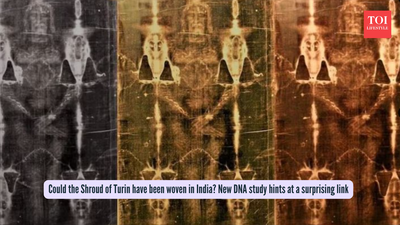
A new DNA analysis of the Shroud of Turin reveals nearly 40% of human DNA originates from India, suggesting the yarn may have come from the Indus Valley or the cloth was handled by people of Indian descent. The study also identified DNA from various animals and plants, painting the shroud as a “time-capsule towel” shaped by a far-flung journey.
The Shroud of Turin has long been one of the most debated objects in the history of humankind – a mysterious linen cloth said to have wrapped the body of Jesus Christ after the crucifixion.For centuries, pilgrims, priests, and scholars have argued over whether it is a genuine relic, a medieval forgery, or something in between. Now, a new DNA analysis has brought this topic into the limelight – but this time with a twist that involves India, its millennia-old trade routes, and a whole menagerie of plants and animals caught in the fibres of the cloth.Scientists say the shroud is less like a “holy photograph” and more like a time-capsule towel, shaped by the touch of countless hands, animals, and environments.
These findings hint at a far-flung journey stretching from the Mediterranean to the Indian subcontinent.
Shroud of Turin linked to India?
A new, yet-to-be-peer-reviewed genetic study
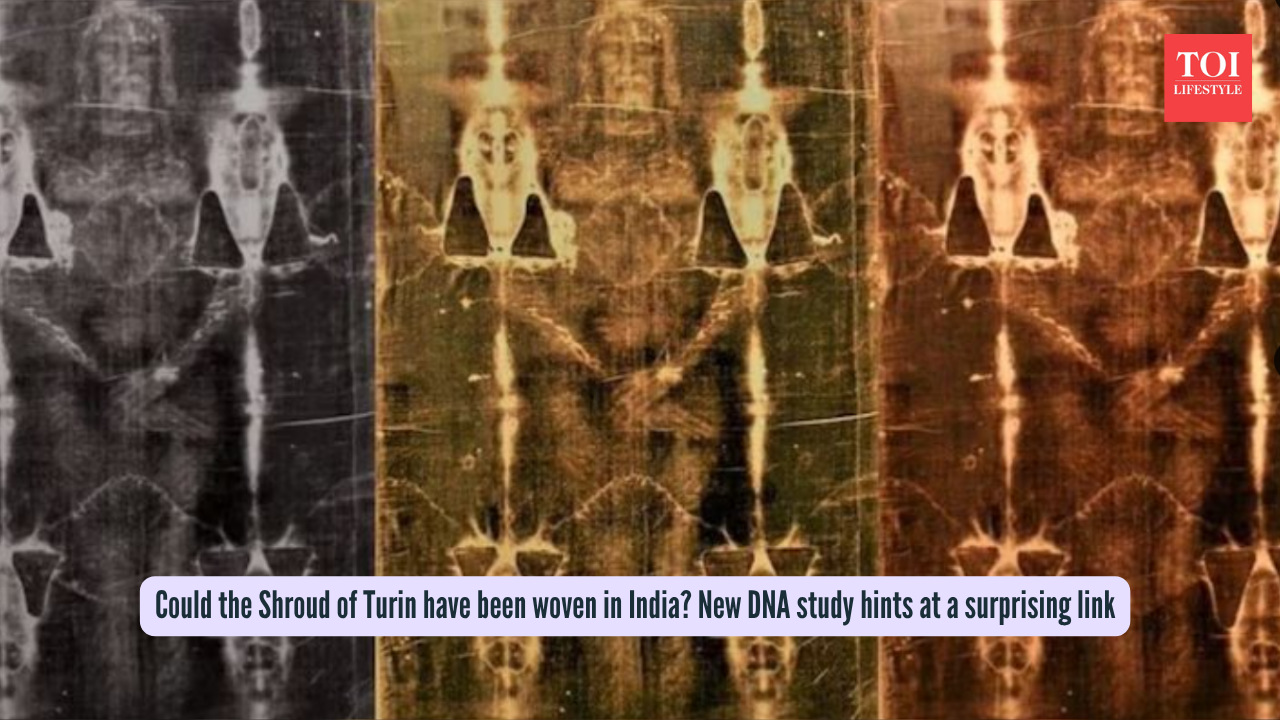
Shroud of Turin (Photo: @OMAapproach/ X)
published on biorxiv.org has identified traces of human, plant, and microbial DNA on the Shroud of Turin, deepening the mystery around its origins. The team was led by geneticist Gianni Barcaccia of the University of Padova, Italy, who re-analysed dust and fibre samples collected from the shroud in 1978, treating them “like an archaeological forensic file.”
40% of the human DNA on the shroud belongs to lineages originating from India
The analysis revealed that nearly 40% of the human DNA on the linen belongs to lineages originating from India, raising the possibility that the yarn itself was produced in the Indus Valley region or that the cloth was handled by people of Indian descent over centuries. The scientists wrote that their findings “highlight its preservation conditions and environmental interactions, offering valuable perspectives into the identified genetic variants, which originated from multiple biological sources.
”
DNA from India, the Mediterranean, and beyond
The study’s most interesting claim is that the DNA traces suggest the shroud may have spent time in the Mediterranean region and that the yarn could have come from India.The team found signatures from numerous haplogroups, including lineages typical of Western Europe, the Near East, and the Indian subcontinent, painting a picture of a cloth that has passed through many hands and regions.The researchers wrote: “Overall, our prior and present findings provide valuable insights into the geographic origins of individuals who interacted with the Shroud throughout its historical journey across various regions, populations, and eras.”
They added that the genetic evidence points to “the potentially extensive exposure of the cloth in the Mediterranean region and the possibility that the yarn was produced in India.
”
Not everyone is convinced
Despite the “Indian origin” possibility, some experts remain sceptical. Anders Götherström, a geneticist at Stockholm University not involved in the work, said, “I still see no reason to doubt that the shroud is French and from the 13th–14th century.”Earlier radiocarbon testing from 1988 had dated the linen to between 1260 and 1390, which many took as evidence that the shroud is a medieval artefact rather than a 1st-century burial cloth.
The Shroud of Turin is a petri dish of history
Beyond the human DNA, the shroud harbours a biological zoo. The team found traces of domestic cats and dogs, farm animals like chickens, cattle, goats, sheep, and pigs, as well as wild animals such as deer, rabbits, fish, and various insects.Plant DNA includes species such as wheat, carrot, and even potato, which likely arrived in Europe after contact with Asia and the New World, though the exact timing of this contamination remains unclear.The shroud also carries bacteria from human skin – a sign of centuries of handling by priests and pilgrims -which the scientists say “challenges the possibility of identifying the original DNA of the Shroud,” since later touch and storage have left their own genetic fingerprints.