
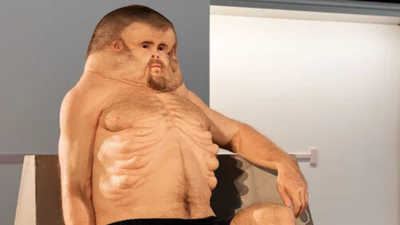
According to science, this is what a human would have to look like to survive a car crash/ TAC
For all the ways modern life has accelerated, the human body has not kept pace. Cars now routinely travel at speeds our physiology was never built to endure, and when something goes wrong, as it often does, it is the body that pays the price.“In the modern world, we are subjecting our bodies to much higher speeds and the body just doesn’t have the physiology to absorb the energy when things go wrong,” said Dr David Logan, a road safety engineer involved in a striking Australian project that set out to visualise this exact problem.The result was “Graham,” not a concept or a diagram, but a full-scale figure designed to answer a difficult question: if humans had evolved to survive car crashes, what would we actually look like?
A human built for impact
Developed as part of the Transport Accident Commission’s road safety campaign Meet Graham, the figure was the product of an unusual collaboration between trauma surgeon Dr Christian Kenfield, crash investigation expert Dr David Logan, and Melbourne-based sculptor Patricia Piccinini. The aim was not to create something futuristic, but something anatomically plausible, a body shaped entirely by the physics of collisions.
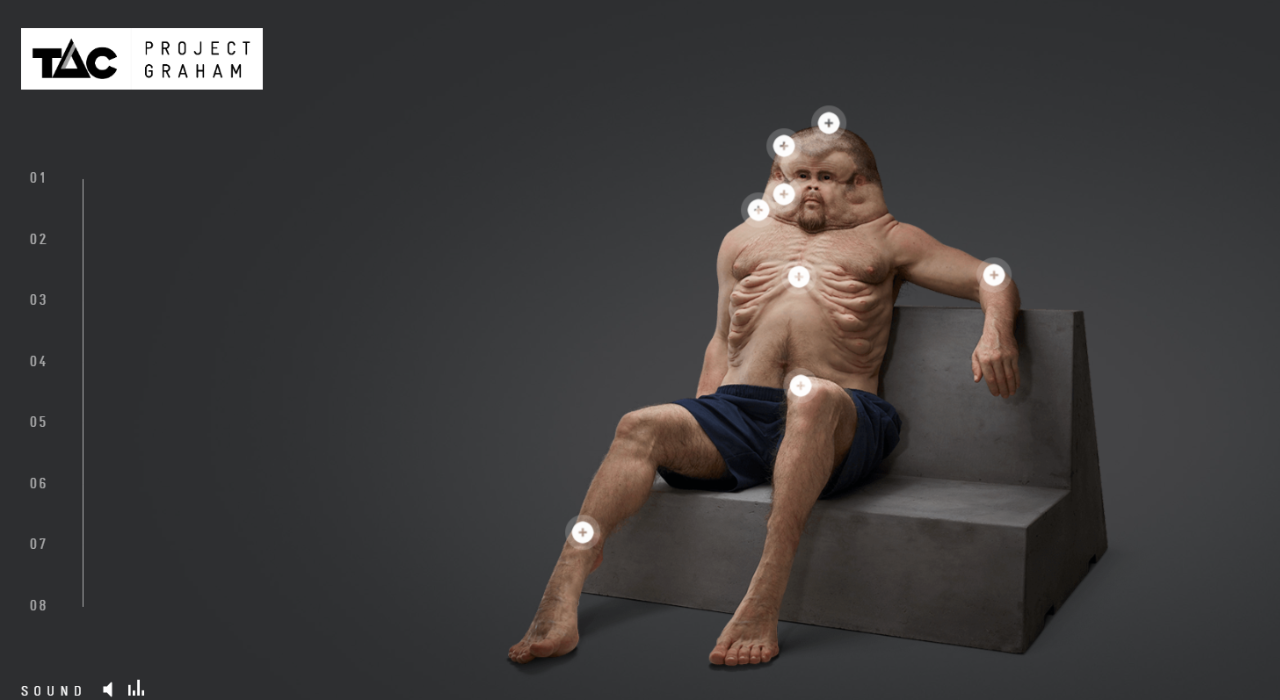
Viewers can also explore Graham (Meet Graham project) online through an interactive 3D platform on the Transport Accident Commission (TAC) website.
The Commission described Graham as a representation of “the only person who could survive on roads,” explaining that “Graham has been designed with bodily features that might be present in humans if they had evolved to withstand the forces involved in crashes. Studies have shown that only this human body can cope with impacts at speeds people can reach on their own, unassisted by vehicles.”
A body that looks wrong, because it works
At first glance, Graham appears almost grotesque: a large, swollen head sits directly atop a torso with no visible neck; the face is flattened, the chest unusually broad, the limbs oddly structured. Each of these features, however, corresponds to a specific vulnerability in the human body.He has a dramatically enlarged skull, built to absorb impact and fracture in a controlled way, much like a helmet. Inside, increased cerebrospinal fluid and reinforced ligaments cushion the brain against the double-impact effect common in crashes.His face is flattened and padded with fatty tissue, eliminating fragile protrusions like the nose and reducing the likelihood of facial fractures. His eyes are smaller and more recessed, protected from debris and blunt force.Perhaps most strikingly, Graham has no neck. Instead, his rib structure extends upwards to support the skull, removing one of the most vulnerable points in the human body. In real-world crashes, the neck, which houses the spinal cord, is highly susceptible to whiplash and catastrophic injury.His torso is barrel-shaped and reinforced, with what appear to be multiple nipple-like structures, in fact, these are air-sac-like cushions embedded between the ribs, designed to function like biological airbags, absorbing force and protecting vital organs.
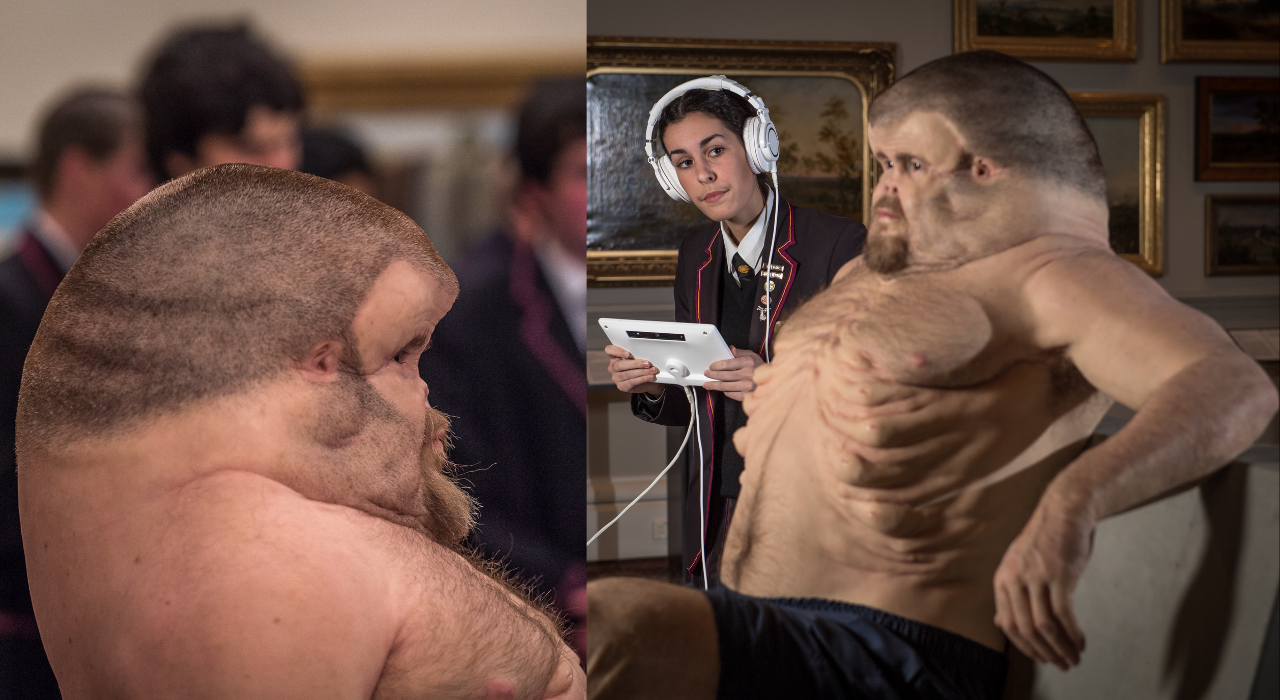
Students at the State Library of Victoria interact with Graham (Meet Graham project) during its 2016 launch/Image: TAC
His skin is thicker and tougher, particularly around the arms and joints, reducing lacerations and nerve damage in impacts where humans instinctively extend their limbs.Lower down, Graham’s legs resemble those of an animal more than a person. He has hoof-like feet and additional joints, including highly flexible, 360-degree-capable knees. These allow for rapid movement and shock absorption, whether inside a vehicle or as a pedestrian struck by one.An extra joint in the lower leg enables what designers described as “spring-loaded” motion, similar to that of a deer or kangaroo, increasing the chances of avoiding or mitigating impact altogether.Viewers can also explore Graham (Meet Graham project) online through an interactive 3D platform, allowing detailed examination of each feature.
Watch
Meet Graham, the only person to survive on our roads.
What Graham is meant to show
The project does not suggest that humans should, or could, evolve in this way. Instead, it makes visible the gap between the environments we have engineered and the bodies we inhabit. “Cars have evolved a lot faster than humans,” said Transport Accident Commission chief executive Joe Calafiore, explaining the thinking behind the campaign.
“Graham helps us understand why we need to improve every aspect of our roads system to protect ourselves from our own mistakes.”First unveiled in 2016, Graham (Meet Graham project) was accompanied by an interactive digital platform that allowed viewers to explore each of his unusual features in descriptive detail, including augmented reality elements and a 360-degree view. Alongside this, a physical, hyper-realistic sculpture of Graham, created by artist Patricia Piccinini for the Transport Accident Commission, was produced to make the concept even more impactful.During its initial launch, the sculpture toured various locations across Victoria, including public spaces and campuses, bringing the road safety message directly to communities. Today, Graham is permanently housed in Victoria, Australia, where he continues to serve as a long-term educational tool managed by the Transport Accident Commission.Together, the physical sculpture and digital experience reinforced the central message: if surviving a crash requires a body like Graham’s, then prevention, through safer driving, improved infrastructure, and better vehicle design, remains the only realistic solution.