
4 min readNew DelhiApr 1, 2026 07:00 PM IST
Shark Tank India‘s Namita Thapar, 48, recently spoke about developing a “food baby” or a temporary, bloated stomach when she eats something heavy. “Have you heard about food baby? Usually, when you eat something really heavy…for example, if I have toor dal khichdi instead of moong dal khichdi or too much bread in my pav bhaji, then you get a stomach pouch under your navel,” she shared in an Instagram post.
DISCLAIMER: This article is based on information from the public domain and/or the experts we spoke to. Always consult your health practitioner before starting any routine.
Taking a cue from her candid confession, we asked an expert why such bloating can happen.
Dt Amreen Sheikh, chief dietitian, KIMS Hospitals, Thane, said feeling bloated after meals is common. “It usually relates to how specific foods are digested in the gut. Pulses like toor dal contain complex carbohydrates and fibre, which are nutritious but can sometimes cause gas during digestion. When these fibres reach the large intestine, gut bacteria break them down, which may lead to gas and a feeling of fullness or abdominal swelling,” said Sheikh.
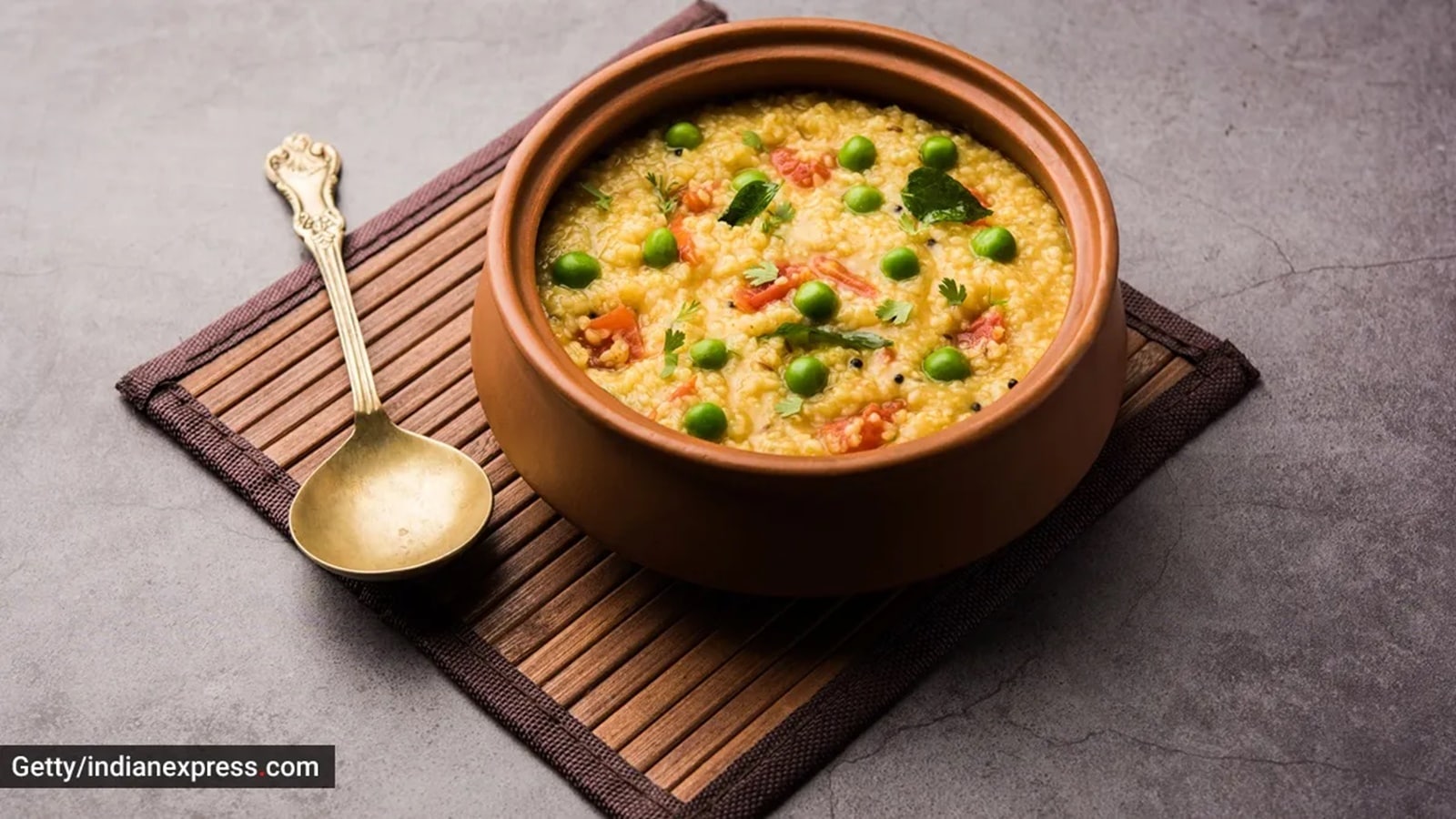 What type of khichdi do you prefer? (Photo: Getty Images/Thinkstock)
Some people notice this more with certain dals than others. “For example, moong dal is generally lighter and easier to digest. In contrast, toor dal may feel heavier for some individuals based on their digestive sensitivity, portion size, and cooking method,” Sheikh said.
However, this type of bloating is usually temporary and doesn’t mean the food is unhealthy or should be avoided completely, she added.
Why might moong dal feel easier on the stomach compared to toor dal?
Moong dal is often seen as one of the easiest lentils to digest. “It has a softer fibre structure and tends to create less gas during digestion compared to other pulses. This is why it is often recommended during recovery from illness or when someone has digestive discomfort,” said Sheikh.
Toor dal, while highly nutritious and a staple in Indian meals, may take a bit longer to digest for some people. “The difference varies among individuals and also depends on how it’s cooked, the spices used, and the portion size,” said Sheikh.
Story continues below this ad
From a nutrition perspective, should people avoid foods that cause mild bloating?
Not necessarily, affirmed Sheikh. “Many fibre-rich foods that support gut health, including lentils, beans, and whole grains, can occasionally cause mild bloating, especially if someone doesn’t eat them regularly. Cutting these foods out completely may lead to missing important nutrients.”
A better way to manage this is to introduce them gradually and pay attention to portion sizes. Cooking methods like soaking dals before cooking, adding digestive spices such as cumin, ginger, or asafoetida, and making sure the food is well-cooked can help improve tolerance.
Simple habits can make a big difference. “Eating slowly, avoiding large portions, and keeping regular meal times can help with better digestion. Including a balanced plate with enough protein, fibre, and healthy fats also helps prevent overeating and digestive discomfort,” said Sheikh.
Story continues below this ad
If bloating happens occasionally and goes away quickly, it’s usually not a concern. “However, if it’s persistent, painful, or linked with other symptoms, it might be wise to consult a healthcare professional to rule out underlying digestive issues.”