
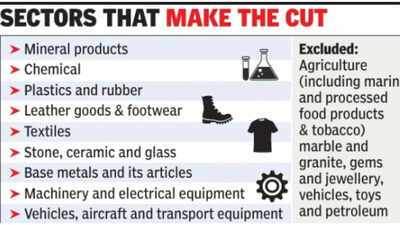
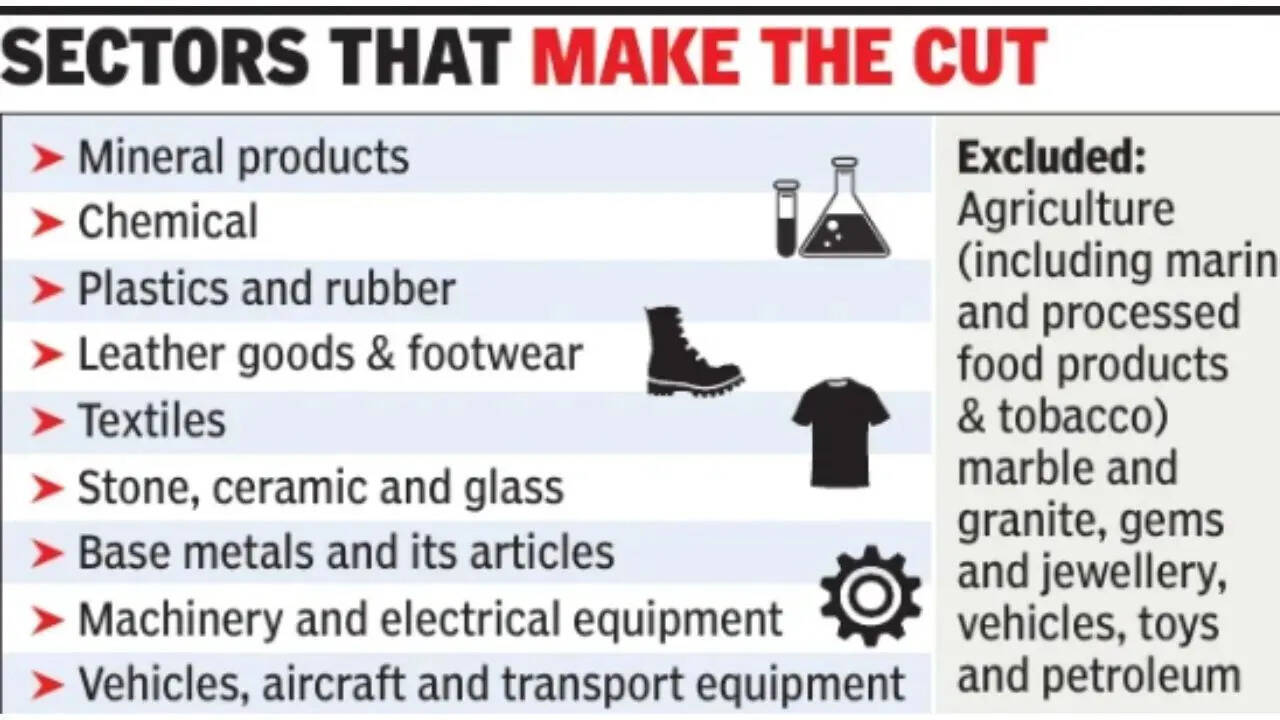
NEW DELHI: As a one-time relief for SEZ (Special Economic Zone) units, govt has allowed them to sell up to 30% of their turnover in the domestic tariff area, or the Indian market, by paying concessional duty.A minimum 20% value addition within the SEZ has been prescribed for units to get the concession that is available during the current financial year. A list of sectors has also been notified, covering major sectors and keeping sensitive sectors out.“The measure is expected to benefit around 1,200 SEZ manufacturing units by enabling economies of scale, reducing costs and enhancing resilience, while preserving the export-oriented nature of SEZs,” the commerce department said.The department is also working on a broader framework on harmonisation of various export promotion schemes, with focus on enhancing exports from India.Although the intent was announced in the budget, govt officials positioned it as a move to help exporters hit by global disruptions, including the West Asia conflict. Already, govt has offered a Rs 500 crore benefit to enhance insurance support for West Asia bound cargo, stepped up focus on duty refunds, while RBI offered relief to exporters on Monday.
“By allowing SEZ units to sell up to 30% of their export turnover in the domestic market, the one-time relief window introduces a calibrated and controlled flexibility, which will ease out the pressure faced by the existing units in SEZs due to global trade disruptions. This 30% cap is critical, it ensures that SEZs remain primarily export-focused, while still providing a meaningful buffer against global demand shocks.
This domestic sales enablement would act as a stabilisation mechanism for manufacturing operations,” an official said.Officials said the idea was to ensure maximum utilisation of production capacity. “Inclusion of minimum value addition requirements reinforces that relief measure is not about opening a trading route, but about strengthening genuine manufacturing activity. It ensures that units continue to focus on substantive production and value creation within India,” the official said, pointing to sectoral safeguards as the benefit has not been given across-the-board.