
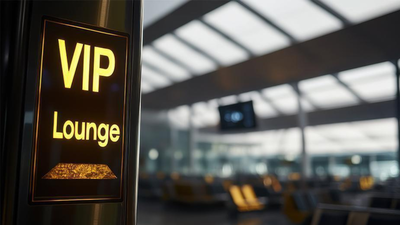
India’s outbound travel has expanded rapidly over the past few years, driven by rising disposable incomes, easier visa processes, and greater global connectivity. According to the Ministry of Tourism, over 30 million Indians travelled abroad in 2024, a figure growing steadily as international travel is becoming more mainstream1. Parallel to this trend, overseas card spending has climbed consistently. It highlights the growing reliance on digital payment tools and the need for reliable forex card solutions that deliver both convenience and cost efficiency.In such a competitive market, airport lounge access has emerged as a headline feature in travel-card marketing. Many of these cards are positioned as ‘premium’, appealing to travellers seeking comfort and exclusivity during transit.
However, lounge privileges alone cannot determine the real value of a forex card.A truly premium card is defined by transparent pricing, low markups, global acceptance and robust security features. Travellers are increasingly looking for these qualities in modern options such as Niyo and similar platforms. Ultimately, financial protection abroad matters far more than a few hours of airport lounge comfort.Why did lounge access become a ‘premium’ selling point?The growth of airport lounges, particularly in India but also across other major global hubs, has transformed them from exclusive enclaves for first-class passengers into a mass-market staple.
Financial institutions quickly realised that ’luxury’ is a powerful selling point. By providing lounge access as a headline benefit, banks could market an aspirational lifestyle to a broader audience. It sells the dream of exclusivity and comfort, making the cardholder feel like a ’VIP’ before the plane even takes off.
In a world of Instagrammable travel moments, the ’lounge flex’ became the ultimate currency for card marketing.Who actually benefits most from lounge access?Cards with international lounge access are ’nice-to-have’, but their utility varies greatly depending on the traveller:1) Frequent flyers: Travellers who fly often benefit most from lounge access. Layovers and delays make quiet workspaces and Wi-Fi useful, so complimentary visits are fully utilised.2) Business travellers: Business travellers value lounges for quiet spaces to work, take calls, or review documents between flights, making lounge access a practical tool, not just a luxury.3) Occasional leisure travellers: For a family on an annual holiday, a lounge is a fun perk to start the trip, but it won’t make or break the holiday.Limitations of airport lounge accessThe reality of airport lounge access today often falls short. Many travellers are finding that this ’premium’ feature of forex cards comes with significant strings attached:
- Crowding and access restrictions: At many major Indian airports, access to airport lounges has become so popular that queues to enter are often longer than those at the boarding gate. The lounges may require advance booking or deny access if capacity is full. In such situations, a traveller may still end up waiting at the gate despite holding a ‘premium’ card.
- Limited visits: Most cards with international lounge access offer only a fixed number of complimentary visits annually. After that, each subsequent visit may incur additional charges. For frequent travellers, these limits reduce the real value of the benefit, especially compared with more meaningful forex card advantages such as low exchange-rate markups or minimal transaction fees.
- Terminal restrictions: A card might provide access to a lounge in Delhi Airport’s Terminal 3, but if your flight departs from Terminal 1, the benefit is effectively useless. Also, travellers with connecting flights or last-minute gate changes often discover that lounge access is unavailable where they actually need it.
- Variable quality: Not all lounges are created equal. Some might actually offer a genuine fine-dining experience, while others provide little more than a crowded room with lukewarm snacks. Expectations may not always match reality, especially during busy travel seasons.
What truly defines a premium forex card?If lounge access isn’t the definitive marker of a premium card, then what is? A forex card truly earns its ’premium’ status when it solves the actual pain points of international travel. Here are some of the features that make the travel cards stand out:
- Low or zero forex markup: This is the hallmark of a high-value card. A premium card should allow you to spend at the real-time market exchange rate without adding a 3–5% margin.
- Transparent charges: Hidden costs can quietly erode a travel budget. A premium card offers clear, upfront pricing without unexpected ‘convenience fees’, cross-currency charges, or transaction processing costs appearing later on statements.
- Strong global acceptance: Your forex card must work seamlessly across different countries, from a high-end boutique in Milan to a local taxi in Tokyo.
- Security and control: Financial safety is far more valuable than temporary comfort. Features such as instant card lock/unlock/block, real-time alerts, and secure mobile app management provide travellers with confidence and control throughout their journey.
International spending costs matter more than loungesCards with international lounge access may save you the cost of a meal at the , but high forex markups can quietly add up to far more over the course of a trip.
Many standard forex cards apply a 3–5% markup on international transactions. On overseas spending of Rs 4–5 lakh, that could mean paying an additional Rs 12,000–25,000 simply in currency conversion charges..There is also the risk of Dynamic Currency Conversion (DCC), where merchants charge in your home currency at unfavourable exchange rates. These hidden charges may not be obvious at the point of payment, yet they quietly increase the total bill.
In contrast, a travel card with competitive exchange rates and transparent pricing delivers measurable financial value, far beyond the limited benefit of airport lounge access.Travel experience beyond the airportAccess to the airport lounge is only a small part of the journey. The real travel experience begins after you land, i.e., when you use your card to book hotels, dine at local restaurants, use transport, or shop abroad.
A forex card should make these everyday moments easier, not more expensive or complicated. A card that works every time you tap is way more useful than one that only works at the airport lounge.Making smarter forex card choicesSmart travellers are shifting their focus from “marketing features” to the ’Total Cost of Ownership’”. When evaluating your next card, look past the lounge icons and dig into the schedule of charges.
Compare the annual fees against the potential savings on forex markups.Platforms like Niyo are helping travellers explore this complex maze by allowing them to evaluate cards based on real international spending value. Their zero forex markup cards help you save 3-5% on forex markup fees and also provide you with benefits like Niyo Coins, zero joining fee and issuance charges, etc.By focusing on how a card performs in the “real world”, you can choose one that actually makes your trip cheaper and safer, rather than just offering a comfortable chair before departure.Looking beyond the loungeLounge access is a pleasant benefit, but it is a poor metric for judging a forex card’s true premium worth. A card that gets you into a lounge but overcharges you on every coffee and souvenir you buy thereafter is not a premium product; it is a trap. Real premium value lies in financial transparency, significant savings on currency conversion, and a seamless digital experience that lasts the entire length of your journey.
The next time you apply for a forex card, look beyond the airport lounge; your wallet will thank you for it.Reference:
- https://static.pib.gov.in/WriteReadData/specificdocs/documents/2025/sep/doc2025927648801.pdf
Disclaimer: This article has been produced on behalf of Niyo by Times Internet’s Spotlight team.