

While we often take our effortless breathing for granted, it’s crucial to understand that feeling normal doesn’t mean our lungs are thriving. In today’s fast-paced world, many may experience decreased lung capacity and inflammation without realizing it. Symptoms like persistent fatigue and light breathlessness can be subtle cues from your body that your lungs need attention.
Breathing happens without effort. It starts at birth and continues without pause, so it is easy to assume that if breathing feels normal, the lungs must be fine. But the body is more complex than that.
Many people breathe every minute of the day and still do not get enough oxygen where it truly matters.That quiet gap between breathing and breathing well often goes unnoticed. And over time, it can shape energy levels, immunity, and even long-term health in ways that are rarely discussed.
Breathing vs breathing well: The hidden gap
“Majority of the population believes that when they are not experiencing any breath discomfort, their lungs are healthy. But normal breathing is not necessarily the best functioning of your lungs.
Even when the lung capacity, oxygen exchange or airway working is impaired, many people still breathe normally,” says Dr Harish Verma, Associate Director- Pulmonary Medicine and Critical Care, ShardaCare-Healthcity.In simple terms, breathing is just the act of taking air in and out. But breathing well means the lungs are doing their full job. That includes drawing in enough oxygen, passing it efficiently into the blood, and removing carbon dioxide without strain.
“Breathing well refers to the lungs functioning effectively to inhale the right amount of oxygen and produce carbon dioxide and sustain the body in their energy requirement. Once such a balance has been disrupted, this may not necessarily result in the immediate effects but with time, it may affect your entire health,” he explains.This is why someone can feel “fine” and still not be functioning at their best.

Modern lifestyle factors such as pollution and inactivity worsen the problem.
What your lungs may be quietly lacking
The lungs rarely complain loudly in the early stages.
Instead, small inefficiencies build up over time.Several factors can quietly reduce how well the lungs work:
- Reduced lung capacity: Long hours of sitting limit how much air the lungs expand and use.
- Poor oxygen exchange: Early-stage lung conditions can affect how oxygen enters the bloodstream.
- Airway inflammation: Pollution, smoking, and allergies keep the airways irritated.
- Weak breathing muscles: Like any muscle, the diaphragm and chest muscles weaken without use.
A report by the NIH highlights how urban air pollution is directly linked to reduced lung function across age groups.Similarly, the Ministry of Health and Family Welfare has noted rising respiratory concerns in cities due to poor air quality and sedentary habits.These are not sudden changes. They develop slowly and often silently.
Subtle signs your body is trying to tell you something
The body does give signals, but they are easy to ignore.
- Feeling tired without a clear reason
- Shortness of breath during mild effort
- Frequent yawning or the urge to take deep breaths
- Reduced stamina during exercise
- A mild but lingering cough
These signs do not always feel serious. But together, they can point to lungs that are not working at full capacity.
The modern lifestyle effect on your lungs
City life has changed how people breathe, often without them noticing. Air pollution is now a daily exposure. Indoor air can also carry dust, chemicals, and poor ventilation. Add to that long work hours, stress, and minimal movement, and the lungs rarely get a chance to function fully.Over time, this constant exposure can irritate lung tissues.
The damage builds quietly, often without clear symptoms until it becomes harder to reverse.
Breathing better is a daily habit, not a treatment
The good news is that lung function can improve with simple, consistent changes.
- Stay active with walking, jogging, or yoga
- Practice deep breathing, especially diaphragmatic breathing
- Improve indoor ventilation at home
- Use masks in high-pollution areas
- Avoid smoking completely
- Get routine health check-ups
Even small changes can increase lung capacity and improve oxygen flow over time.
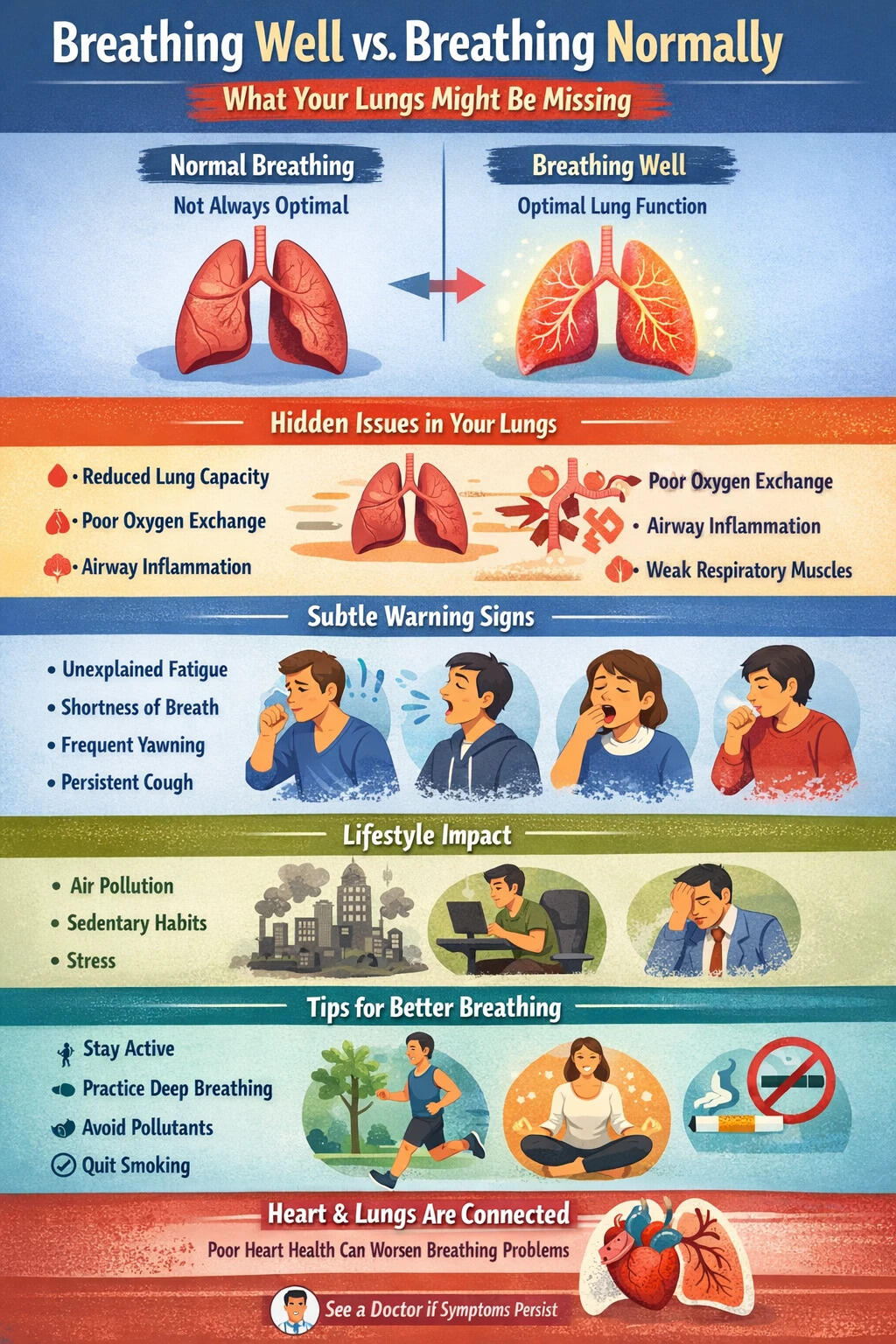
Early awareness and simple habits can improve lung health and prevent long-term damage.
Why ignoring your heart can worsen breathing too
Breathing and heart health are closely linked. When blood flow is affected, oxygen delivery suffers.“Heart attack does not just occur immediately, it happens gradually.
The insides of the arteries become narrowed by fatty deposits (plaque) which limits the blood flow. Once one of these plaques tears open, a blood clot is created and it obstructs the artery, interrupting the supply of oxygen to the heart,” explains Dr Akhil Kumar Rustagi, HOD/ Senior Director – CTVS, Cardiac Sciences, ShardaCare-Healthcity.Risk factors such as high cholesterol, diabetes, smoking, and inactivity damage arteries slowly.
Common warning signs include chest pressure, breathlessness, fatigue, and even indigestion-like discomfort.The overlap is important. When the heart struggles, breathing often feels harder, even if the lungs themselves seem fine.
When should you see a doctor?
If breathlessness becomes frequent, or fatigue feels unusual, it is worth getting checked. Chest tightness, reduced stamina, or persistent cough should not be ignored. Early diagnosis can prevent small issues from turning into long-term conditions.
What should people realise
Breathing is automatic, but breathing well is not guaranteed. The absence of discomfort does not always mean the lungs are healthy. Many changes happen quietly, shaped by lifestyle, environment, and daily habits.Paying attention to small signs, staying active, and making conscious choices can help the lungs work better for years to come. Because sometimes, what feels normal is simply what the body has adapted to, not what it truly needs.Medical experts consultedThis article includes expert inputs shared with TOI Health by:Dr Harish Verma, Associate Director- Pulmonary Medicine and Critical Care, ShardaCare-Healthcity.Dr Akhil Kumar Rustagi, HOD/ Senior Director – CTVS, Cardiac Sciences, ShardaCare-Healthcity.Inputs were used to explain how normal breathing doesn’t always reflect healthy lung function, what may be silently lacking, and why timely attention and expert guidance are important for better respiratory health.