

Frequent yawning, sighing, or deep breaths might signal your lungs aren’t functioning optimally, according to experts. These subtle signs, often overlooked, can indicate reduced capacity or shallow breathing due to modern lifestyles and pollution. Paying attention to these signals and adopting healthier habits can significantly improve lung health and prevent future issues.
Yawning in the middle of a meeting. Taking a deep breath without thinking. Letting out long sighs even when nothing feels wrong. These small actions often get brushed aside as habits or boredom.
But the body rarely does anything without a reason.Breathing is automatic, so it is easy to assume everything is fine. Yet the lungs can underperform quietly for years before showing clear symptoms. What looks like a harmless yawn or sigh can sometimes be the body’s way of asking for better oxygen, better airflow, or simply better care.As Dr Harish Verma, Associate Director- Pulmonary Medicine and Critical Care, ShardaCare-Healthcity, explains, “Majority of the population believes that when they are not experiencing any breath discomfort, their lungs are healthy.
But normal breathing is not necessarily the best functioning of your lungs.”
The hidden difference between breathing and breathing well
Breathing happens without effort. But breathing well is a different story.Dr Verma points out, “Breathing well refers to the lungs functioning effectively to inhale the right amount of oxygen and produce carbon dioxide and sustain the body in their energy requirement.”This means even if there is no breathlessness, the lungs may not be working at full capacity.
Oxygen exchange might be slightly off. Airflow may not be smooth. Over time, this imbalance can affect energy levels, focus, and even immunity.A simple way to understand this: feeling “okay” is not the same as functioning at your best.

While often ignored, these subtle signs can point to reduced lung capacity, shallow breathing, or lifestyle-related factors like pollution and inactivity.
Why yawning, sighing and deep breaths happen more often
These actions are not random. They are subtle adjustments. Yawning helps pull in a large amount of air quickly, especially when oxygen levels feel low. Sighing resets breathing patterns when they become shallow or irregular.Deep breaths help expand parts of the lungs that are not being used enough.In many cases, the body is trying to correct shallow breathing. Modern routines, long sitting hours, and stress often lead to shorter, quicker breaths. So the body compensates with occasional deep ones.
What your lungs could be missing silently
Several factors can quietly reduce lung efficiency without obvious signs.Dr Verma highlights key concerns:
- Less lung capacity: A
sedentary lifestyle limits how much air the lungs can use. - Shallow oxygen exchange: Early-stage lung issues can reduce how well oxygen enters the blood.
- Airway inflammation: Pollution, smoking, and allergies keep airways irritated.
- Weak respiratory muscles: Lack of activity weakens the muscles that help you breathe.
Studies by the Indian Council of Medical Research have also linked rising urban pollution to declining lung function in otherwise healthy individuals.Similarly, the World Health Organization has repeatedly warned that long-term exposure to polluted air reduces lung efficiency even before symptoms appear.
Subtle signs people often ignore
The body rarely sends loud warnings at first. It starts with whispers.Dr Verma notes that these signs may seem small but matter:
- Feeling tired without a clear reason
- Getting breathless during mild effort
- Frequent yawning or deep breathing
- Reduced stamina during exercise
- A mild but persistent cough
These signs often get blamed on stress or lack of sleep. But they can also point toward lungs not performing at their best.
How modern life is quietly affecting your lungs
City living has changed how people breathe. Indoor air, traffic pollution, long screen hours, and stress all play a role.
Many people spend most of their day sitting, with minimal physical movement. This reduces lung expansion over time.Dr Verma explains, “The city life has had a considerable impact on the lungs. Indoor air quality, air pollution, stress, and physical inactivity are all factors that lead to inefficiency in breathing.”The concern is not immediate illness, but gradual decline. Damage builds slowly and often goes unnoticed until it becomes harder to reverse.
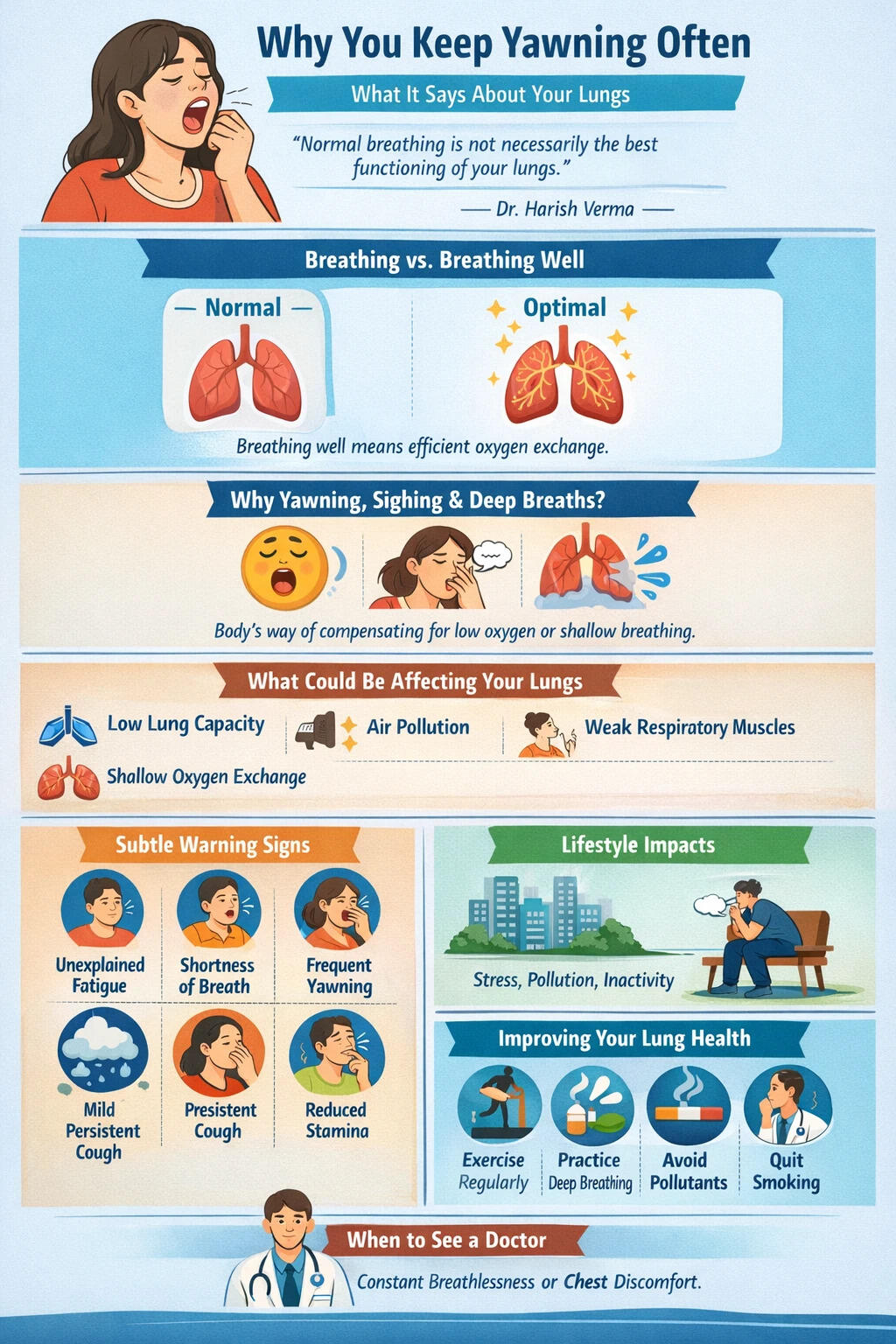
Experts stress the importance of noticing these early signals and improving daily habits to support better lung health.
Simple ways to help your lungs work better
Improving lung function does not always require drastic steps. Small changes can make a visible difference.
- Move daily: Walking, jogging, or yoga helps open up the lungs
- Practice deep breathing: Techniques like diaphragmatic breathing improve oxygen flow
- Avoid polluted air: Use masks in high pollution and ventilate indoor spaces
- Quit smoking: One of the biggest steps toward lung recovery
- Get regular check-ups: Early detection prevents bigger problems
These are not quick fixes. But over time, they help the lungs regain strength and efficiency.
When should it not be ignored anymore?
Occasional yawning or sighing is normal. But patterns matter.Dr Verma advises, “In case you feel breathless constantly, chest tightness, or unnatural tiredness, it is necessary to refer to a specialist.”If these signs persist, they should not be dismissed. Early diagnosis can prevent long-term respiratory issues.
Listening to what your breath is trying to say
Breathing is constant, but awareness is rare. The body does not always shout when something is wrong. Sometimes, it simply sighs a little more often.Yawning, deep breathing, and sighing may look ordinary, but they can reveal how well the lungs are functioning beneath the surface. Paying attention to these small signals can make a big difference over time.Because in the end, it is not just about breathing. It is about breathing well.Medical experts consultedThis article includes expert inputs shared with TOI Health by:Dr Harish Verma, Associate Director- Pulmonary Medicine and Critical Care, ShardaCare-Healthcity.Inputs were used to explain why frequent yawning, sighing, or taking deep breaths may not be random habits but subtle signs of how well your lungs are functioning, and why paying attention to these patterns can help detect underlying respiratory issues early.

