
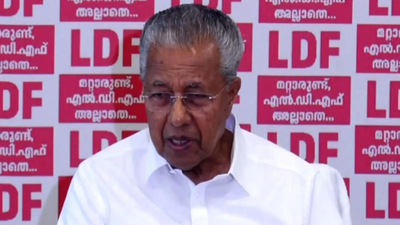
Kerala CM Pinarayi Vijayan
Mounting voter unease, fiscal stress and rifts in CPM will test whether his governance model is enough to defy the state’s alternation patternThe road to the 2026 Kerala assembly elections is shaping up to be a defining political moment not just for the ruling Left Democratic Front (LDF), but, more crucially, for chief minister Pinarayi Vijayan. At stake is more than an electoral victory; it is a referendum on whether the “Pinarayi brand” of governance can withstand anti-incumbency and deliver an unprecedented third straight term in a state historically known for political alternation.Kerala’s electoral history has long been marked by a cyclical shift between the LDF and the United Democratic Front (UDF). The LDF’s return to office in 2021 broke this pattern, raising expectations and intensifying scrutiny. As the 2026 election approaches, the central question is whether that disruption was an exception shaped by extraordinary circumstances or the beginning of a new political trajectory.
Anti-incumbency: Undercurrent or wave?
The debate around anti-incumbency remains complex and, as many observers note, inherently difficult to quantify.
Political commentator Roy Mathew describes it as an “undercurrent”, which may not always be visible but manifests itself decisively during polls. Yet, current indicators suggest antiincumbency is no longer merely speculative and has begun to take a more visible form, he says.The LDF’s setbacks in the 2024 Lok Sabha elections and the 2025 local body polls serve as early warning signals. While not definitive predictors, they point to growing unease among voters, driven less by ideological shifts than by governance concerns such as economic distress, delays in welfare delivery, and administrative fatigue, he adds.
Leadership vs govt: A dual challenge
What distinguishes the current political climate is the apparent shift from generic anti-incumbency against the govt to a more personalised critique of Vijayan himself. Increasing instances of dissent within CPM, including rebel candidates and internal discontent, point to friction within party ranks.Critics argue that perceptions of centralised decision-making, an assertive leadership style and allegations of political arrogance have contributed to this sentiment. This raises a critical question: is the anti-incumbency in 2026 primarily centred on leadership, or does it extend more broadly to the govt’s performance?
Economic strain, welfare pressures
Kerala’s fiscal stress has emerged as a key factor when it comes to voter sentiment.
Welfare politics has traditionally been the cornerstone of LDF’s legitimacy, and disruptions, particularly delays in pension disbursal, directly affect its core support base. In addition, agrarian distress and unemployment have begun to erode the perception of administrative efficiency.Political analyst and psephologist Dr J Prabhash says LDF now carries the burden of a decade in office, adding that the absence of strong anti-incumbency in 2021 was largely due to the extraordinary context of the pandemic.
In contrast, the current environment reflects broader and more palpable dissatisfaction cutting across social groups.
Perception gaps
Recurring allegations of corruption and governance-related controversies have further contributed to a narrative of disconnect between the ruling establishment and public sentiment. While no single issue may decisively sway the electorate, their cumulative effect has reinforced perceptions of strain and fatigue within the system, says Prabhash.
The counter-narrative
Despite these challenges, Vijayan continues to project confidence, seeking to reframe the political discourse around governance and development. His administration highlights achievements in infrastructure, public health and education as evidence of performancedriven legitimacy.Another political commentator, Jacob George, argues that the ‘Pinarayi brand’ remains intact. He points to projects such as the completion of the GAIL pipeline and the progress of the Vizhinjam port as examples of strong leadership.
This narrative seeks to consolidate voter trust by emphasising continuity and administrative capability.
A high-stakes battle
The 2026 Kerala Assembly election is unlikely to be a straightforward verdict on anti-incumbency alone. Instead, it is evolving into a more nuanced contest in which leadership perception, governance outcomes, internal party cohesion and opposition mobilisation will all play decisive roles.For the LDF and Vijayan, the challenge lies in sustaining credibility amid economic pressures and political dissent.
For the opposition, the task is to convert emerging discontent into a cohesive electoral alternative.Ultimately, whether the election becomes a reaffirmation of the ‘Pinarayi model’ or a reassertion of Kerala’s traditional anti-incumbency cycle will define not just the immediate political future, but also the evolving nature of leadership and voter behaviour in the state.