
Indian farmers are shifting from traditional crops to Mahogany tree farming, a long-term investment yielding significant profits. These trees offer premium timber for various global industries and medicinal uses, requiring minimal care and providing substantial returns over 12-15 years. This sustainable approach offers financial stability against climate and market risks.
India’s farmlands are quietly changing from grain fields to green goldmines, where patient planters swap quick cash crops for massive-sized timber that pays off big decades later.In India, where land is legacy and farming feeds dreams, Mahogany trees stand out as the ultimate long-game bet, with low fuss but high reward.Recently, an interesting business idea has been buzzing on social media, where farmers tired of weather whims and market dips are looking forward to these deep-red giants. Let’s find out what this is all about.
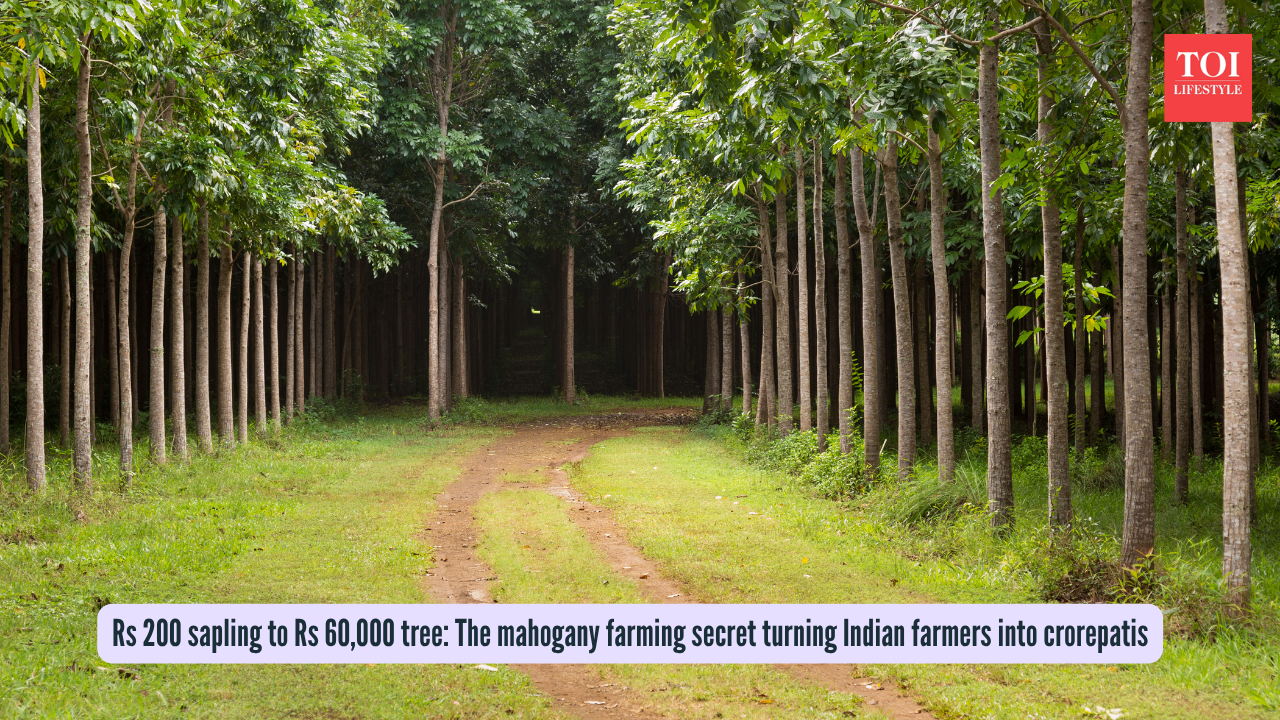
Representative Image
What makes Mahogany tree farming special and an upcoming business idea?
Mahogany, often called the “king of timber,” delivers premium wood prized globally for its durability and rich hue.
The timber fetches Rs 1,500-2,500 per cubic foot, used in shipbuilding, luxury car interiors, rifle stocks, bungalow woodwork, guitars, tablas, and harmoniums. Beyond construction, tree parts also treat malaria, diabetes, and diarrhea. Leaves help make mosquito repellents, soaps, and herbal tonics.
It is a low-cost startup
Saplings cost Rs 200-300 each. Plant 500 for Rs 1 lakh total. These drought-tolerant, pest-resistant trees need minimal care, just occasional watering, no fancy fertilizers.
They reach 50-60 feet tall in 12-15 years, maturing into harvest-ready giants.
Mahogany trees yield massive returns
A single mature tree yields ~40 cubic feet, selling at Rs 1,500/cu ft for Rs 60,000 average. 500 trees make it to Rs 3 crore pure profit after costs. It’s like a passive income that builds silently.
Why has Mahogany farming become popular
Global timber demands have been increasing amid furniture booms and sustainable sourcing. Traditional crops face climate risks, whereas Mahogany offers stability.
In the early years, grow vegetables or shade-tolerant crops between the trees to earn extra income. It is advised to plant trees 10 feet apart (10×10 feet spacing) on a 1-acre plot, which can accommodate about 400-500 trees.
Risks and tips to keep in mind
Wait for trees to reach 12-15 years for maximum value, as cutting earlier reduces trunk thickness.Always check local regulations, since some regions limit non-native species.Test soil to ensure it’s well-drained and loamy. Prune lower branches each year for better growth.
Sell to reputable mills to get the best prices.This isn’t a short term-money scheme, it’s about building wealth for the long term. Many farmers pass down mahogany groves to their children as inheritance or wedding gifts.Mahogany farming changes traditional agriculture: plant once and enjoy profits for years.

