
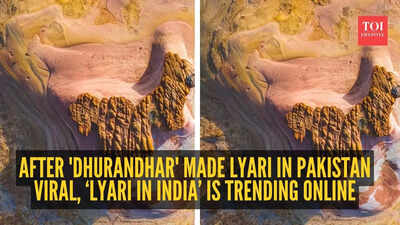
There is a new keyword that is quietly going viral across social media and search platforms. “Lyari in India.” At first glance, it creates confusion. Many people instantly connect it to Karachi.
But the reality behind this trend is very different and much more rooted in nature than people expect.This rising interest is actually about a hidden riverbed in Gujarat that is now being noticed for its unusual landscape and scientific importance. It is not a city, not a border story, and not connected to Pakistan in any way. It is a natural site that has been there for years but is only now getting wider attention. Here is a simple breakdown of what this place really is and why it matters.
What “Lyari” means in the Indian context
In India, Lyari refers to a seasonal river located in the Kutch region of Gujarat. It flows through the Rann of Kutch, which is known for its dry and extreme conditions.This river or the Tal-Lyari is not active throughout the year. The waterbody flows during the monsoon season and then slowly dries up. Thereafter, what remains is a wide riverbed with a few water patches.This dry riverbed is the main point of interest.
No link to Karachi’s Lyari
The similarity in names has led to confusion.
This Lyari is completely different from the Lyari River in Pakistan. It is also not related to any urban area. The Indian Lyari is purely a natural formation with its own identity.
The real highlight lies in the landscape
What makes this place stand out is the structure of its riverbed.As mentioned in an NDTV report, the area has layers of rock that have formed over a long period. These layers look carved and give the land a textured appearance.The formations are the result of natural forces like water flow, wind, and time.
Over the years, these forces have shaped the land into what it looks like today.
Location and accessibility
According to Roundglass Sustain, the Lyari riverbed is located around 70 kilometers from Bhuj. It lies close to the Dhinodhar Hills.It is still a lesser-known place. It does receive visitors, but it has not yet become a major tourist destination.
Why these rock formations are important
The rocks found in this area are important beyond their appearance.They are believed to hold information about the region’s past.
These layers can help experts study climate change over time.
Dhinodhar Hill adds more significance
Near the riverbed is Dhinodhar Hill, which plays an important role in the region’s geography.According to reports, it is known as a volcanic plug. This means it was formed when lava cooled inside a volcanic opening and became solid. Over time, the surrounding material wore away, leaving this structure behind.The drainage patterns around the hill spread outward, creating a distinct layout in the landscape.
A river that changes with the seasons
Lyari is not the same all year round.During the rainy season, water flows through the river. Once the rains stop, the water disappears, leaving behind a calm and dry riverbed with scattered pools.Visitors often say the place looks best during early morning or evening, when the light changes the colours of the land.
Changes in the surrounding region
While Lyari itself remains relatively untouched, nearby areas like the Banni Grassland are seeing development.According to the reports, activities such as mining and renewable energy projects like solar and wind installations are being reported in the region. These are gradually changing the landscape around it.Thumb image: Instagram/ @p_a_a_r_i_n

