
Bengaluru or Chennai sambar? Food delivery platform Zomato sparked debate recently with its viral X post siding with Bengaluru over Chennai after the Royal Challengers Bengaluru defeated the Chennai Super Kings in the latest Indian Premier League 2026 match at the M. Chinnaswamy Stadium in Bengaluru. However, social media didn’t take it lightly. One wrote, “Careful there. Are you ready to shut your operations in Chennai? Behave like a listed company, not like a street vendor. It’s just a league cricket match after all.”
As calls to boycott the app grew louder on social media, we reached out to experts to understand the nuances of each sambar and what makes them unique.
Bengaluru sambar > Chennai sambar.#RCBvCSK
— zomato (@zomato) April 5, 2026
Sambar varies significantly across South India, and the differences are largely shaped by how it is consumed in each region, according to Vinayak Shah, chef and founder of Foodcraft Hospitality. “In Bengaluru and across Karnataka, the sambar typically has a slightly thicker consistency with a hint of sweetness, often coming from ingredients like jaggery. The spice blend is usually thicker, and the dish is commonly paired with items such as idli, vada, or dosa, so the flavour is built to complement these textures,” Shah said.
DISCLAIMER: This article is based on information from the public domain and/or the experts we spoke to.
In Chennai and much of Tamil Nadu, sambar tends to be more fluid in consistency, with a more pronounced tanginess from tamarind and a sharper spice profile, said Shah. “It is frequently served as part of a full meal with rice, so the balance of flavours is adjusted accordingly,” said Shah.
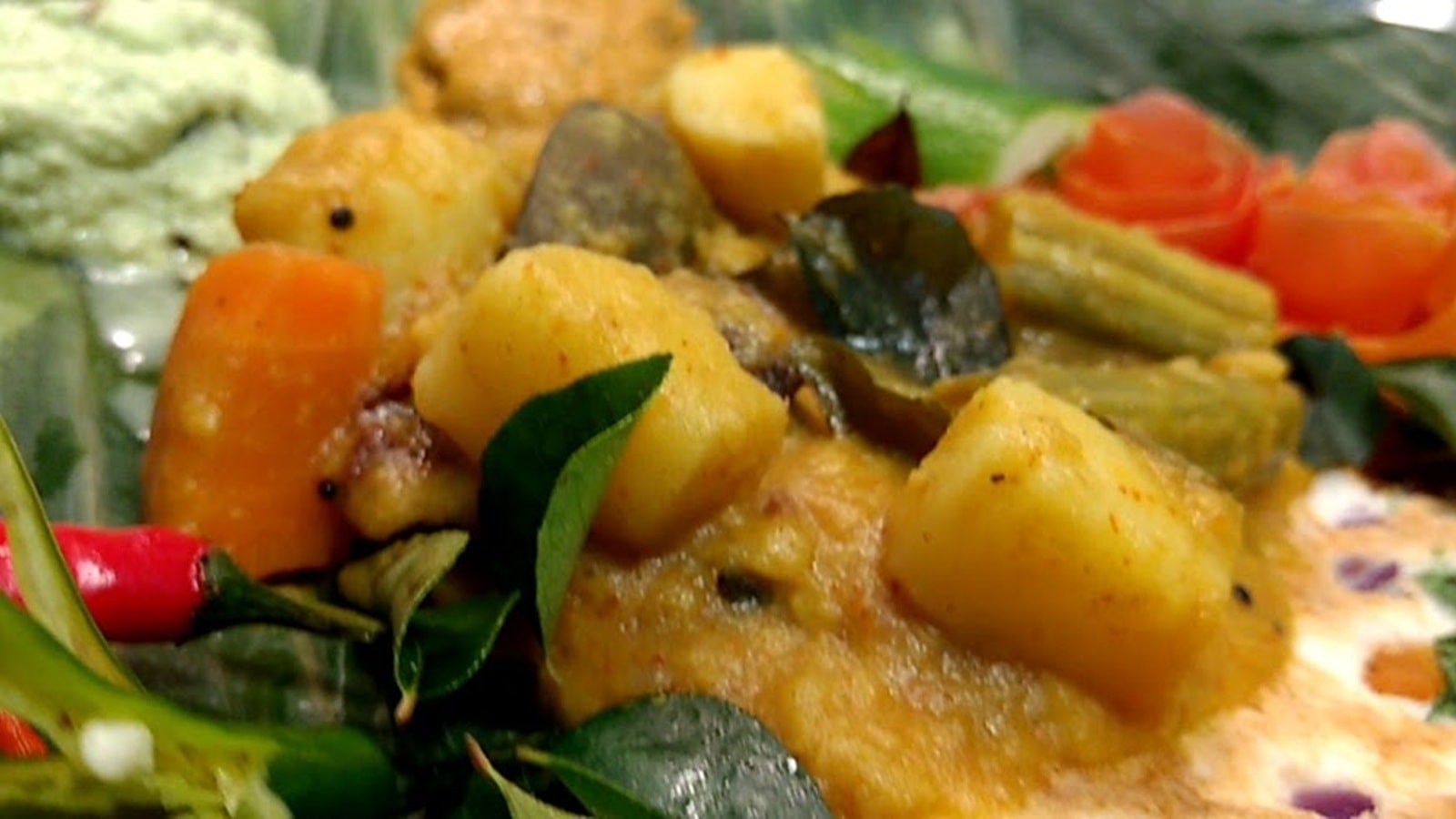 A lot of people make sambar with loads of vegetables (Photo: Wikimedia Commons)
The choice of vegetables, the roasting of spices, and even the ratio of dal to liquid can differ between the two styles.
Food historian and academic Pushpesh Pant weighed in on the origins and said that the sambar served in both these cities represents distinct regional variations that can be traced to the influences from the Thanjavur-Maratha reign. Legend has it that sambar was born when Chhatrapati Sambhaji Maharaj visited the Thanjavur court. A royal cook, finding himself without kokum for the traditional amti, turned to tamarind and added vegetables, creating a lentil stew that came to be known as sambar in the king’s honour.
While Chennai sambar is spicier and tart in flavour, owing to the more extensive use of tamarind, paired with a single vegetable like drumstick, brinjal, or pumpkin, Bengaluru sambar offers a milder, sweeter, and aromatic flavour, owing to the use of jaggery and often features a mix of vegetables. “It features a lot of vegetables and even freshly ground pastes rather than just dry sambar powder,” Pant told indianexpress.com.
Story continues below this ad
Mohammed Chef Eliyaz, executive chef at Conrad Bengaluru, concurred, noting that he sees both as two distinct expressions of the same dish. “Bengaluru-style sambar is more rounded and comforting – it’s slightly sweet, aromatic, and layered because of the freshly ground masala. Chennai-style sambar, on the other hand, is more direct and assertive. It leans into tanginess and spice, with tamarind and sambar powder giving it a sharper, more pronounced character,” said Eliyaz.
Pant further highlighted that while there are variations to the standard Tamil sambar, most feature hing and are characterised by the absence of onion. “Bengaluru sambar is more inclined towards the sweeter Udupi style cuisine,” Pant said.
These variations are not incidental; they reflect regional cooking practices, local palates, and the role the dish plays within a meal, Shah said.
Over time, regional styles emerged, each reflecting its own philosophy. Eliyaz noted that in Bengaluru, the freshly ground masala builds depth, layer by layer, giving the sambar a rich, aromatic, almost velvety body. “In Chennai, it’s all about restraint and precision: the careful use of sambar powder and the timing of tamarind create a cleaner, sharper, and more defined flavour. In essence, Bengaluru sambar feels like a complex, built-up symphony, while Chennai sambar is a disciplined, elegant composition – both rooted in the same legendary origin.”
Story continues below this ad
Shubham Parikh, a food blogger and founder of Mumbai Food Heaven, shared that the difference really shows up in how the flavours hit you. “In some places, the sambar feels a bit fuller and slightly sweet, while in others it’s lighter with more tanginess. Even the way it sits on the palate is different; you notice it more when you’ve eaten both styles multiple times, not just once,” reflected Parikh.
He expressed, “I’ve always felt the difference isn’t drastic when you look at it once, but when you eat it regularly, you start noticing how the flavour, texture, even the aftertaste changes from place to place. It’s the same dish at its core, just shaped by local habits and what people grow up eating.”
DISCLAIMER: This article is based on information from the public domain and/or the experts we spoke to.