
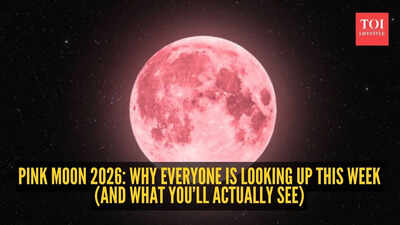
The “Pink Moon,” the first full moon of spring, will reach peak illumination on April 2nd, though the evening of April 1st offers the best viewing. Despite its name, the moon will likely appear orange or golden due to atmospheric scattering. This lunar event also determines the dates for Easter and Passover.
Skywatchers, mark your calendars and ready your binoculars. The first full moon of the spring season is gearing up to grace our night skies, and it is a spectacle you really will not want to miss.Traditionally dubbed the “Pink Moon,” this month’s major lunar event is officially set to reach its absolute peak illumination at exactly 3:12 am on Thursday, April 2. But if you want to catch the most dramatic, picture-perfect views, you will actually need to step outside a bit earlier. The best time to look up is on the evening of Wednesday, April 1, right as the moon begins to breach the horizon.
What exactly is the Pink Moon? (Spoiler: It’s not pink)
If you are heading out expecting to see a vibrant magenta orb floating in the night sky, you might be a little surprised.
The name is completely deceptive. So, where does the colourful title come from? It is actually rooted deeply in history. Early Native American tribes in the northern hemisphere kept track of the shifting seasons by observing the monthly lunar cycle. They named this specific full moon after the early-blooming pink wildflowers – specifically, the wild ground phlox – that beautifully carpeted the ground at the very start of the spring season.
Instead of pink, the moon rising on Wednesday evening is much more likely to glow in striking shades of orange, copper, or even a deep golden yellow.
The science behind the copper glow
There is a fascinating, yet simple, bit of physics behind this colour change. When the moon hangs low on the horizon, the sunlight reflecting off its surface has to travel a much longer distance through Earth’s atmosphere to reach our eyes.Our atmosphere is dense with various particles. As that reflected moonlight pushes through, the shorter wavelengths of light- like the blues and violets – get scattered away in all directions.
What survives the long journey? The longer wavelengths. The reds, oranges, and yellows manage to slice right through the atmospheric interference, giving the rising moon its beautiful, warm, coppery tint. It is the exact same optical trick that gives us those breathtaking, fiery sunsets.
A brilliant companion in the Virgo constellation
This week’s lunar display comes with a fantastic bonus feature for astronomy enthusiasts. As you admire the full moon, pay close attention to the exceptionally bright point of light sitting very close to it.
That isn’t just an ordinary star. It is Spica, a dazzling binary star system located right within the Virgo constellation. Having Spica positioned so closely to the glowing full moon creates a wonderfully dynamic night sky.
Setting the date for a major holiday
Beyond its undeniable visual appeal, the Pink Moon holds significant cultural and religious weight. It directly dictates when millions of people around the world will celebrate Easter and Passover.The rule for this is quite ancient. Easter always falls on the very first Sunday that follows the first full moon after the spring equinox. Because this year’s astronomical spring equinox landed on March 20, this specific April full moon acts as the trigger. It officially locks in the dates for the upcoming holiday weekend.
Will the weather play spoilsport?
Of course, any astronomical event is entirely at the mercy of the weather. For those tuning in from the UK, the forecast is currently a bit of a mixed bag.

According to the latest meteorological updates, skywatchers in England and Wales might face some frustration. Heavy cloud cover and patches of rain are expected to roll in on Wednesday night, potentially blocking the view entirely. However, it is a different story further north. Scotland and Northern Ireland are currently sitting under colder air masses, meaning those regions boast the highest chances for clear, uninterrupted viewing spells.Whether you get a pristine view or just a fleeting glimpse through a break in the clouds, take a moment on Wednesday night to step outside. The spring sky is finally waking up.