

Health experts now emphasize meal timing alongside diet for metabolic health. Our body’s internal clock dictates how we process food, with late-night eating disrupting blood sugar, liver function, and fat storage. Consistent meal schedules, especially early dinners, are crucial for maintaining balance and preventing issues like weight gain and fatty liver.
There’s a shift happening in how health experts look at food. It’s no longer just about calories, carbs, or clean eating. Time has entered the conversation. The body doesn’t process a late-night dinner the same way it handles a morning meal.
It reacts differently, stores differently, and even heals differently.In daily life, meals often follow convenience, not biology. Breakfast gets skipped, lunch is rushed, and dinner stretches into the night. Over time, this pattern can nudge the body off balance. Blood sugar begins to fluctuate. The liver works overtime. Weight creeps up without a clear reason.
Watch
How to reduce your sugar intake without feeling deprived: 9 foods for managing diabetes
As Dr Sunil Rana explains, “Most people focus only on what they eat, but when they eat is equally critical for metabolic health.
Our body follows a natural circadian rhythm, and irregular meal timing—like late-night dinners or skipping breakfast—can disrupt insulin sensitivity, leading to unstable blood sugar levels. Over time, this increases the risk of conditions like prediabetes, fatty liver, and unwanted weight gain.
”
The body runs on a clock you can’t see
Every organ follows a rhythm. This internal clock, often called the circadian rhythm, controls sleep, hormones, digestion, and metabolism.
In the morning, the body is primed to use energy. Insulin works better. Food gets converted into fuel. But as evening sets in, this efficiency drops. The same meal eaten at 10 pm can lead to higher blood sugar spikes than if eaten at 10 am.A government-backed study by the National Institutes of Health found that eating later in the day is linked to impaired glucose tolerance and increased fat storage.
Blood sugar swings often begin with timing, not sugar
It sounds counterintuitive, but unstable blood sugar isn’t always about eating too much sugar.
It can start with when meals are taken.Skipping breakfast may seem harmless. But it often leads to a sharper rise in blood sugar after the next meal. The body, after a long fast, becomes less responsive to insulin.Late dinners worsen this further. The body struggles to bring sugar levels down overnight, which can quietly raise fasting glucose over time.A controlled trial published by the National Institute of Diabetes and Digestive and Kidney Diseases shows that early eating improves insulin sensitivity and reduces glucose spikes.

Irregular eating patterns, especially late-night meals and skipped breakfasts, can disrupt metabolism and increase health risks over time.
Your liver keeps the score of your eating hours
The liver is often silent. It doesn’t complain early, but it adapts to patterns. Irregular eating, especially late-night meals, forces the liver to process nutrients when it should be resting. Over time, this can lead to fat buildup, even in people who don’t drink alcohol.Dr Rana puts it simply, “When meals are consumed at inconsistent hours, the liver struggles to process nutrients efficiently, which may silently promote fat accumulation.”This explains why some people develop fatty liver despite eating “healthy” foods. Timing disrupts metabolism long before symptoms appear.
Late-night eating changes how your body stores fat
Eating late doesn’t just add calories. It changes how those calories are used.Research supported by the National Institutes of Health shows that late eaters burn fewer calories and store more fat compared to early eaters, even when calorie intake is the same.This happens because metabolism slows down at night. The body shifts from burning to storing.
Hunger hormones also behave differently, making late-night snacking harder to control.
Skipping meals doesn’t “fix” weight, it confuses the body
There’s a belief that eating less often helps with weight loss. But long, irregular gaps can backfire. When meals are skipped, the body enters a conservation mode. It becomes efficient at storing energy when food finally arrives. This can slow metabolism over time.Erratic eating also increases cravings. The body looks for quick energy, often in the form of sugary or high-fat foods.
The result is a cycle that feels like discipline but acts like stress on the system.
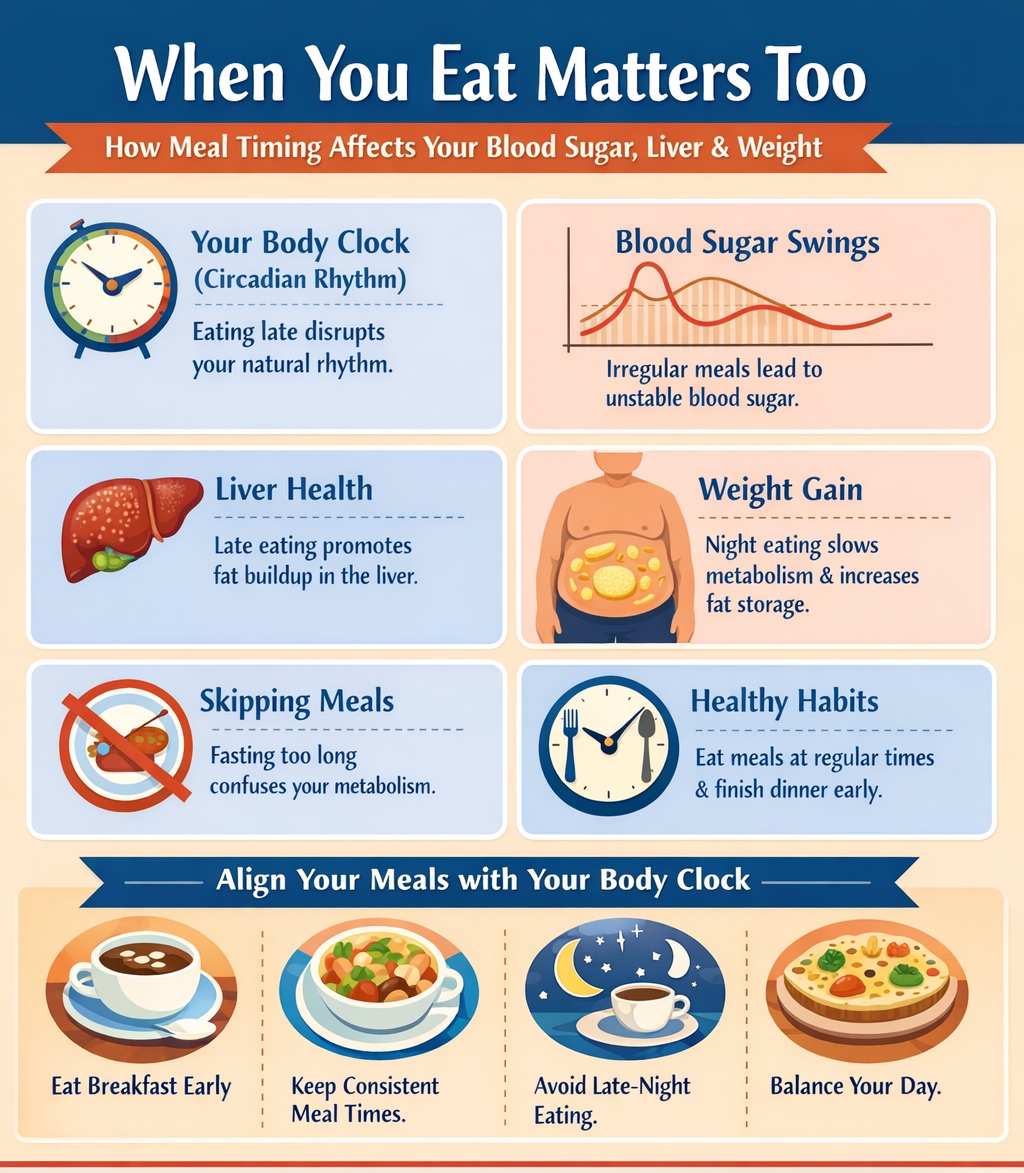
Aligning meals with the body’s natural clock helps improve insulin sensitivity, supports liver health, and prevents unnecessary weight gain.
A steady eating rhythm can reset more than hunger
Consistency is where the real change begins. The body doesn’t need perfection. It needs rhythm.Dr Rana advises, “I always advise patients to maintain a consistent eating window, prioritize an early dinner, and avoid prolonged gaps or erratic snacking. Aligning your meals with your body clock is a simple yet powerful step to improve metabolism, protect liver health, and maintain a healthy weight in the long run.”Simple shifts can help:
- Eating breakfast within 1-2 hours of waking
- Keeping meals at similar times daily
- Finishing dinner at least 2-3 hours before sleep
- Avoiding frequent late-night snacking
These habits don’t demand extreme diets. They restore balance.
Food timing is not a trend, it’s a return to basics
Long before modern nutrition, routines shaped eating habits. Meals followed daylight. Nights were for rest. Today, screens, work, and lifestyle have blurred that line. But the body hasn’t changed as fast as schedules have. It only asks for attention.Medical experts consultedThis article includes expert inputs shared with TOI Health by:Dr Sunil Rana, Associate Director and Head- Internal Medicine, Asian Hospital.Inputs were used to explain how meal timing influences blood sugar levels, liver function, and weight management, and why paying attention to when you eat is as important as what you eat for overall health.


