
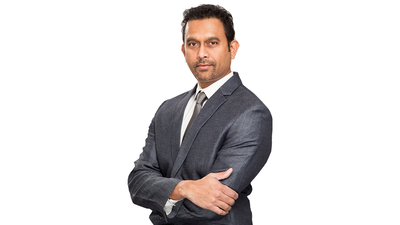
Regenerative Orthopaedics offers biologic, image-guided alternatives that aim to repair and regenerate rather than remove and replace.At the centre of this movement is Dr Venkatesh (Ven) Movva, Founder of RegenOrthoSport. A fellowship-trained Sports Medicine physician with board certification and over three decades of experience across Dallas, Mumbai, Bengaluru, and Hyderabad, Dr Movva has pioneered precision-based, non-surgical treatments using autologous bone marrow stem cells, high-concentration platelets, and growth factors to stimulate targeted tissue repair.Dr Movva was among the early physicians to introduce this paradigm shift to India nearly a decade ago – a philosophy that is already mainstream worldwide and now rapidly growing across India.A new era in Orthopaedics“Orthopaedics traditionally focused on cutting, replacing, or permanently altering anatomy,” Dr Movva says. “Regenerative Orthopedics asks whether we can activate the body’s own repair pathways before making irreversible decisions.”This approach now addresses conditions that were once considered surgical-only in many cases, including:
- ACL repair support in selected ligament injuries
- Labral regeneration strategies for shoulder and hip pathology
- Meniscal regeneration approaches
- Disc regeneration therapies in early degeneration
- Early-to-mid-stage avascular necrosis (AVN)
- Intraosseous biologic therapy for bone marrow lesions
“In appropriately selected patients, we are not just managing pain – we are supporting tissue repair and helping patients return to activity sooner,” he explains.Dr Movva, tell us about your journey and what led you to regenerative Orthopedics.My path into regenerative Orthopedics began with a simple question: Can we help the body heal itself before moving to surgery?After years of treating athletes and active individuals with joint and spine injuries, it became clear that many patients wanted solutions that preserved their natural anatomy whenever possible.
That shift in perspective led to a focus on biologic therapies designed to support the body’s own repair systems.The body already contains powerful healing elements – platelets, bone marrow stem cells, and growth factors. When carefully concentrated and precisely delivered, they can stimulate repair in a way that works with the body rather than replacing it.At RegenOrthoSport, the philosophy is straightforward and patient-centered:Repair. Regenerate.
Preserve.For patients, that means exploring thoughtful, stage-based options aimed at reducing pain, restoring function, and potentially delaying or avoiding surgery – while helping them return to the activities they love with confidence.For those unfamiliar, what is regenerative Orthopedics?Regenerative Orthopedics uses a patient’s own bone marrow stem cells, platelets, growth factors, and cytokines to repair damaged joints, tendons, ligaments, and discs without surgery.
These cells are harvested, concentrated, and injected precisely into the injured area using live ultrasound and fluoroscopic X-ray guidance.The goal is to regenerate tissue while preserving natural structures instead of cutting or replacing them. Only autologous (self-derived) cells are used, in accordance with ICMR guidelines – no donor tissue, no implants, and no hospital admission. Patients typically return home the same day, followed by structured rehabilitation.What are High-Concentration Platelet and Bone Marrow Stem Cell therapies, and how do you decide which is right?High-Concentration Platelets are derived from a patient’s own blood and concentrated 16–18 times to release growth factors that accelerate tissue repair. They are often ideal for early inflammation, tendonitis, and mild soft-tissue injuries.Bone Marrow Stem Cell therapy uses concentrated stem cells harvested from the iliac crest to support repair in structural damage – such as cartilage degeneration, meniscus tears, disc pathology, or early arthritis – where platelets alone may not be sufficient.The choice depends on clinical evaluation, biomechanics, and MRI analysis. Treatment must be tailored to the patient, not just the scan.What conditions can be treated?The knee remains the most commonly treated joint, including cartilage injuries, meniscus tears, ACL injuries, and early-to-moderate osteoarthritis.Spine conditions such as disc bulges, herniations, degeneration, and sciatica are increasingly seen in younger adults. Shoulders, hips, ankles, and smaller joints are also addressed.In India, early-to-mid-stage AVN of the hip – often steroid-related – can be managed biologically before collapse occurs, potentially delaying or preventing joint replacement.What advantages do regenerative treatments offer over surgery?These treatments preserve natural tissue, avoid implants, and do not cause permanent structural changes. They are minimally invasive, performed under local anesthesia, and generally carry lower risks compared to surgical intervention.Recovery is often measured in weeks rather than months. Importantly, if outcomes are not optimal, surgical options remain available.What sets RegenOrthoSport apart?RegenOrthoSport is guided by the following clinical standards:High-concentration protocols: Standardised biologic preparation across all centres.Precision individualisation: Image-guided, diagnosis-driven treatment with structured rehabilitation.Autologous-only approach: Exclusively patient-derived biologics; no donor or foreign materials.Active clinical research: Ongoing evaluation of safety and efficacy.Regulatory compliance: Strict adherence to governmental and ICMR guidelines.Outcomes monitoring: Systematic tracking of functional and patient-reported results.Evidence-based refinement: Protocols continuously updated based on scientific literature and real-world data.The future is already hereRegenerative Orthopedics is no longer a theoretical concept.
It is a rapidly expanding, research-backed field with increasing global adoption. The next decade is expected to bring bioengineered scaffolds, cell-seeded injectables, targeted biologic delivery systems, and 3D bioprinting using a patient’s own cells.As musculoskeletal disease increases alongside longer life expectancy, regenerative Orthopedics is no longer viewed as a fringe alternative, but as an integrated, evidence-supported approach to joint preservation.For patients facing the prospect of irreversible surgery, the question is no longer simply, “What can be removed or replaced?” – but rather, “Can this be repaired and preserved?”In many cases, modern regenerative medicine suggests the answer is yes.Disclaimer: The views and opinions expressed in the story are independent professional judgment of the experts and we do not take any responsibility for the accuracy of their views. This should not be considered as a substitute for medical advice. Please consult your treating physician for more details. Movva Healthcare is solely liable for the correctness, reliability of the content and/or compliance of applicable laws. The above is non-editorial content and TIL does not guarantee, vouch or endorse any of it. Please take all steps necessary to ascertain that any information and content provided is correct, updated, and verified.