
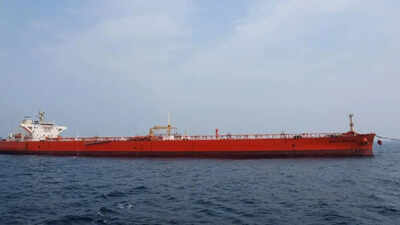
Hours after a Greek vessel moved through the Strait of Hormuz, two more Chinese supertankers are transiting the narrow chokepoint as peace talks are underway between the US and Iran in Pakistan, news agency Bloomberg reported.This comes days after the US and Iran announced a temporary two-week ceasefire, halting a month-long conflict in the Middle East.If all three vessels pass, it would mark the biggest day of oil exiting through Hormuz since the conflict began.According to Bloomberg, none of the vessels is carrying oil from Iran or has obvious, direct links to the country. Since the war began, the vast majority of crude leaving the region has come from the Islamic Republic.In oil-flow terms, the exits are significant but still well below peacetime levels. The three tankers together have a transport capacity of about 6 million barrels of crude. In addition, Iran exported at a rate of about 1.7 million barrels a day last month. That would imply about half the normal rate of shipments through the waterway — and only for a single day.Meanwhile, an India-flagged liquefied petroleum gas (LPG) tanker, Jag Vikram, also crossed the strait, marking the first such transit by an Indian vessel since the ceasefire was announced.
The tanker moved through the strategic waterway between Friday night and Saturday morning and was located in the Gulf of Oman, east of the strait on Saturday afternoon, proceeding eastwards.Jag Vikram is the ninth Indian vessel to exit the Persian Gulf since early March, while about 15 India-flagged ships remain in the region, awaiting passage.At least 28 India-flagged vessels were in the Strait of Hormuz region when the West Asia conflict erupted, including 24 on the western side and four on the eastern side of the waterway.The reopening of Hormuz is critical to the world’s oil trade because its closure has resulted in the loss of millions of barrels of supply to global markets. A resumption would alleviate pressure on increasingly tight physical markets everywhere.The two Chinese supertankers would be the first from the Asian nation observed taking barrels out of the region, a boon for Beijing but nevertheless underscoring that the country has also been squeezed by the conflict.

