
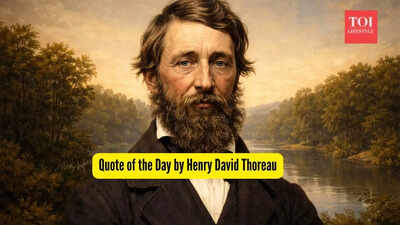
Henry David Thoreau was an American writer, philosopher, and naturalist. He is best known for his ideas about living simply, being free, and getting along with nature. Thoreau was born on July 12, 1817, in Concord, Massachusetts, to a family that wasn’t very wealthy.
He was genuinely interested in nature, observation, and learning from a young age. Thoreau went to Harvard University, where he learned about classical literature, philosophy, and science. Despite receiving a formal education, Thoreau frequently questioned established practices and preferred independent thought. After he graduated, he worked as a teacher, a surveyor, and a writer, but none of these jobs really defined him. Thoreau’s friendship with Ralph Waldo Emerson, a key figure in the philosophical movement called Transcendentalism, had a big impact on his life. This movement stressed the value of trusting your gut, being independent, and having a spiritual connection to nature. Emerson pushed Thoreau to write and helped him grow as a thinker. As a result of this, Thoreau found his own unique voice and point of view. Thoreau’s experiment in simple living at Walden Pond was one of the most important things that happened to him.
He built a small cabin near the pond in 1845 and lived there for about two years. He wanted to live on purpose during this time, away from the noise of society, so he could figure out what was really important in life. Later, he wrote about his experiences in the famous book Walden, where he talked about nature, being self-sufficient, and the worth of living a simple, mindful life.Thoreau believed that people should live authentically and independently, rather than just going along with what everyone else does.
He thought that modern life often keeps people from focusing on what really matters. He said that money, things, and always being busy don’t make people truly happy. He told people to make their lives simpler and focus on growing, thinking, and connecting with nature. Another important part of Thoreau’s teachings was his belief in personal conscience and moral duty.
His most famous essay, “Civil Disobedience,” makes this point most clearly.
In this piece, Thoreau said that people shouldn’t let governments go against their moral beliefs. People have a duty to peacefully oppose a law that is unfair. He put this idea into action by not paying a poll tax as a way to protest slavery and the Mexican-American War. This got him arrested for a short time.Thoreau’s thoughts on civil disobedience had a big effect on many important leaders and movements around the world. His ideas about nonviolent resistance inspired people like Mahatma Gandhi and Martin Luther King Jr. Gandhi used these ideas to help India become free, and Martin Luther King Jr.
used them to help the Civil Rights Movement in the United States. Thoreau’s belief in peaceful protest was a strong way to bring about social change. Thoreau is remembered not only for his political and philosophical ideas, but also for his work in environmental thought. People often think of him as one of the first environmentalists.
His careful notes on plants, animals, and the changing seasons show that he has a lot of respect for nature.
He thought that people are a part of nature, not separate from it, and that taking care of the natural world is important for both spiritual and physical health. His writings still inspire modern movements for the environment and conservation.Another important part of Thoreau’s legacy is the way he wrote. His work is admired for its clarity, poetic appeal, and deep insight. He mixed scientific observation with philosophy in his works.
Thoreau had a big impact on literature, philosophy, politics, and environmentalism, even though he only lived for 44 years. He died on May 6, 1862. His ideas make people think for themselves, live simply, and do what they think is right.
Thoreau’s message is still essential in a world that often values speed, consumption, and following the rules. In short, Henry David Thoreau was more than just a writer. He was also a thinker who told people to question society, look for the truth inside themselves, and live in harmony with nature.
He is one of the most important thinkers of our time because he lived at Walden Pond, supported civil disobedience, and cared about the natural world. People still look to his teachings for inspiration to live lives that are meaningful, moral, and aware.One of the most iconic lines of David Thoreau is, “Do not be too moral. You may be cheating yourself out of much life. Aim above morality. Be not simply good, be good for something.” Through these lines, the author wants to convey that being good is not enough. He thinks that just following social norms or rules that are called “moral” can sometimes make people less real and limit their experiences. In trying to be good and rightful, many forget to live life! Thoreau says, “You may cheat yourself out of much life,” which means that being too concerned with traditional morality can keep people from fully enjoying life.
For example, society often has strict rules about what is right and wrong, as well as what is proper and improper. If someone believes these things without question, they might stop being creative, curious, or honest with themselves. Lastly, “be not simply good, be good for something” stresses the importance of doing good things on purpose. Thoreau is telling people to reject goodness that is passive or meaningless, like merely avoiding wrongdoing or following the rules. Thoreau’s broader philosophy is that life should be guided by self-awareness, independence, and moral courage. This quote shows that. He thought that real goodness comes from within and must be shown through actions that have a purpose. People shouldn’t just follow rules without contemplating them. His message is still important today: we should live fully, think for ourselves, and make sure that what we do matters.