
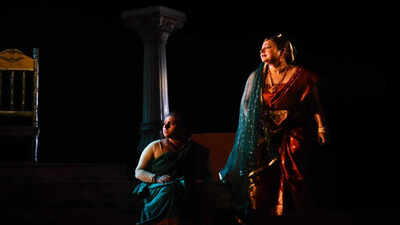
After three years of working with short-format theatre, city-based group Rong O Mukh made a confident leap into full-length productions with Binashthi last year. Now, marking their fifth anniversary, the group returns with Rupakriti- a carefully crafted historical drama that revives a lesser-known story from the Gupta era.Directed by playwright Shankar Bandyopadhyay, known for translating the works of Mirza Ghalib ,the production continues his interest in reinterpreting existing narratives. While Binashthi drew from Akira Kurosawa’s Rashomon, Rupakriti turns to history, building its narrative from fragments of the nearly lost Sanskrit play Devi Chandraguptam by Vishakhadatta.A story of conflict, choice, and voiceSet in the transitional period between Samudragupta and Chandragupta II, the play centres on Ramagupta and the events that shaped the course of succession.
At its core is a dramatic sequence—Ramagupta’s controversial decision involving his queen Dhruvadevi, and the chain of events that follow, including Chandragupta’s intervention and eventual rise. What stands out, however, is Dhruvadevi’s perspective.
Faced with a deeply personal crisis, she asserts her voice, drawing on verses from the Parashara Samhita to justify her stance. The moment resonates beyond its historical setting—centuries later, Ishwar Chandra Vidyasagar would invoke similar texts while advocating widow remarriage.
“Rupakriti speaks about women’s liberation as early as 400 AD,” says Bandyopadhyay.
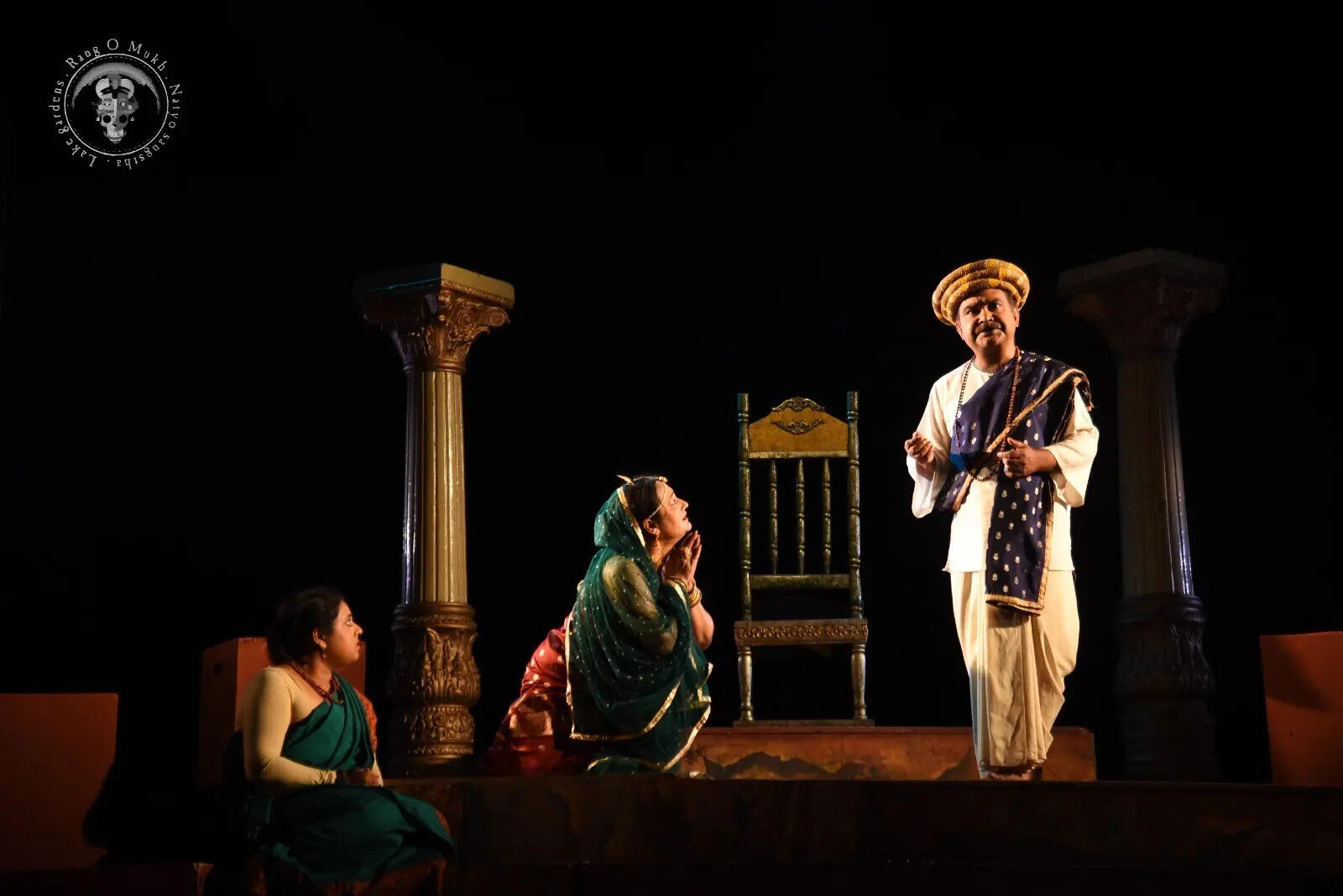
Rituals, performance, and interpretationThe play opens with Dhruvadevi’s reluctant marriage and closes with a union shaped by choice, creating a sense of narrative symmetry. The use of Saptapadi mantras, alongside their Bengali translations, adds an interesting layer, highlighting ideas of consent and partnership embedded within tradition. On stage, Kabita Sonali delivers a nuanced performance as Dhruvadevi.
“Playing her felt deeply personal,” she says.
“She carries both vulnerability and strength, there’s a quiet assertion in her journey that stays with you.” Tanushree Das supports well as Damini, while Basudev Bhattacharya brings depth to Harishena. Dipak Sengupta, as Vasubandhu, leaves a lasting impression. There are moments, however, where dialogue delivery falters, slightly affecting the flow. Krishnendu Mondal’s Chandragupta, despite effort, feels uneven at times, while Prajna Dutta stands out with a confident portrayal of Rudrasimha.