
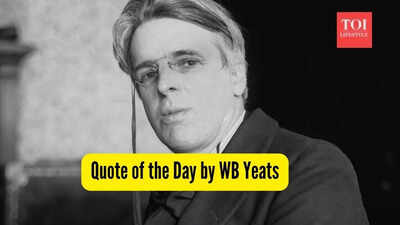
William Butler Yeats is one of the most important poets in modern literature. Yeats was a key figure in twentieth-century poetry. He used mysticism, politics, folklore, and lyrical beauty to make a body of work that changed English literature.
His poetry went from dreamy romanticism to sharp modernist reflection. His poetry was a reflection of both his own life and the big political changes happening in Ireland at the time. Yeats became not only a renowned writer but also one of the most important voices in Ireland’s cultural revival through his poems, plays, and essays.On June 13, 1865, in Dublin, Ireland, William Butler Yeats was born. John Butler Yeats, his father, was a painter who pushed the family to be creative and learn new things.
Yeats was born in Dublin, but he spent most of his childhood in the countryside of County Sligo in western Ireland. The myths, legends, and natural beauty of Sligo had a lasting effect on the young poet and later became a major source of inspiration for many of his works.
Yeats loved Irish myths and stories when he was a kid. Tales of old heroes, fairies, spirits, and magical places fascinated him. This interest would later influence his poems and plays, which were part of a larger movement called the Irish Literary Revival.
The revival aimed to rediscover and celebrate Ireland’s cultural heritage while the British were in charge of the country.Yeats went to school in Dublin when he was young and then went to the Metropolitan School of Art. But over time, his interest moved from visual art to literature. By the time he was in his early twenties, he had started to publish poetry and was becoming known as a talented young writer.Romanticism and early poetryRomanticism and symbolism had a big impact on Yeats’s early poetry.
The Wanderings of Oisin and Other Poems (1889) and other early collections looked at themes from Celtic mythology and folklore. These poems often had mystical landscapes, heroic characters, and images that looked like dreams. The Lake Isle of Innisfree, written in 1888, is one of his most famous poems from his early years. Yeats imagines leaving behind the noise of modern life in this poem and going to a quiet island where he can live in harmony with nature.
The poem shows how much the poet wants to be at peace and feel connected to nature on a spiritual level.Another famous early poem is “The Stolen Child,” which shows how much Yeats loved Irish folklore. The poem is about fairies trying to get a child to leave the real world and go to a magical one. It shows both the magic and the sadness of leaving the normal world behind. At this point in his career, Yeats’s poetry was known for its musical language, deep symbolism, and romantic longing.
But his style and themes would change a lot over time.Yeats and the Irish Literary RenaissanceYeats was a big part of the Irish cultural renaissance in the late 1800s and early 1900s. He thought that Ireland needed a strong cultural identity based on its own myths, language, and customs. Yeats, along with other writers and cultural figures, tried to bring back Irish stories, plays, and folktales. The Abbey Theatre in Dublin, which he started in 1904, is one of his most important contributions.
The theater became a central part of Irish culture, putting on plays that dealt with Irish issues and themes.
Yeats wrote a number of plays for the theater, one of which was Cathleen ni Houlihan, which became an important work of nationalist drama. Yeats helped Ireland’s culture become more confident by being involved in theater and literature. Other writers were inspired by his work to write about Irish themes and stories.Politics and YeatsYeats lived in Ireland during a time of great political change. In the early 1900s, nationalist movements grew and people fought for independence from Britain. The Easter Rising of 1916, an armed uprising against British rule, was one of the most important events in history during this time. Yeats was named to the Irish Free State Senate in 1922, after Ireland became partly independent. He talked about cultural issues, education, and the arts’ place in society as a senator.International fame and the Nobel PrizeYeats had become one of the most important poets in English by the 1920s. He won the Nobel Prize in Literature in 1923. The award praised his “inspired poetry, which expresses the spirit of a whole nation in a very artistic way.” This award made Yeats a well-known writer all over the world. People liked his work not only because it was beautiful and well-made, but also because it was able to show how complicated modern life is emotionally and politically.Later Years and last worksYeats wrote some of his best poetry in the last years of his life. His later collections show that he wasn’t afraid to deal with getting older, dying, and the passage of time. His mature work is very deep and emotional, as shown by poems like “Among School Children” and “Lapis Lazuli.” Yeats kept writing even as his health got worse. He passed away in France on January 28, 1939. After he died, his body was buried again in County Sligo, the place that inspired a lot of his poetry.Impact on literatureWilliam Butler Yeats had a huge impact on literature. His work helped connect the romantic styles of the 1800s with the new ideas of the 1900s. Yeats showed that poetry could talk about both big historical events and personal feelings. heritage by using Irish folktales and history. Yeats’s poems still speak to people all over the world more than eighty years after his death. His writing about love, politics, mythology, and the mysteries of life will always be relevant.
One of his most famous lines says that the world may seem chaotic and uncertain most of the time, but art and imagination keep the human spirit alive. William Butler Yeats’s legacy lives on in that spirit of endurance.Quote of the DayOne of the most memorable quotes from WB Yeats is about happiness. It says, “Happiness is neither virtue nor pleasure nor this thing nor that but simply growth. We are happy when we are growing.” One of William Butler Yeats’s most famous thoughts on happiness is, “Happiness is not virtue, pleasure, or this or that; it is simply growth.” When we grow, we are happy. This statement expresses a deep and philosophical understanding of what it means to be happy.
Yeats stresses personal growth as the real source of lasting happiness instead of linking happiness to outside successes or short-term pleasures.People often think that happiness comes from having a lot of money, being comfortable, or having fun for a short time. People often think that getting rich, famous, or living in luxury will make them happy. But Yeats goes against this common belief. He says that happiness doesn’t come from having something or reaching a certain level.
Instead, it comes from constantly growing in all three areas: mentally, emotionally, and spiritually.Yeats thought that growth meant becoming a more complete version of oneself. People are always changing and growing as they learn, have new experiences, and think about them. People feel like they are making progress when they learn more about the world, improve their skills, and face challenges. People in today’s world often feel pressure to measure success by material things. Yeats’s words give us a new way to look at things.
They remind us that happiness comes from growing inside, not from getting things from the outside. A person who is learning, growing, and trying to get better will naturally feel alive and happy.