
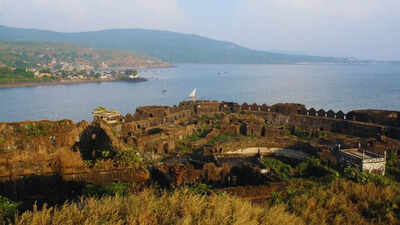
Inside Janjira Fort. Wikimedia Commons CC 3.0/Dr. Raju Kasambe
In India, forts have been built and destroyed, captured after fierce battles, captured after sieges, and captured after internal betrayal. The empires have come and gone, and all have left their mark on these magnificent structures.
But in this long and eventful past, there has been a phenomenon, a rare anomaly, a fort that defied all kinds of attacks, all forms and types of attacks, standing resolute and unyielding after repeated attempts, no matter how hard and how many times it was attacked.Rising majestically from the Arabian Sea, off the Konkan coast, Murud Janjira is not just another historic fort, but one that has come to be accepted and acknowledged as India’s only fort, never captured, not through a siege, not through betrayal, and most definitely not through a military assault.
This part of the subcontinent has seen many forts, however invincible they might have been, captured through attacks and invasions, and yet Janjira stands out as a rare phenomenon, a military fort, never captured, never defeated.
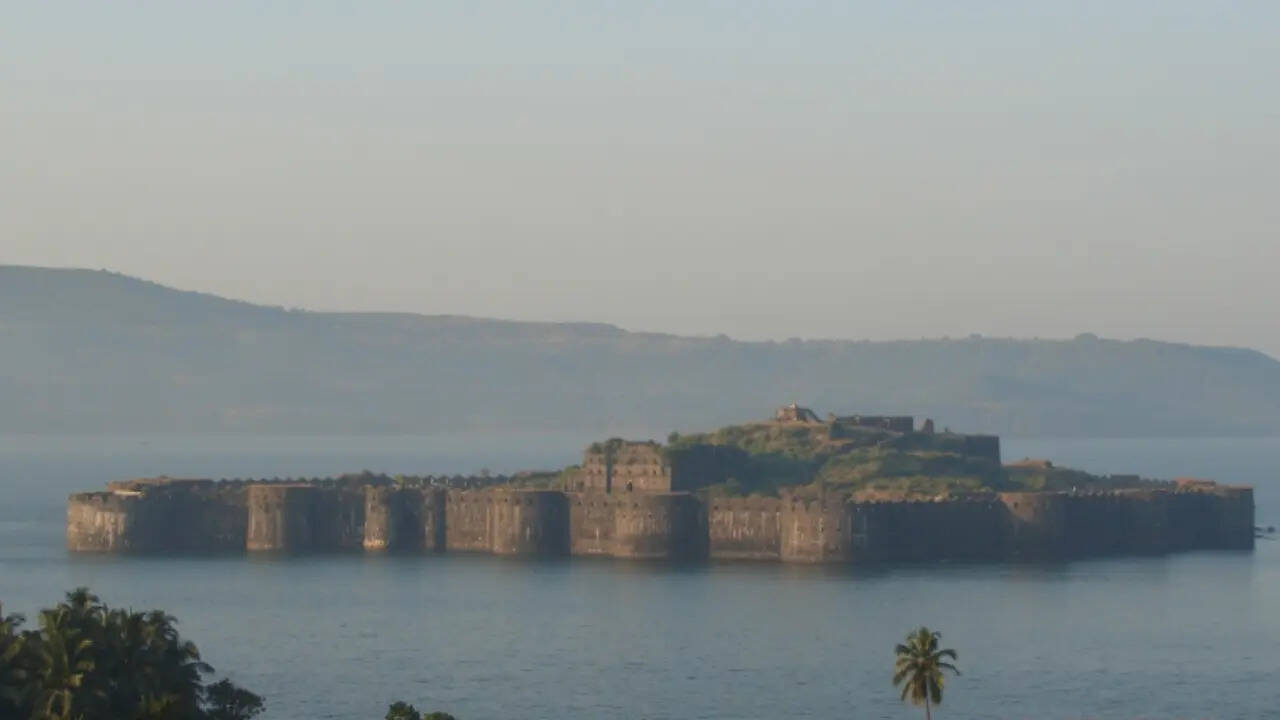
Murud Janjira Fort. Wikimedia Commons CC 3.0 / Parag Purandare
The origins of Murud Janjira date back to the 15th-16th century, when a small wooden fortification, originally raised by a Koli chieftain, was later converted into a massive stone fortress by the Siddis, an African-ethnic ruling class with strong naval capabilities.
The fort’s name, ‘Janjira,’ has been derived from the Arabic term ‘Jazira,’ which means ‘island.’ The term ‘island’ was given because of the fort’s geographical location. The fort was situated on a rocky outcrop, oval in shape, 2 kilometers away from the mainland. It was impossible to access the fort through land, and this immediately made the fort quite different from other forts in the country.Janjira under the Siddis, became a small but powerful empire, which made alliances with other powerful empires, including the Mughal Empire, in order to strengthen its position.
The unbroken record: Never conquered
What sets Murud Janjira apart from other forts is not only the design of the fort, but also that there is a record of attempts made by various powerful forces to conquer the fort, and none of them succeeded.Some of the powerful forces that tried and failed to capture Murud Janjira fort are:
- Marathas under Shivaji Maharaj
- Sambhaji Maharaj
- Portuguese navy
- British Empire
- Deccan kingdoms
None of these powerful forces succeeded in capturing the fort despite repeated attempts, including naval attacks, sieges, and covert strategies.
One documented Maratha attack in 1676 involving thousands of troops was repelled decisively.
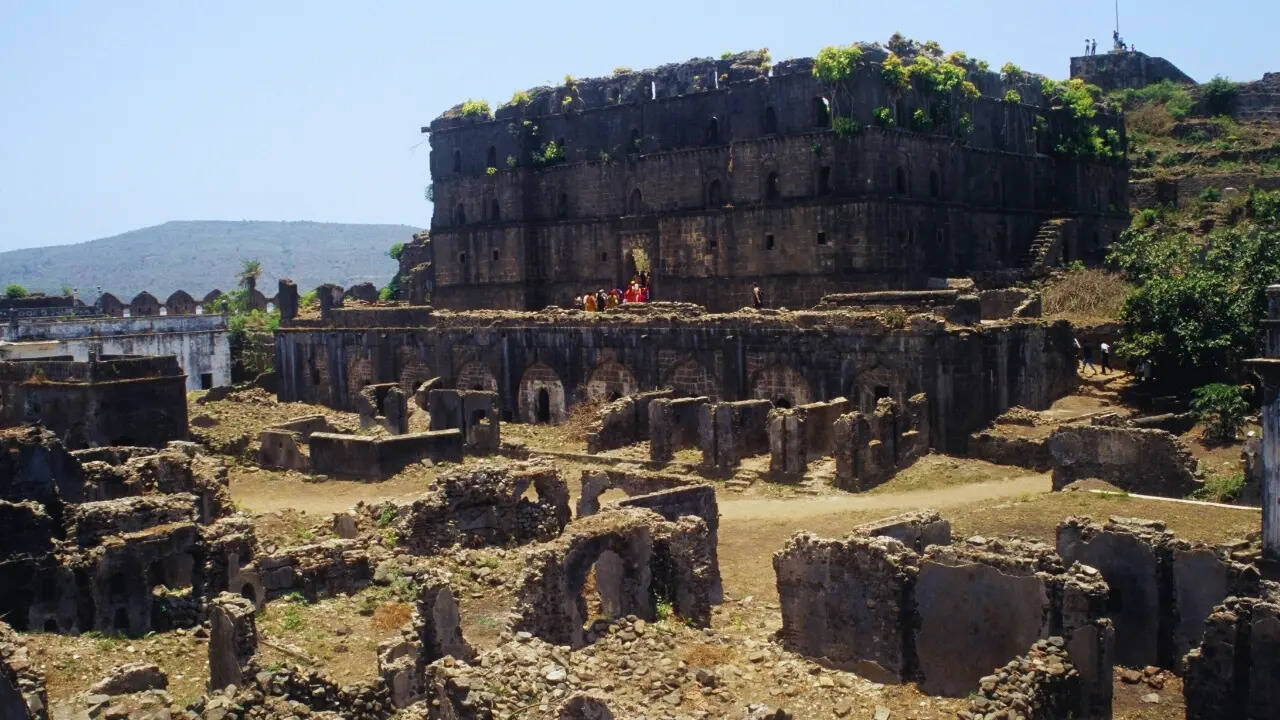
Murud Janjira Fort
Why was Murud-Janjira impossible to conquer?
- Island geography: Unlike hill forts or desert forts, Janjira’s biggest strength was its island geography. Any army attacking Janjira would have to do so by water, thus putting them at a disadvantage even before they reached the fort.
- Invisible entrance: The main entrance of Janjira fort is quite ingenious, as it can be seen only when you are almost on top of it, i.e., at a distance of merely 40 feet. This was done so that enemies would not be able to attack or even try to enter directly.
- Massive defensive Walls: The fort’s walls start right out of the water, making it impossible to climb up to it. The walls are made of solid stone and were designed to withstand even water and cannonballs.
- Superior artillery: The fort boasted a number of bastions, each equipped with a cannon, including the huge long-range cannon known as Kalaal Baangadi. This allowed the defenders to fire at the enemy vessels before they got close enough to attack.
- Self-sustaining design: One of the most interesting features is that the fort was provided with freshwater reservoirs, even though it was surrounded by seawater. This meant that the fort was self-sustaining and would not run out of water even if besieged for a long time.
- Failed engineering attempts by enemies: Sambhaji Maharaj, the ruler, is said to have planned to lay a causeway to reach the fort on land, filling a section of the sea with stone and debris, but this was never completed.
In short, conventional warfare simply didn’t work against Janjira.
A maritime power centre
Murud Janjira was not just defensive; it was also an offensive and strategic fort. The Siddis used it as an offshore base to counter Portuguese rule in the Arabian Sea, support Mughal interests at sea, and retain dominance in the region. There are even accounts of Janjira being used in sea battles beyond India.At its best, the fort was a self-contained township with palaces, administrative areas, mosques, barracks, water facilities, and over 20 bastions. The oval shape and layered defenses meant that even if one area was breached, which never happened, there would still be multiple lines to defend against invaders.
The end of rule – without defeat
Unlike any other fort in India, Murud Janjira was never captured through a battle. It remained under the rule of the Siddis for centuries and was assimilated into India after 1947, through a process of political integration, rather than military defeat. The legacy of Murud Janjira is that it remained completely immune to conquest. While other forts in India are celebrated for bravery in defeat, Murud Janjira is a monument to something far rarer – endurance without defeat.
In the annals of warfare in India, Murud Janjira stands alone, not just as a fort that was difficult to capture, but as a fort that was never captured at all.