
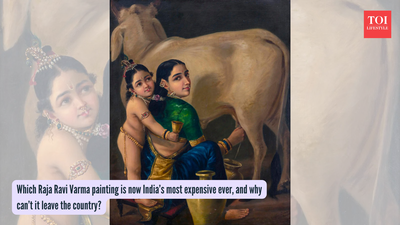
Raja Ravi Varma’s ‘Krishna and Yashoda’ fetched a record ₹167.2 crore at auction, acquired by Cyrus Poonawalla. This masterpiece, depicting a tender mother-son moment, is celebrated for humanizing Indian deities and blending Western techniques with Indian themes. Declared a national treasure, it will be displayed publicly, making Varma’s art accessible.
Legendary painter Raja Ravi Varma’s masterpiece grabbed headlines after his iconic work Yashoda and Krishna was sold at a high-profile Saffronart auction in Mumbai.Cyrus S Poonawalla, the man behind the Serum Institute of India acquired the painting after a competitive bidding process.Only a few names shine as brightly as Raja Ravi Varma, whose paintings brought Indian subjects to life in a way that generations instantly recognise. For many, seeing a Hindu goddess or Krishna in a calendar or print still means seeing Ravi Varma’s distinctive style first.
Yashoda and Krishna- Raja Ravi Verma’s masterpiece
The painting widely regarded as Raja Ravi Varma’s greatest masterpiece is Krishna and Yashoda. Created around the 1890s, this oil‑on‑canvas work shows a tender moment between the infant Lord Krishna and his foster mother, Yashoda, in a rural home.In the scene, Yashoda is busy milking a cow while little Krishna playfully interrupts her to ask for milk, capturing much of the pure, everyday motherly love.
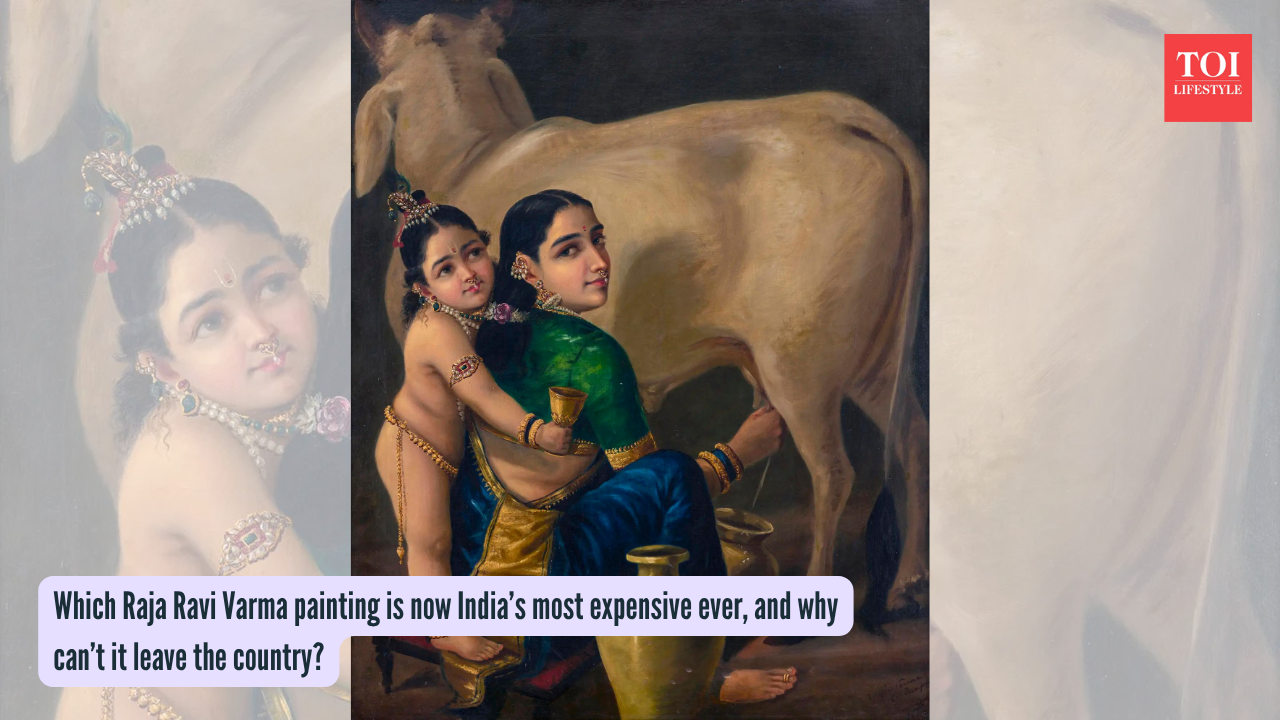
Raja Ravi Varma’s Krishna and Yashoda – (Photo: PTI)
The cow in the background is painted in exquisite detail, and in it lies a subtle reference to Kamadhenu, the wish‑fulfilling cow of Hindu mythology, adding a layer of divine symbolism to the otherwise simple domestic scene.
Why is Krishna and Yashoda so special?
Raja Ravi Varma wanted to make Indian gods feel human and relatable, and Krishna and Yashoda is one of his most powerful examples of this.
He blended Western oil‑painting techniques with Indian mythological themes, giving the divine a realistic, almost lifelike presence. Art historians and critics frequently point out that the painting is admired not just for its skill but for the way it portrays maternal love, one of the most heartily themes across all cultures around the world.
The most expensive Indian painting ever
In April 2026, the painting set a record as the most expensive Indian artwork ever sold at auction, fetching approximately ₹167.2 crore, according to gallery and auction‑house coverage.The Indian government, under the Antiquities and Art Treasures Act, has since declared it a “Non‑Exportable National Treasure,” so the original painting is legally bound to stay within India. It was acquired by billionaire Cyrus Poonawalla, who has said he plans to display it periodically for public viewing, not just keep it in private.
Varma’s ‘masterpiece’ is a debatable topic
Because of its high profile and cultural value, many art articles now explicitly call Krishna and Yashoda “Raja Ravi Varma’s highest‑paid painting” and his best‑known masterpiece, even though subjectively some also acclaim works like Shakuntala, which is especially praised for its emotional depth, particularly in the scene where Shakuntala pretends to remove a thorn and looks back at her lover, King Dushyanta.
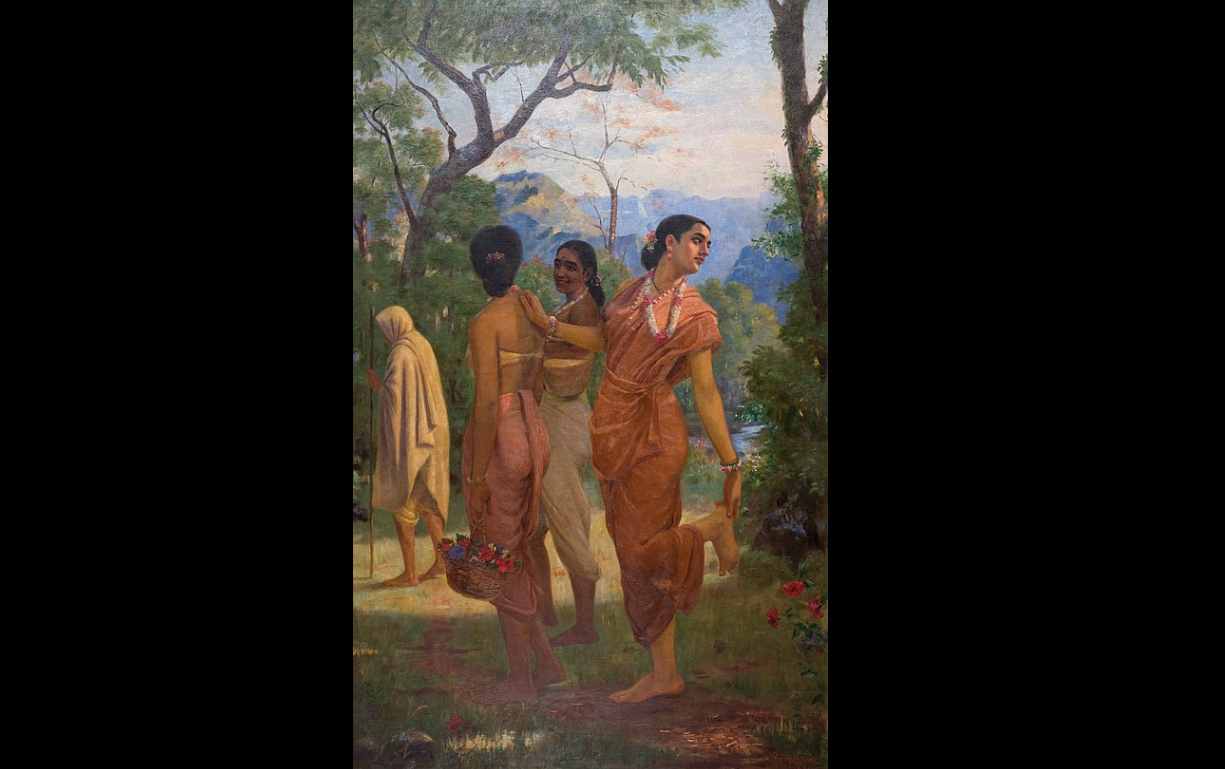
Shakuntala- By Raja Ravi Verma (photo via Wikimedia Commons)
Who was Raja Ravi Varma?
Raja Ravi Varma is often called the “Father of Modern Indian Art.” Born in Kilimanoor, Kerala, into a royal family, he showed an early passion for drawing and was trained by his uncle, and later by a British artist named Theodor Jenson.By the 1870s he had won prizes at the Madras Painting Exhibition and international shows in Vienna and Chicago, according to biographical summaries on sites such as Wikipedia and gallery pages.In 1894 he opened a printing press in Mumbai, churning out cheap lithographic prints of his paintings so ordinary households could afford images of gods and goddesses.This step “democratised” art in India, making deities like Lakshmi and Saraswati visually standardised in the public eye. Today, major collections of his work remain at the Sree Chitra Art Gallery in Thiruvananthapuram, the Laxmi Vilas Palace in Vadodara, and the Jaganmohan Palace in Mysuru.