

An appealing plate of food doesn’t guarantee optimal health. Nutritionists emphasize that while the quality of your meals matters, how efficiently your digestive system operates plays an equally important role in absorbing nutrients. Elements such as stress levels, sleep quality, and the state of your gut microbiome can greatly influence your body’s ability to benefit from what you eat.
A plate full of fresh vegetables, whole grains, and lean protein looks like the perfect picture of health. But, many people who follow a “clean” diet still complain of bloating, fatigue, or low energy.
So what’s going wrong?The answer lies beyond the plate. It sits in how the body processes what is eaten. Nutrition is not just about intake. It is about what the body actually uses.As Dr Shrey Srivastava explains, “Consumption of nutrients is one thing, but their absorption is another entirely different issue.” This simple distinction can change how health is understood.
Diet quality vs digestive efficiency
Diet quality is easy to define. It refers to what goes into the body.
Fresh foods, balanced meals, and nutrient-rich choices all fall under this.Digestive efficiency, however, is about what the body does with that food. It involves breaking it down, absorbing nutrients, and using them where needed.Dr Anupama N K puts it clearly, “Diet quality refers to what you eat… Digestive efficiency refers to how well your body breaks that food down, absorbs the nutrients, and removes what it doesn’t need.”
This means a perfect diet can still fall short if the digestive system is not functioning well. The nutrients may enter the body, but they may not reach the cells where they matter most.
Why a good diet doesn’t always deliver results
It may seem surprising, but eating healthy does not guarantee good health. The missing link is often digestion.Dr Shrey Srivastava notes, “Even though a diet is healthy, it cannot guarantee effective utilization of nutrients by the body.”There are several reasons behind this. The body depends on enzymes to break down food. If enzyme production is low, proteins, fats, and carbohydrates are not processed properly. The nutrients then pass through the system without being absorbed.Gut health also plays a role. An imbalance in gut bacteria can limit how vitamins and minerals are used. This explains why two people eating the same meal can experience very different outcomes.
What affects digestive efficiency more than you think
Digestion is sensitive. It reacts quickly to daily habits and lifestyle patterns.Stress is one of the biggest disruptors. It slows down digestion and reduces enzyme activity. Poor sleep has a similar effect. The body struggles to repair and regulate itself without enough rest.Dr Anupama highlights this clearly: “Stress, lack of sleep, low stomach acid, and conditions like irritable bowel syndrome or fatty liver can all interfere with the process.”

Factors like stress, poor sleep, gut imbalance, and eating habits can weaken digestion.
Even small habits matter. Eating too fast, skipping chewing, or not drinking enough water can weaken digestion over time. Age also plays a role, as digestion naturally slows down.According to the Indian Council of Medical Research (ICMR), digestive health is closely linked with overall nutrient status. Their dietary guidelines highlight that proper digestion and absorption are essential for preventing deficiencies.
The gut factor: Where most people miss the point
The gut is not just a digestive organ.
It is a complex ecosystem.Trillions of bacteria live in the intestines. These microbes help break down food, produce certain vitamins, and support immunity. When this balance is disturbed, digestion suffers.Dr Anupama explains, “A person may eat a perfectly balanced meal, but if their gut bacteria are out of balance, the body may not fully use the vitamins and minerals in that food.”This is where many diets fail. They focus on food quality but ignore gut health.
Without a healthy gut, even the best diet cannot perform its role.
Beyond food: What truly supports better digestion
Improving digestion does not require extreme changes. It needs consistent, simple habits.Dr Shrey Srivastava advises, “It is equally important to digest them properly by eating consciously, drinking plenty of water, chewing food, and living healthily.”Eating slowly gives the body time to process food. Proper chewing reduces the burden on the stomach.
Hydration supports enzyme activity and nutrient transport.Adding fibre and probiotics can improve gut balance. Managing stress through basic techniques like walking or breathing exercises also helps.
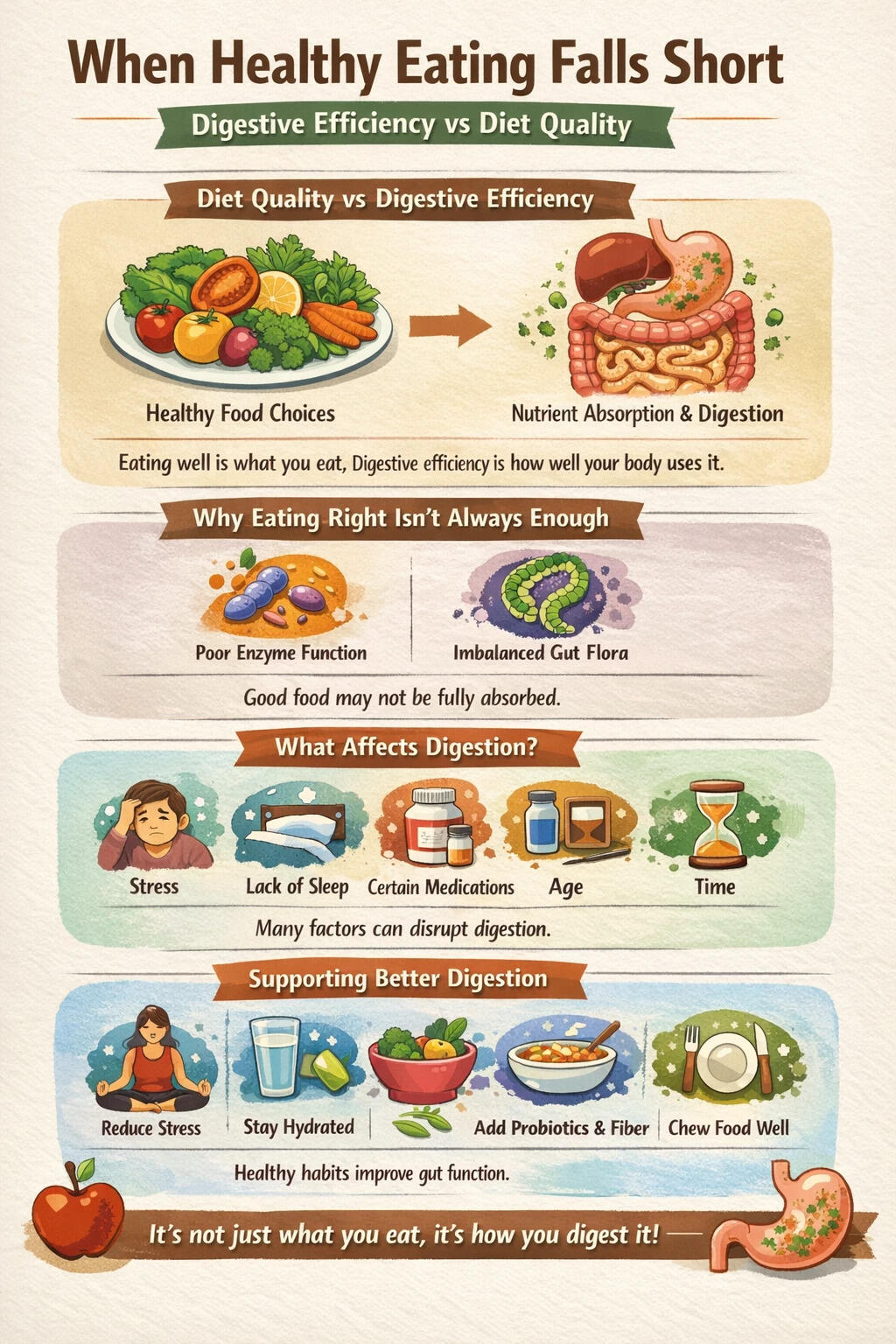
Focusing on both diet quality and digestive health is essential for long-term wellness.
It’s not just what you eat
Focusing only on diet quality is like buying the best ingredients but never cooking them properly. The body needs both good input and efficient processing.Dr Anupama sums it up well: “Focus both on diet quality and digestive health rather than one without the other is what truly supports long-term well-being.”In simple terms, eating well is important. But helping the body use that food is just as critical.Medical experts consultedThis article includes expert inputs shared with TOI Health by:Dr Anupama N K, Senior Consultant – Medical Gastroenterology, Aster CMI Hospital, Bangalore.Dr Shrey Srivastava, Assistant Professor- Internal Medicine, Sharda Hospital.Inputs were used to explain why eating a healthy diet alone may not ensure proper nutrition, and how digestive efficiency and medical guidance play a crucial role in how well the body absorbs and uses nutrients.



