
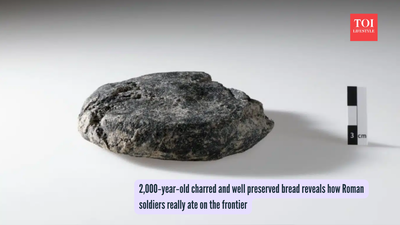
A 2,000-year-old Roman bread loaf, discovered at the Vindonissa military camp in Switzerland, offers rare insights into daily life for soldiers. This charred find, exceptionally preserved, suggests organized food production and the use of local ingredients, shedding light on the logistics of Roman frontier outposts.
Sometimes the most powerful glimpses into the past come not from grand statues or weapons, but from something as simple as food.In Switzerland, archaeologists have found a 2,000‑year‑old piece of Roman bread at the ancient military camp of Vindonissa, and this simple, charred loaf is now helping them understand how one of the empire’s earliest outposts north of the Alps really worked.
This discovery is special because fully preserved bread from antiquity is extremely rare, and this is believed to be the first Roman‑era bread ever identified in Switzerland.What makes this find even more interesting is that it was not just a random crumb, but a tangible piece of daily life for Roman soldiers living far from Rome.
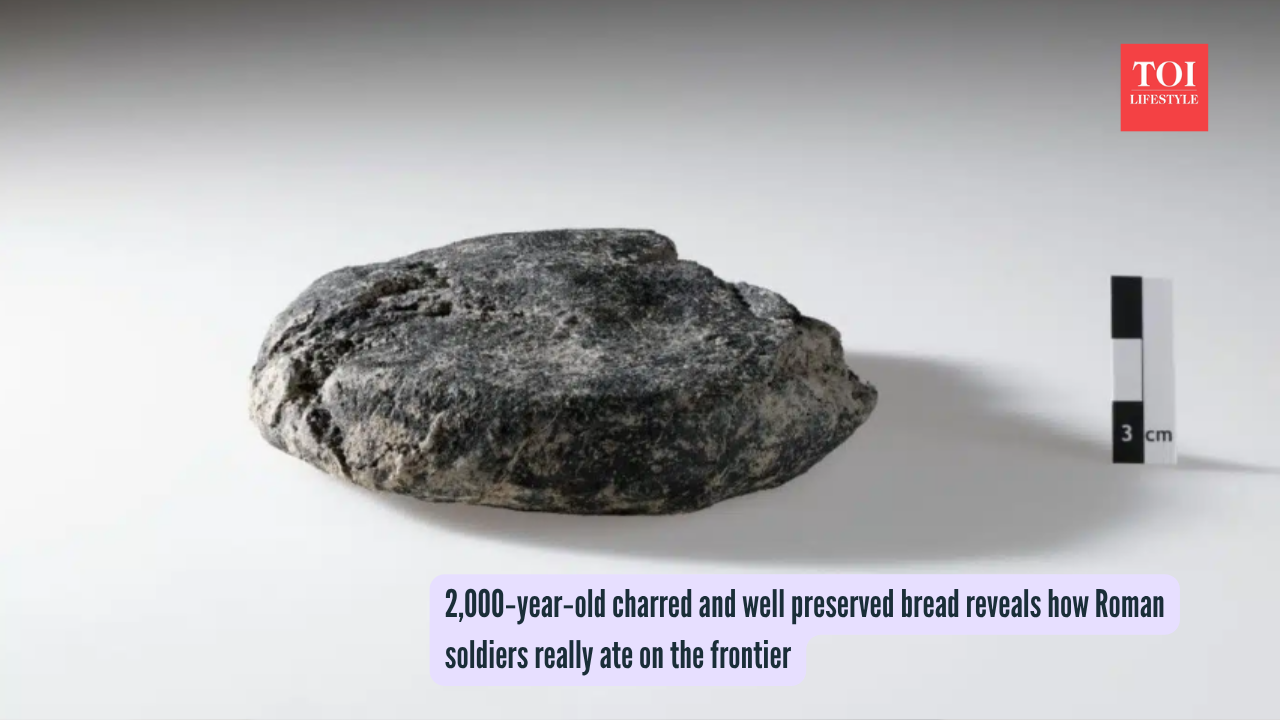
Well preserved 2000 year old roman bread (Credit: Department of Education, Culture and Sport / Kanton Aargau)
A charred loaf from 2,000 years ago
The bread was found during a rescue excavation ahead of a planned residential development in Windisch, in the Swiss canton of Aargau, near the Roman fortress of Vindonissa.
Archaeologists found a small, round, carbonised object measuring about 10 centimetres (4 inches) across and roughly 3 centimetres (1.2 inches) thick, which specialists from the University of Basel have provisionally identified as a Roman loaf of bread.According to the Aargau Cantonal Archaeology Service, such finds are extremely rare because bread usually rots away, unless it is accidentally burnt. In this case, charring likely sealed the loaf’s structure, protecting it from decay and allowing it to survive for two millennia.
More than just ancient leftovers
Archaeologists stress that this bread is more than just a curious food remnant. Its shape and size, resembling a small, flat or unleavened loaf, suggest it was baked in a communal oven, not as a one‑off home‑made piece.This points to organised food production for troops, an important clue about how the Romans fed large numbers of soldiers at a frontier camp.According to the Aargau press release, the find is “a rarity” and one of the most evocative everyday objects yet discovered at Vindonissa.
Further scientific analysis in a specialist laboratory in Vienna is expected to reveal the exact grain types and baking conditions, which will help researchers understand how Roman forces used local ingredients rather than relying only on imported supplies.
What this bread tells us about Rome
The bread sits at the heart of a bigger story about Roman military life in what is now northern Switzerland. Vindonissa served as a key legionary base in the 1st century CE, guarding major river routes and border zones. Along with the bread, excavations have uncovered the remains of an early wood‑and‑earth fortification, barracks, and other everyday objects, showing that these camps were not just short‑term camps but complex, long‑term settlements.