
- News
- Real Estate News
- 5 iconic modern architectural buildings in India shaping contemporary cityscapes
TIMESOFINDIA.COM / Updated: Apr 15, 2026, 21:24 IST
AA
Text Size
- Small
- Medium
- Large
1/6
5 iconic modern architectural buildings in India shaping contemporary cityscapes
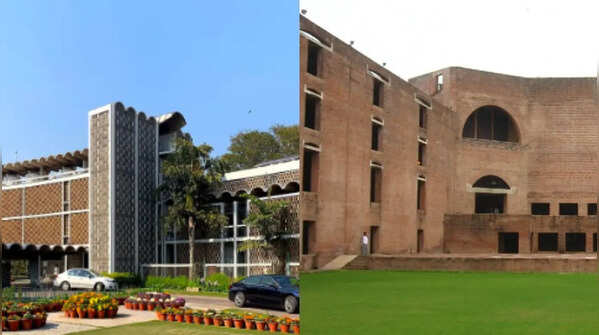
Contemporary Indian architecture exhibits an intelligent amalgamation of international modernity and indigenous practices. In particular, after the period of independence, architectural designs began developing based on Indian climatic conditions and socio-cultural environment rather than simply imitating Western models. Buildings in India not only perform their utilitarian roles but also represent a progressive nation moving towards development. These design principles increasingly shape modern real estate projects, influencing how homes and urban spaces are planned and built. Here are five such examples of these modern buildings.
Let’s have a look at them:
Image Credit: Wikipedia
2/6
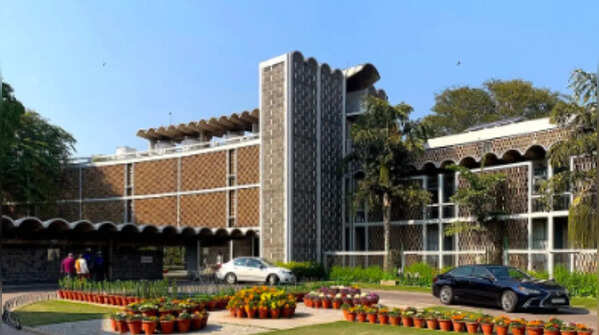
India International Centre, New Delhi
The India International Centre (IIC) in New Delhi, designed by Joseph Allen Stein, is a landmark of climate-responsive modern architecture. Built in the 1960s, it integrates low-rise structures with courtyards and landscaped gardens, creating a seamless relationship between the built and natural environments. The use of local materials and simple forms reflects Stein’s philosophy of human-scale, environmentally sensitive design.
Image Credit: Wikipedia
3/6
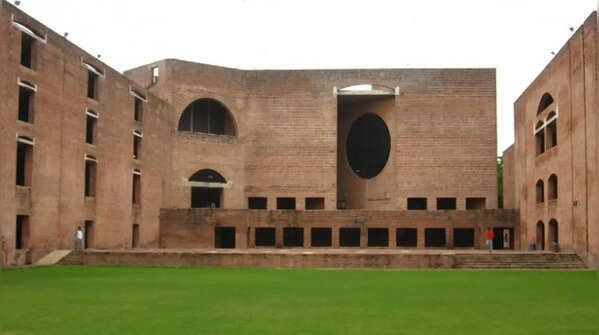
Indian Institute of Management (IIM), Ahmedabad
Designed by Louis Kahn, IIM Ahmedabad is a masterpiece of exposed brick architecture completed in 1974. Its monumental geometric forms – arches, circles, and deep voids – combine modernist principles with Indian sensibilities. The campus encourages interaction through plazas and corridors, while its façade acts as a natural climate moderator by filtering light and heat.
Image Credit: Wikipedia
4/6
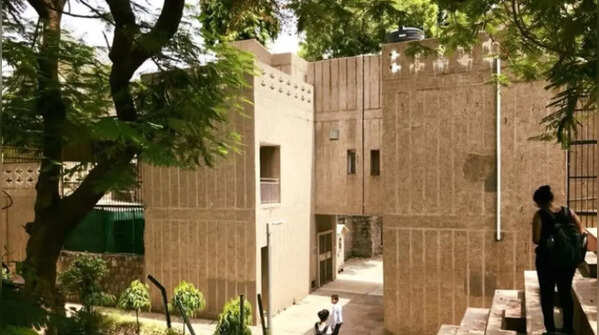
Asian Games Village, Delhi
Designed by Raj Rewal for the 1982 Asian Games, this residential complex in Delhi reinterprets traditional Indian urban planning. The design features clustered housing, courtyards, terraces and narrow shaded streets that promote community interaction. Inspired by historic towns like Jaisalmer, it successfully merges modern housing needs with traditional spatial concepts and climate-sensitive planning.
Image Credit: Facebook/ Housing Ecologies
5/6
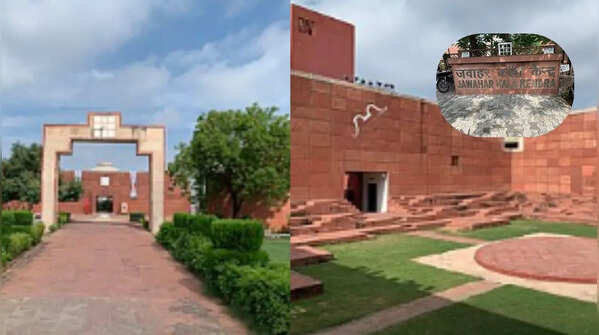
Jawahar Kala Kendra, Rajasthan
The Jawahar Kala Kendra in Jaipur, conceived by Charles Correa, is a cultural center inspired by Jaipur’s historic grid planning and cosmological principles, particularly the Navagraha mandala. Thus, the architect successfully integrated the building’s traditions and functionality into one structure.
Image Credit: Wikipedia
6/6
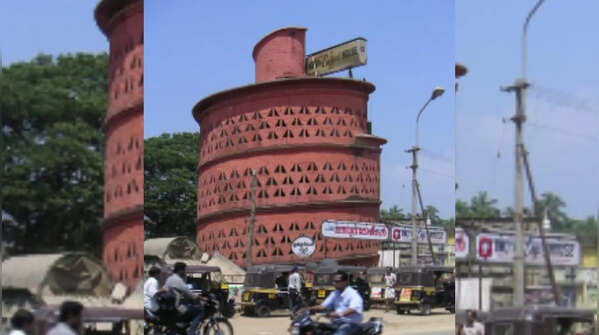
Indian Coffee House, Trivandrum
The Indian Coffee House in Thiruvananthapuram designed by Laurie Baker is distinguished by its characteristic spiral form and environmentally friendly technologies. Baker made efficient use of local building materials and created a system of natural ventilation. This approach significantly reduces operational energy use through passive cooling and efficient design.
These landmarks illustrate how contemporary architecture in India goes beyond mere adaptation of foreign architectural styles; rather, it involves a transformation into something more appropriate for the local environment. Each building has an individual take on architecture, be it through attention to climate issues or the use of cultural imagery. These architectural examples continue to inspire modern real estate developments to prioritise sustainability, climate responsiveness, and culturally rooted design when shaping future urban spaces.
Image Credit: Wikipedia
Follow Us On Social Media


