
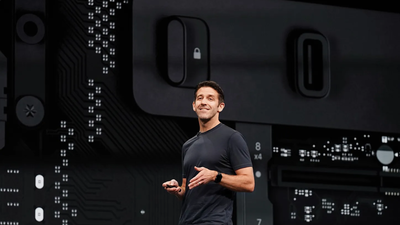
Apple is about to enter a new chapter. On September 1, Tim Cook will hand over the keys to John Ternus, a 25-year Apple veteran who has quietly shaped some of the most iconic products the company has ever made.
The choice says a lot about where Apple is headed. Even as rivals like Microsoft and Google are pouring hundreds of billions of dollars into pushing artificial intelligence (AI) into every product they make, Ternus, In a recent interview, has signalled a different approach, which is rooted in Apple’s oldest rulebook: make the product better using technology rather than providing that technology.
Quote of the Day by John Ternus
“We’re always focused on ‘how do we make a given product better.’ We’re always pushing. And we never think like, ‘well, what impact if we did something here would have on a product over here?’”
Understanding the meaning behind the quote
The quote sounds simple on the surface, but it carries real weight given the moment Apple finds itself in.
Ternus, a hardware specialist, has worked in Apple for 25 years. This means that the 50-year-old executive has worked with co-founder Steve Jobs and current CEO Tim Cook. The Apple executive is not talking about AI strategies, platform wars, or trillion-dollar investment pledges. He is talking about the product in front of him.
The job at hand. The question every Apple engineer wakes up asking: how do we make this better than it was yesterday?This is not a new idea at Apple. It is, in many ways, the idea that built Apple. From the original Macintosh to the iPod to the iPhone, the company’s greatest products were not born from trying to win a tech arms race but they came from obsessing over a single question: what does the person using this actually need?
Who is John Ternus
John Ternus is not a household name in the way that Tim Cook or Steve Jobs were.
He has spent most of his 25 years at Apple doing what Apple people tend to do best — working on the product and staying out of the spotlight. Over the course of his career at the company, he has had a hand in developing multiple generations of the iPhone, overseen the transition of the Mac to Apple Silicon, and served as Senior Vice President of Hardware Engineering, making him responsible for the physical devices that generate the vast majority of Apple’s revenue.
He is, in the clearest sense, a product person. And that is exactly why his appointment matters.
The AI question Apple cannot avoid
None of this means Apple is ignoring artificial intelligence. It cannot afford to. The company has delayed rollout of its revamped Siri assistant which has attracted criticism, and its decision to rely on Google to power some of its AI features, moving from OpenAI, has raised questions about whether Apple has fallen behind in the AI race. Apple has also lost its position as the world’s most valuable company to Nvidia, a dramatic symbol of how much the market’s attention has shifted toward AI infrastructure. Apple’s AI will not be a wholesale reinvention, but a careful integration of AI capabilities into the products people already love. The goal, as Trenus puts it, is to fuse AI into the hardware experience rather than chase the kind of platform-level AI bets that Microsoft and Google are making.Ternus himself has been direct about the fact that Apple does not believe in mashing things together for the sake of it. “Just to clear up any ambiguity. There has never been this idea of mashing these two things together,” he has said.
Apple: Product over platform
In a tech industry that increasingly rewards grand visions, sweeping announcements, and headline-grabbing investment figures, his words represent something almost countercultural.
He is not talking about changing the world or building the future of intelligence. He is talking about making a given product better.That focus is what has allowed Apple to remain one of the most profitable companies in history across multiple decades and multiple technological shifts. It is what carried the company through the transition from desktops to laptops, from laptops to smartphones, and from Intel chips to Apple Silicon.The question now is whether it will carry Apple through the AI transition as well.