
As artificial intelligence and automation continue to reshape careers and industries, parents are beginning to ask a deeper question: what skills will truly help my child succeed in an unpredictable future? While academic excellence remains important, it is no longer the sole marker of preparedness.
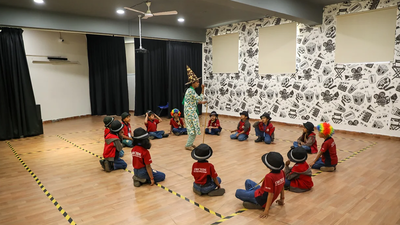
Communication, creativity, empathy, and adaptability are increasingly recognised as the skills that will endure.This shift in mindset is why many modern parents are choosing schools with active performing arts programmes. Those that include theatre, music, movement arts, and mime. These disciplines are no longer viewed as optional add-ons. Instead, they are understood as powerful tools for holistic development, shaping not just what children know, but how they think, feel, and express themselves.From a child psychology perspective, this makes sense. Why? Early and middle childhood1 are critical periods for brain development, when experiences actively shape neural connections. Research2 consistently shows that children who engage in the arts demonstrate stronger social-emotional skills, improved cognitive abilities, and higher levels of academic engagement. Performing arts, in particular, are uniquely effective because they require children to engage multiple faculties at once: mind, body, and emotion.When a child rehearses a play or learns a musical composition, they are developing memory, focus, emotional regulation, and empathy simultaneously3. Theatre also provides a safe space for emotional exploration. Children who may struggle to articulate feelings in everyday conversations often find freedom in expressing themselves through characters, allowing them to explore emotions without fear of judgment. Over time, this builds confidence, self-awareness, and emotional intelligence.From creative expression to real-world skillsThe benefits of performing arts extend far beyond the stage. Drama, music, and movement naturally cultivate communication, collaboration, and critical thinking – skills that today’s educators, employers, and futurists consistently identify as essential for success.Performing arts teach children how to listen actively4, respond thoughtfully, and work as part of a team. They learn discipline through rehearsal, resilience through feedback, and confidence through performance.
These are lived experiences, not theoretical lessons.One particularly valuable outcome is storytelling. In an age of information overload, the ability to communicate ideas clearly and compellingly has become a leadership skill across industries. In fact, companies today are creating senior roles dedicated entirely to storytelling, with compensation reflecting how critical this skill has become. This underscores a powerful truth: storytelling is not about entertainment; but about clarity, connection, and influence.Parents sometimes worry that time spent on the arts may detract from academics. Research5 suggests the opposite. Students engaged in arts education show stronger academic performance, better writing skills, improved memory, and higher levels of concentration. Arts participation has also been linked to increased school engagement and reduced behavioural issues. Rather than competing with academics, the arts strengthen the foundational skills that make learning more effective.Perhaps most importantly, performing arts support social-emotional development. Collaborative creative environments help children build empathy, manage anxiety, read social cues, and develop resilience. These qualities are increasingly vital in a world marked by rapid change and digital interaction.Orchids International School and a balanced learning philosophyFor parents seeking a school that genuinely balances academic rigour with holistic development, Orchids International School offers a compelling example. By integrating performing arts such as theatre, music, and movement into its educational framework, the school recognises that confident communication and emotional intelligence are as important as academic achievement.This approach reflects a deeper understanding of how children grow and learn. Students are encouraged to explore creative disciplines alongside core subjects, helping them build confidence, self-expression, and collaboration skills while maintaining strong academic foundations. The result is an environment that prepares learners not just for exams, but for life beyond the classroom.Learning that shapes more than gradesPerforming arts education is not a luxury or an optional enhancement, in fact, it is a vital part of preparing children for the future.
When parents choose schools with strong arts programmes, they are investing in more than creative expression. They are nurturing confident communicators, empathetic collaborators, and adaptable thinkers.The children who step onto the stage today are learning skills that will serve them for a lifetime. By combining academic excellence with the transformative power of the arts, schools can help shape future-ready individuals who can think deeply, connect meaningfully, and tell their stories with impact.References
- https://www.arts.gov/stories/blog/2025/educating-ourselves-about-childhood-arts-experiences-and-why-they-matter
- https://www.frontiersin.org/articles/10.3389/fpsyg.2021.624712
- https://www.kennedy-center.org/education/resources-for-educators/classroom-resources/articles/collections/arts-integration-resources/arts-integration-and-21st-century-skills/
- https://www.researchgate.net/publication/386172149_The_Effects_of_Arts_Education_on_Academic_Achievement
- https://www.peaktheatrearts.com/post/storytelling-skills-dismissed-by-parents
Disclaimer: This article has been produced on behalf of Orchids International School by Times Internet’s Spotlight team.