
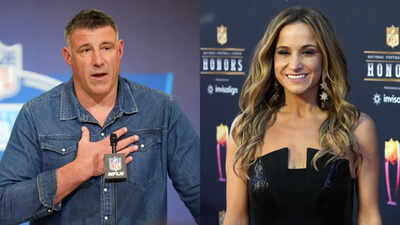
Dianna Russini’s reporting career future in question (Getty Images)
New photographs published by the New York Post on Thursday showing NFL reporter Dianna Russini and New England Patriots head coach Mike Vrabel kissing at a New York City bar in March 2020 have effectively ended whatever slim chances remained of a professional resurrection for Russini.
The photos, taken six years before the pair were spotted together at an Arizona resort, reveal that the relationship predates even the earliest timeline Russini’s supporters had been working with.
What do the new 2020 photos actually change for Dianna Russini?
Everything.Until Thursday, there was at least a theoretical argument that the Arizona resort photos could be explained away. Not convincingly, but theoretically. The 2020 images remove that option entirely.They tell a straightforward story: a prominent NFL insider maintained an intimate relationship with one of her primary sources for years, covered him extensively during that time, and then repeatedly denied any impropriety when the story eventually broke.
Russini had called mounting speculation “self-feeding” and “unmoored from the facts.” Vrabel initially dismissed any suggestion of inappropriate behavior as “laughable.
“
Why has trust in Dianna Russini’s reporting come under scrutiny?
That question is almost impossible to answer optimistically right now.Trust is the fundamental currency of journalism. Readers and viewers accept what reporters tell them because there is an implied contract of honesty. That contract, for Russini, now looks broken beyond repair.
Online scrutiny has moved through years of her work, from quarterback coverage during the Titans era to more recent reporting tied to the New England Patriots. At the time, those reports stood on their own. Now, they are being revisited through a different lens.That shift reflects a broader climate. Audiences already question sourcing, influence, and proximity in insider reporting. This situation has amplified those concerns.
The issue is no longer limited to one story. It has become about whether boundaries were crossed and whether transparency was withheld.Russini had pushed back strongly in her last public statement, dismissing what she called “self-feeding speculation that is simply unmoored from the facts.” But with new evidence surfacing, that defense has lost traction.
Why did Mike Vrabel’s counseling announcement make things worse, not better?
Within hours of the photos going live, Vrabel held a press conference less than an hour before the first round of the 2026 NFL Draft began.“I take accountability for my actions and the actions that caused a distraction to the people I care most about: my family, this football team, the organization, and our fans,” Vrabel said. “My previous actions don’t meet the standard that I hold myself to. They don’t.”It was a carefully worded statement that admitted fault without quite admitting specifics. More damaging, though, was the context surrounding it. Vrabel had already announced he would miss Saturday’s third day of the draft to seek counseling, a revelation that landed before the Post’s latest photo drop. That sequencing raised an obvious question: was the counseling announcement designed to get ahead of what was coming rather than a genuine response to it?The Patriots’ handling of this situation has been consistently reactive, never leading the story, always chasing it.
And each new development has made the previous statement look worse.Shortly after Vrabel’s press conference, Russini deleted her account on X. The New England Patriots have also struggled to control the narrative. A series of delayed responses and carefully timed statements have created the impression of reacting rather than leading. That has only prolonged the story.For Russini, the stakes appear higher. After initially backing her, The Athletic opened an investigation. She later resigned, maintaining her stance while criticizing leaks around the process. Support from media peers has also faded as the situation evolved.The underlying issue remains simple. Trust is the currency of reporting. Once it is questioned, recovery becomes difficult. Right now, Russini faces that reality in full view.


