
There comes a point when the usual meals no longer deliver the same strength, energy, or recovery. Many people notice this quietly. Muscles feel weaker, fatigue lingers, and even small illnesses take longer to bounce back from.
One key reason sits inside the body’s changing biology: protein resistance.Protein has always been the building block for muscles, tissues, and repair. But with age, the body becomes less efficient at using it. So the same portion that once worked well now falls short. This shift is subtle, but it carries real consequences for strength, mobility, and long-term health.
What exactly is “protein resistance”?
Protein resistance means the body does not respond to protein intake as effectively as it once did.
In younger years, the body quickly converts dietary protein into muscle protein. This process slows down with age.Dr Athul Vyas V, Specialist & Associate Coordinator, Geriatrics and Healthy Living, KIMSHEALTH, Thiruvananthapuram, explains it simply, “Ageing causes the body to be less efficient at using protein, including making muscle proteins from the amino acids we get after digestion.”In practical terms, this means the body needs more protein to trigger the same muscle-building response.
It is not about eating differently overnight. It is about understanding that the internal machinery has changed.Research backed by the Indian Council of Medical Research (ICMR) has also highlighted how protein metabolism shifts with age, pushing for revised dietary allowances in older adults.

As the body ages, it becomes less efficient at using protein, a phenomenon known as protein resistance. Alongside age-related muscle loss, or sarcopenia, this raises the body’s protein needs.
The silent muscle loss: Sarcopenia
Ageing does not just reduce protein efficiency. It also gradually reduces muscle mass. This condition is called Sarcopenia.Muscle loss often starts in the 30s and accelerates after 60.
The effects are not always dramatic at first. It may show up as reduced grip strength, slower walking speed, or difficulty climbing stairs.Over time, sarcopenia can affect balance, increase fall risk, and reduce independence. What makes it more concerning is that it feeds into protein resistance. Less muscle means lower protein storage and utilisation, which further weakens the system.A global review published with support from the National Institutes of Health explains that muscle protein synthesis declines with age, even when protein intake remains the same.
Why older bodies need more protein
The logic becomes clear when both processes come together. Reduced efficiency plus muscle loss creates a higher demand.Dr Vyas adds, “These processes cause an increased need of proteins of 1–1.2 grams per kilogram. It can rise to 1.5 or higher during illness or recovery, depending on metabolism and body composition.”This is higher than what many adults typically consume. For someone weighing 60 kg, that means roughly 60-72 grams of protein daily under normal conditions, and even more during recovery.Still, this recommendation does not apply to everyone. People with kidney disorders must follow medical advice before increasing protein intake.
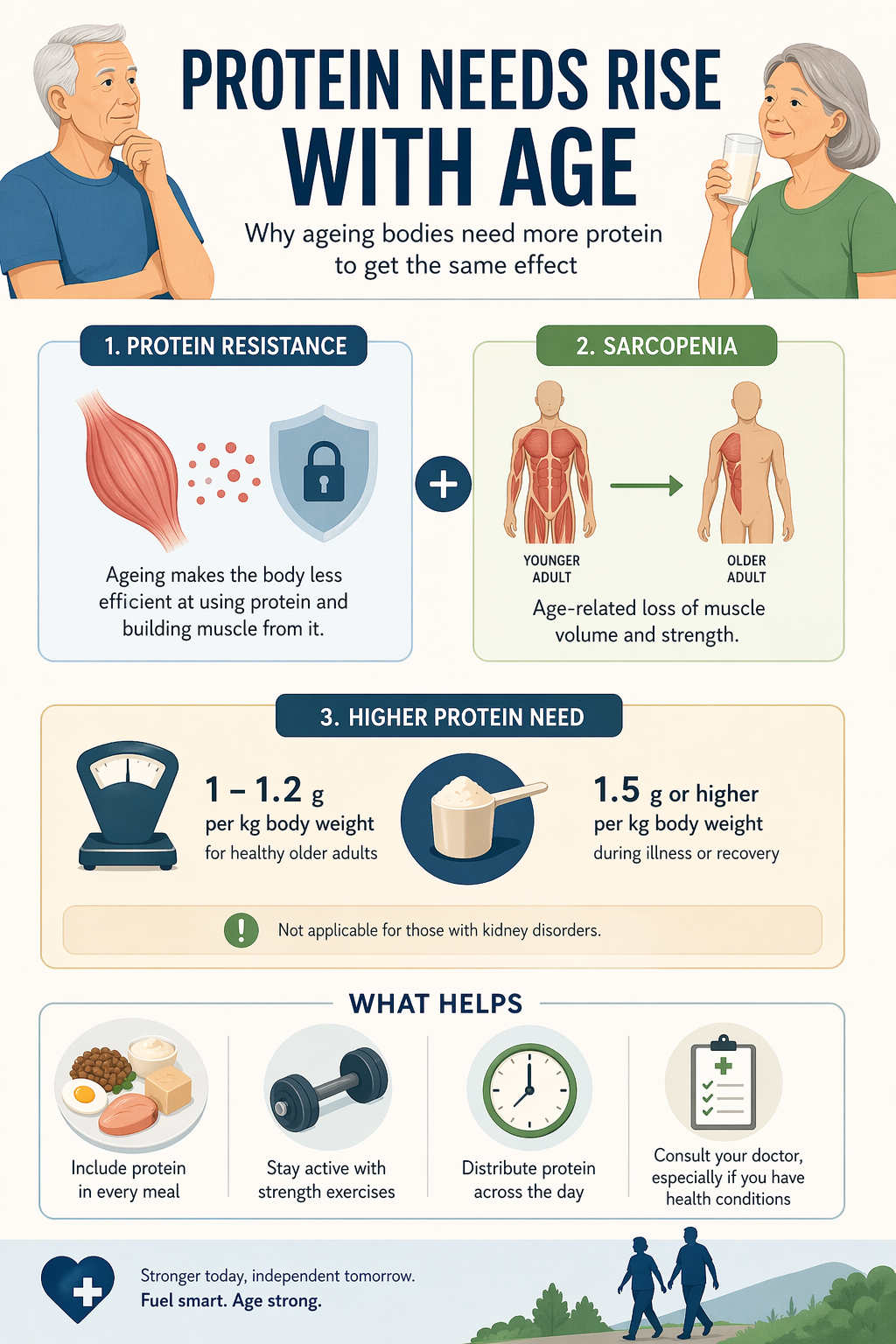
Experts suggest increasing protein intake to maintain strength, support recovery, and protect overall health. Simple dietary adjustments and regular activity can help manage this shift effectively.
Why diet alone is not enough anymore
Protein intake matters, but timing and quality matter just as much. Ageing bodies respond better when protein is spread across meals instead of consumed in one large portion.Equally important is combining protein with movement. Resistance exercises, even light ones like bodyweight training or resistance bands, help the body use protein more effectively.There is a simple truth here. Food builds, but activity signals the body where to use those building blocks. Without movement, even a high-protein diet may not prevent muscle decline.
What this means for everyday life
Protein resistance is not a disease. It is a natural part of ageing. But ignoring it can lead to weakness, fatigue, and slower recovery.A few thoughtful changes can make a difference:
- Include protein in every meal, not just lunch or dinner
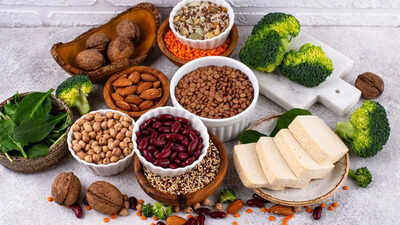
- Focus on quality sources like pulses, dairy, eggs, lean meats, and nuts
- Stay physically active, even with simple strength exercises
- Monitor health conditions before increasing protein intake
The goal is not to eat excessively, but to eat wisely. The body may be ageing, but it still responds when given the right signals.Medical experts consultedThis article includes expert inputs shared with TOI Health by:Dr Athul Vyas V, Specialist & Associate Coordinator, Geriatrics and Healthy Living, KIMSHEALTH, Thiruvananthapuram.Inputs were used to explain what protein resistance is, why ageing bodies require higher protein intake to maintain muscle and function, and the importance of appropriate dietary planning to support healthy ageing.