

Exams Are Temporary, Confidence Is Forever: The Parenting Advice Everyone’s Sharing
As exam season tightens its grip across schools and colleges, a quiet but powerful shift is taking place in how educators and parents are being urged to think about marks, merit and the meaning of success.
Exam results often dominate headlines and dinner-table conversations alike but a growing chorus of academic voices is challenging a long-held belief that a child’s intelligence can be measured by numbers on a report card.Voices across education sector, from universities to schools and edtech platforms, are now speaking in rare unison and assert that exams are important but they must never define a child. Educators are calling for a fundamental reset in parenting attitudes, one that prioritises confidence, curiosity and emotional resilience over grades.
Watch
How To Educate & Protect Children: BK Shivani’s Powerful Message
Marks are not a measure of a child’s future
In an interview with the Times of India, Vani Khanna, Head of Undergraduate Admissions and Communications at Universal AI University, delivered one of the most striking reframes of the exam culture, “Marks in themselves are never an accurate measure of a child’s intelligence, caliber, or future achievements. Exams are necessarily part of learning processes, but they must never instill fear in children and become labels for them.
”Her words strike at the heart of a system where numbers often overshadow nuance. Khanna stresses that what truly shapes a child’s academic relationship is not the exam itself but how they feel during the process. She said, “If parents and teachers impress children with their commitment and enthusiasm to learn, rather than just with their performance, children can develop a positive attitude towards learning.”In an environment where anxiety often peaks during exams, this shift from performance to passion could be transformative.
According to Khanna, it is also necessary to go beyond comparison because it can create undue pressure. Every child learns in their own way, at their own pace, with their own strengths. Parents should give their kids the confidence to grow by believing in themselves, by telling them that their love, support and encouragement will not be less despite their performance in certain areas because a single exam will not determine their capability or their future.
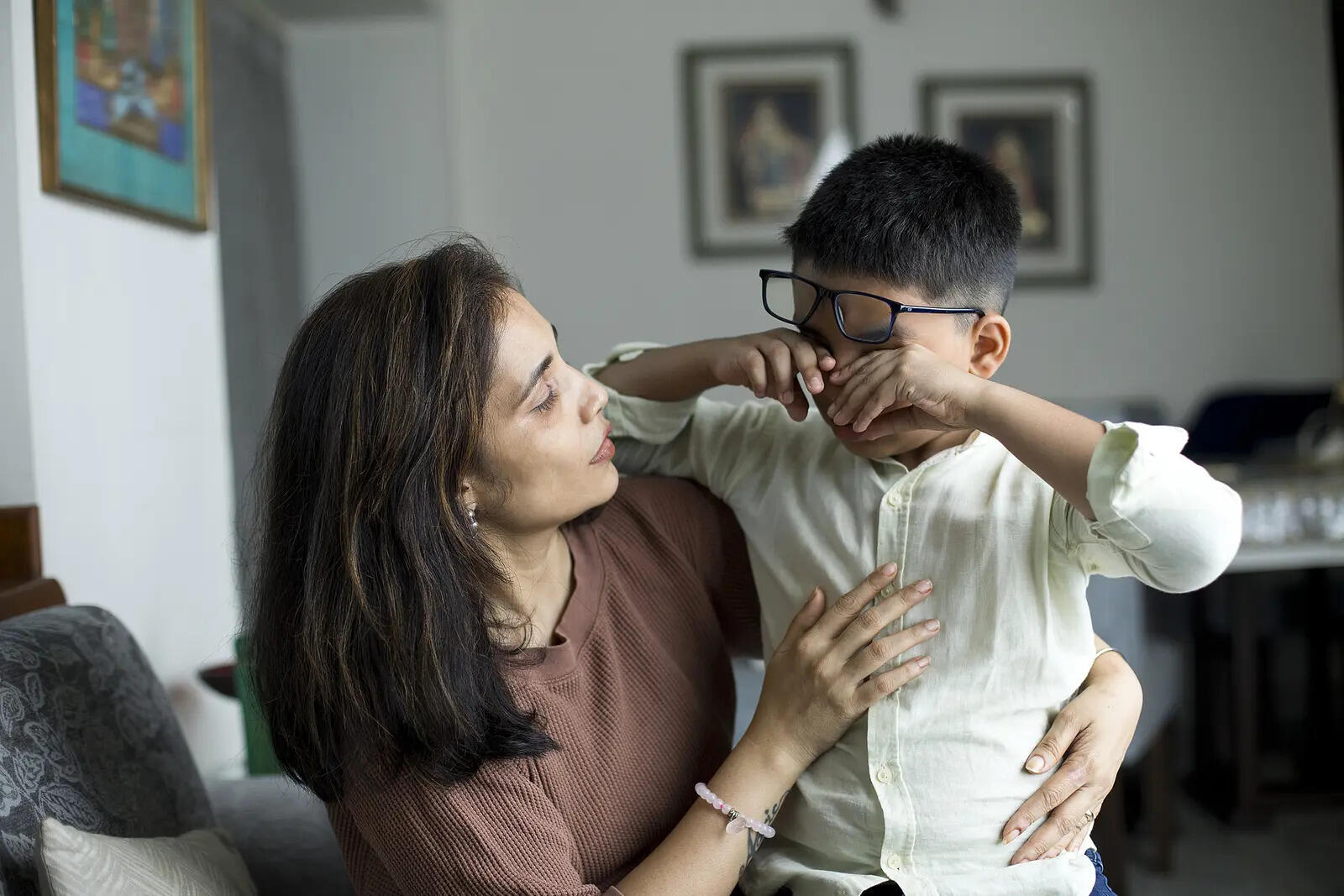
Are Exams Becoming ‘Self-Worth Tests’? The Dangerous Trend Parents Must Stop
Khanna suggested, “Tests should not be perceived as endpoints but rather as milestones. Gaining knowledge through trials and errors is a part of learning, and children should be made to see that these are not failures but indeed disguised opportunities. They are taught to be composed while working on their weaknesses, to seek solutions together, and to guide them through difficulties rather than pushing them, which would eventually lead to emotional resilience in children.
Moreover, along with education in school, the kids’ interest in sports, art, technology and other creative activities should be well nurtured, as, in this way, they will grow up to be well-rounded and confident individuals.”Educators today advocate for learning by doing, an experiential learning pedagogy where assessments are seen not as endpoints but as milestones in a larger journey. This is because knowledge is built through exploration, trials and even mistakes.
These moments are not failures; they are opportunities in disguise. Khanna advised, “Children must be guided to reflect, improve and work through their challenges calmly, rather than being pushed or pressured.
Such an approach builds emotional resilience and self-belief. During this time, it is equally necessary for children to have a glimpse of what the adult world is saying. Statements that encourage, besides the hard work and balance, also thoughtful learning strategies are very effective and can do a lot in taking away the fears and worries about learning and schoolwork.
The focus and the praise of hard work and progress serve to remind the children of the importance of a growth mentality and to support them in their struggle. Thus, children will gradually gain the confidence to learn and explore without being concerned about grades and results.”Ultimately, the development of confidence when taking exams is really about preparing kids not only for the exam environment but also for life.
It is through the development of learning, resilience and character rather than numbers that parents are able to make kids understand that their potential goes well beyond the results of their exams.
Confidence is more important than a grade
Echoing this sentiment, Anita Paul, Principal of Amity Global School Noida, placed emotional strength above numerical success and said, “Marks, especially during exams, are not the only thing that matters. Confidence here is more important than a grade on a paper.
Examinations may judge people’s knowledge but can never evaluate a child’s curiosity, resilience, creativity, or inner strength.”Her observation highlights a critical, often overlooked truth that children do not enter exam halls as blank slates of knowledge, they carry expectations, fear and pressure. She said, “Children do not only bring their studies into the examination hall but also the heavy burden of expectations and the fear of falling short.
In such situations, support becomes more critical than results and faith becomes stronger than pressure.
”
Exams Aren’t the Problem, Parent Pressure Is: What Experts Want You to Know
Paul underscores that support, not scrutiny, is what children need most in these moments. She pointed out, “Children’s confidence increases when they are allowed to put forth their best effort without fear of criticism. It is constructed when hard work is acknowledged, preparation is recognized, and advancement is applauded, regardless of the result.
An assured child handles exams with composure, while a child weighed down by pressure views exams as a test of self-worth instead of an opportunity to learn.
By telling kids that exams are just one stop on their journey, we help to keep them rooted and emotionally strong.”Additionally, experts feel that each child has his or her own way of learning and no grading scale can completely reveal the potential of the individual.
Some children show their intelligence by analysis, while others do it by imagination, leadership, empathy or problem-solving. When the teaching method emphasises only the scores, the self-esteem of the students may go down but when learning, growth and resilience are put first, children will start to believe in their abilities during uncertain times.Paul opined, “Imparting confidence during examinations implies that children should be taught that mistakes are trials leading to success and not failures.
It also means being with them all the time, giving them your patience, support, and understanding. The grades received might only show the performance on that particular day, but confidence is what forms the character for a lifetime. When children are assured of their worth being more than their academic results, exams turn into chances for them to develop rather than into religious tests about their worth.
”
Assessment should never define the child
From the competitive exam ecosystem, Mohit Tyagi, Co-Founder and Director of Competishun, offered a grounded perspective on the purpose of testing, “Assessment, or examinations, is a part of education, yet it should never define the child.
It can accurately reflect the level at which the child is performing, yet it is definitely not a representation of the child’s intelligence or cleverness, which can also affect their performance at a later level.
”Tyagi pointed to a deeper issue, which is the mindset that children develop around exams, “The critical factor during examinations is the mindset of the children towards their own abilities for learning.”

Behind Every Exam Is an Anxious Child: Are Parents Making It Worse?
When outcomes are overemphasised, stress becomes inevitable but when effort and understanding are prioritised, children feel secure. He encouraged, “If parents and teachers concentrate on effort and understanding, then these children can feel secure and confident. If they are encouraged to display the quality of being curious and consistent with their effort in this manner, these children will then be able to understand that learning is a process, not an evaluation to establish their worth.
It is easy for these children to feel that they are driven to learn, irrespective of the results.”He also reframed failure in a way that resonates strongly with modern pedagogy, “It is also very important that there is a shift in the way the teaching and evaluation process is done: Tests are evaluation points where one needs to identify the strong and weak points, and not every time conclude. Failures also help a lot while learning something new.
The child also needs to be made aware of the mistakes they made and how they could have been done differently, so that the child becomes adept at problem-solving and becomes tough.
”Besides academic pursuits, children can also get involved in other interesting activities that are beyond the textbook. Sports, art, technology and others play critical roles in instilling confidence and discipline in children, as per the experts.
These activities also expose children to other achievements in life and teachings, for instance.Positive communications for the students are also important during the exam season. Those communications that reflect upon the acknowledgment that has been done for the efforts put in, the progress accomplished and the intelligence displayed during the preparation for exams can certainly bring down the stress levels.
Tyagi recommended, “The appreciation should not be just for the achievement but for the hard work as well, which reveals that the child is satisfied with the achievement and spreads the message of progress among the children.
”

Report Cards Don’t Define Intelligence: Why Parents Need This Wake-Up Call This Exam Season
Thus, a confidence that has been retained because of exams finally gets children ready for life. Children grow into confident individuals when they believe in themselves, even if their report cards do not always reflect it and they learn to value education beyond just grades.
Exams should not define ability or future
Adding an academic lens, Sheetal Bharat, Associate Professor at Vidyashilp University, addressed the subtle signals adults send children, “Exams often come to define children because, consciously or not, adults signal that a few hours of performance determine ability or future.”She challenged this misconception by clarifying the real purpose of examinations, “In reality, examinations are meant to assess understanding and analysis, not memory or repetition.
What matters is the attitude with which students are guided to approach them.”While acknowledging that comparison is embedded in grading systems, Bharat suggested a healthier alternative, “Comparison cannot be eliminated, as grading systems make it inevitable but it can be redirected – children should learn to compare themselves with their own earlier work, not with peers.”Her insight offers a practical path forward, one that balances reality with emotional well-being.
Stable routines, steady study through the semester and calm reassurance from parents help reduce fear. Exams need not be viewed as something threatening; they are opportunities to see how much has been learnt. Confidence grows when children learn to face assessment without losing self-belief.

Why Your Child Fears Exams More Than Failure And What You Must Change Today
At the core of this lies a simple but powerful message for parents: your response matters more than the result. Whether it is acknowledging effort, avoiding comparison or simply reassuring children of unconditional support, small shifts in parental behaviour can have lasting psychological impact.
In the end, this is not just a conversation about exams; it is about the kind of individuals that children grow up to become.When curiosity is nurtured, when resilience is built and when self-worth is separated from scores, children begin to see learning as a journey rather than a judgment. In an exam-driven culture, that belief may just be the most important lesson of all.