
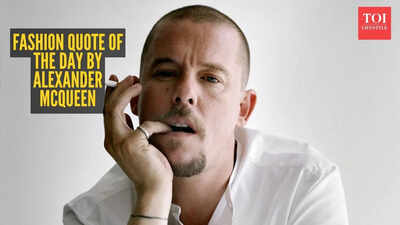
In a fashion world dominated by understated “quiet luxury,” the piece champions Alexander McQueen’s radical vision. McQueen found beauty in the unconventional, transforming perceived ugliness into powerful, intimidating designs. His work, inspired by the raw and grotesque, offered a profound counterpoint to modern perfection, urging us to embrace the complex, darker aspects of human experience in art and fashion.
“I think there is beauty in everything. What ‘normal’ people perceive as ugly, I can usually see something of beauty in it.” – Alexander McQueenLook at the current sartorial landscape. We are essentially drowning in a sea of beige.
Everyone is chasing the quiet luxury dream, sprinting toward that understated, old-money aesthetic.
It is the era of flawless Jamdani weaves. Pristine, minimalist heritage investments. A vintage, impeccably preserved Rolex or Patek Philippe tucked quietly under a tailored cuff. Everything is meticulously curated. It is entirely safe, beautifully polished, and intensely controlled.Then, you have the legacy of Lee Alexander McQueen.“I think there is beauty in everything. What ‘normal’ people perceive as ugly, I can usually see something of beauty in it.”That single sentence is not merely a passing thought or a quick soundbite. It is the definitive anchor for a worldview that completely shattered the industry’s relentless obsession with sanitized perfection. McQueen never designed clothes just to make people look palatable or pretty. He wanted to armor them.
He wanted his silhouettes to render the wearer intimidating, fiercely powerful, and profoundly real.
The antidote to perfection
We live in a moment where the internet demands a flawless, filtered facade. Trends push us toward stealth wealth, clean lines, and an almost clinical level of minimalism. McQueen offered the exact opposite. He handed us a ruptured, haunting romance.He pulled his inspiration from the absolute margins. He looked at taxidermy, medical apparatuses, historic trauma, and the raw brutality of the natural world.
Where a heritage brand sees the apex of luxury in a perfectly spun silk thread, McQueen saw it in the grotesque. He took elements that most would discard or instinctively shy away from – molted feathers, razor-sharp clam shells, violently ripped lace, and heavy leather harnesses—and tailored them into undisputed masterpieces.Consider the horological equivalent. If quiet luxury is a simple, elegant vintage dial, McQueen’s aesthetic is a skeletal, avant-garde timepiece.
One that strips away the polished casing to expose the raw, brutalist, ticking mechanics underneath. It forces you to watch the machine work.
A psychological canvas
There is a massive psychological weight to his creative output. Watching a McQueen archive piece move down a runway feels less like a fashion show and more like reading a sprawling Dostoevskian narrative. It is incredibly heavy. It forces the observer to confront the darker, less comfortable corners of the human condition.You can almost feel the fragmented, disillusioned reality of a T.S. Eliot poem stitched right into the seams of his garments. McQueen presented a world where pain, decay, and beauty are inextricably linked. You simply cannot have the light without acknowledging the dark. By embracing the grotesque and the discarded, he made the beautiful elements of his work shine with a blinding intensity. It was storytelling at its most visceral.
The real meaning of taste
McQueen’s philosophy violently disrupts the standard narrative of what constitutes “good taste.” It pushes the cultural conversation far past superficial, fleeting trend cycles. It asks the public to stop and reconsider the flawed, the decaying, and the unconventional.True artistry does not hide the messy parts of the human experience. It does not sweep trauma or ugliness under a perfectly woven rug. It drags it out into the harsh light of day.
It takes those complex, dark realities and tailors them into something entirely unforgettable.So, the next time you encounter a piece of art or fashion that makes you slightly uncomfortable – something asymmetrical, theatrical, or just a little bit too raw – do not look away. That friction is exactly where the genius lives. McQueen always knew it. If we look closely enough, we might finally see it too.